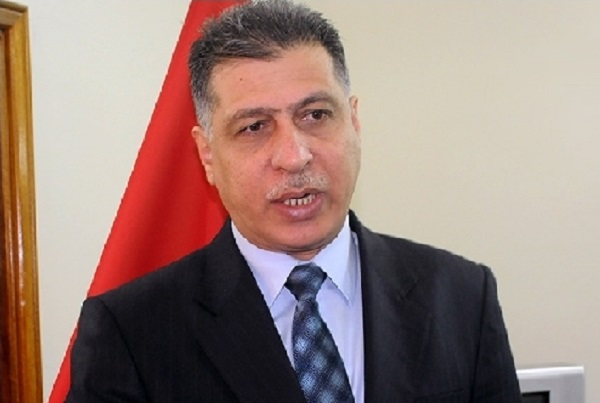
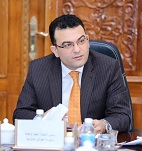
Muslim Brotherhood in Syria is one of the most organized and oldest opposition movement of the country. The Movement, which had to leave the country and maintain its political activities abroad after the 1982 Hama Massacre, played an active role in all opposition attempts following the start of uprising in Syria on March 2011. Despite various estimations on their power within Syria and among grassroots, the Muslim Brotherhood Movement will be one of the most important elements of the Syrian political life in the forthcoming period. In the interview we made with Mohammad Riad al-Shaqfa, leader of the Movement, we talked about political activities of the movement and what the new visions of Syria would be.
“We Aim to Bring Stability, Peace and Democracy to Syria”
ORSAM: First of all, could you tell us about your personal and political background in brief?
RIAD AL-SHAQFA: The Muslim Brotherhood Movement in Syria was created in 1945. The founder of the movement is Dr. Mustafa Al Sibai. The movement was by all means affiliated to the international Muslim Brotherhood Movement. In fact, I joined this movement very early, namely in the beginning of 60s. Meanwhile, I was born in 1944. My late father was a Shafii Imam in Aleppo. The founder of the Muslim Brotherhood and the General Murshid Hasan Al-Benna was one of the most prominent clergymen of the last century. I was by all means influenced by his ideas to a large extent. When the Baath Party came into power following the 1963 revolution, our Movement engaged in early conflict with them, and the first conflicts started with the demonstrations staged by a high-school against the Baath regime in Hama in 1964. Fire was opened on demonstrators and a student was killed during the attack. Then this incident was boycotted in Hama, and Sultan Mosque was bombed. This was recorded as the first conflict.
Then, of course, there were actions during the 70s. As a result of these events, the 1982 Hama massacre took place. By all means, there were also other incidents that took place in Aleppo and other cities before the massacre. The aftermath of the massacre led to fear among the Syrian people, and the people could not stage demonstrations for fear. When the revolutions called the Arab Spring began, the Syrian people started to stage demonstrations to call for their rights and to protest the oppression they have been exposed to for the last 50 years, but attacks were organized against those demonstrations. Therefore, the young ones among us had to resort to armed struggle. Our Movement was by all means in favor of calling for rights in a civilized manner, but when the attacks were carried out, we had to support the armed actions as well. This is the short history of mine, the Movement, and the Revolution.
ORSAM: Could you inform us about the organization of the Muslim Brotherhood Movement in current situation? The Muslim Brotherhood had to leave Syria after 1982. Is there any organization of the Movement going on in Syria right now?
RIAD AL-SHAQFA: The 46th Law was enacted in 1980. In accordance with the aforesaid Law, whoever from the Muslim Brotherhood Movement was sentenced to death penalty. We left Syria, and those who stayed in the country did not take part in any activity. In other words, we stopped all activities of the Movement in Syria. During the Massacre of 1980s , approximately 20 thousand members of the Movement were arrested and executed in prison. Therefore, there is no organization of the Movement in Syria. However,our followers and the family members of those who were executed support us. So far we haven't had any organization inside, and we support all our revolutionist fellows without exception. Because there is no such thing as discrimination among revolutionists and they have been fighting for a single goal. Besides, we intend to start to get organized in rebel zones.
ORSAM: The Muslim Brotherhood is one of the earliest opposition movements in Syria. How do you assess the power of Muslim Brotherhood in the forthcoming period in case the regime is toppled in Syria? What kind of role the Muslim Brotherhood would assume in the building process of new Syria?
RIAD AL-SHAQFA: As the Muslim Brotherhood, we by all means take part in almost all revolutionary activity. Besides, we have been organizing a certain schedule to get reorganized in Syria, and according to this schedule the Movement will go into action all across Syria within 6 months. In addition, another project of ours is to build the political wing of the Muslim Brotherhood, and to form a political party. However, this party would have a nationalist identity, instead of being named after the Muslim Brotherhood. The party is by all means open to everyone who wants to join, because our political party would be based on both nationalism and also Islamism. This party will be formed in forthcoming months. Sthis is our current schedule. Of course, we will be open to everyone after collapse of the regime , and we will gather the whole opposition under a single roof. We will gather especially the revolutionist troops under a single command. We aim to bring stability, peace and democracy to Syria.
Furthermore, we have another project which is about the elections. We will take part in the elections as the Muslim Brotherhood, but if we achieved to form a political party, we would take part in the elections as a political party. If the movement won the majority of seats in the parliamentary elections, we would not form the government alone. We would rule Syria jointly. The Syrian people had enough of the single-party system, and thus, we want to act in unison with everyone in the process of establishing a new Syrian state. We act in line with this objective and we have been carrying out our activities.
ORSAM: Should the Muslim Brotherhood came into power, would minority groups in Syria go through problems in the new period? What would you like to say about it?
RIAD AL-SHAQFA: To tell the truth, we will defend all rights of the minorities. This is not our program. Islam urges us to do so, and to be nice to everyone. As all citizens, minorities are entitled to same rights as us, and also they bear the same responsibilities as every citizen. In Quran it says, “Allah does not forbid you from those who do not fight you because of religion and do not expel you from your homes – from being righteous toward them and acting justly toward them. Indeed, Allah loves those who act justly. (Surah Al-Mumtahinah, Verse 8) As Allah commands us here; we will be nice to everyone, we will protect those who were oppressed and they will get their rights. Besides we will defend the minority groups. Even though Alawites oppressed us, and fought against us; we will not be doing injustice to them. And we will equally defend those who are oppressed. These are our principles, and those principles stem from our faith.
ORSAM: As the Muslim Brotherhood, what do you think about the relations between Europe and the West, and the countries in the region such as Iran, Saudi Arabia, Israel?
RIAD AL-SHAQFA: We will be open to all world countries in the forthcoming period, and we will also strive to establish a good relationship with everyone. Because generally international relations are always built on the interests of both countries, but we will adopt a certain attitude towards those who attack us. As for the relations with Iran, it is the accomplice of massacres carried out by the current regime, and thus we will not establish relationship with Iran. We sent messages to Iran through some parties, assuming the role of mediation, for it to stop supporting the current regime and not to kill the Syrian people; as we wanted to establish good relationship with Iran in the future. This was about Iran. As for Israel, on the other hand, it invaded our lands. We will save the Golan Heights from the invasion of Israel. This will be possible either through negotiations, or through other means. The Golan Heights belong to us. In fact, the question that should be addressed to Israel is that: “Will the plan of expanding Jewish settlements continue?” Because Israel is already the party that attacked and it is guilty. As I said, we will save our lands.
ORSAM: We see that the opposition has had some gains in Syria in the recent period. How long do you think the situation in Syria will continue, and how will it be concluded ?
RIAD AL-SHAQFA: It is quite hard to answer this question as it depends on estimations. However, we see that military success is progressing quite rapidly. This situation is by all means a situation that turned in favor of the Syrian people as a result of big sacrifices. Thanks god, our troops are making progress, if slowly. The process, on the other hand, depends on the types of arms to be provided for revolutionists. The international community is against providing us with high-technology arms. Western countries are worried that the religionists might have missile defense systems. These are all excuses. I explicitly say that; if we were provided with arms to defend ourselves against aircrafts and tanks, the war would come to and end as soon as possible. So, we believe that the international community is responsible for what has been taking place in Syria.
ORSAM: As the Muslim Brotherhood Movement, you are within the Syrian National Council. Besides, a National Coalition was created in Qatar. What do you think about the New Coalition? Will the integrity be maintained within the Coalition as the Council? And what do you think about future of the new opposition structure?
RIAD AL-SHAQFA: In our policy, we join all groups that contribute to our nation. Therefore, we assumed a major role in formation of the Syrian National Council. As we transferred some seats that had been assigned for the Movement to other groups, this Coalition was created and became the biggest opposition group. Some mistakes were made in the Council, but that does not come to mean that the Council did not play any positive role. We believe that it played very important roles in this process. As for the New Coalition; before it was created, a project called “National Initiative” had been put forward. Some opposition groups came up with this project. The main goal of the project was to split the National Council and to replace it with the aforesaid project. Of course, we did not like the way the project was put forward. However, we negotiated with the opposition groups managing the “National Initiative” project. In addition, we structured the National Council, and we achieved taking part in the “National Coalition” as the National Council. We support this Coalition and we are striving to more actively expand this role. As National Council and National Coalition, we stated that we would provide all kind of support to topple the regime and not to negotiate with this regime. Some parties are in favor of negotiating with the regime. They cannot be a part of this coalition.
ORSAM: One of the biggest fears is that a civil war could break out in the country and there would be a chaos when the Assad regime is toppled. On the one hand, the state will be eliminated, and on the other hand, small groups of uncontrolled armed opposition will seize the control of different areas. Do you believe that these armed groups might be controlled?
RIAD AL-SHAQFA: I already touched on this subject. Currently, we are striving to gather the armed groups and brigades, which have been fighting under the roof of opposition, under a single roof. After the collapse of the regime, we will try to reach an agreement with these armed groups for them to strive for establishing stability in Syria and to deliver their arms to the government when it is time for elections.
ORSAM: A new central command unit was formed under the name of High Military Council. Do you believe this unit could achieve gathering military units?
RIAD AL-SHAQFA: As I said, we stand by this unit and thus we want and support all armed groups to be gathered under the roof of Council. Hopefully, we will become stronger through this coalition. We sincerely support it.
ORSAM: There are scenarios about the establishment of a Nusayri state including Latakia and Tartus in case the Assad regime is toppled. This situation might lead Syria to a division. In addition, Kurds call for federal district. What do you think about it?
RIAD AL-SHAQFA: We believe that they have no chance to live separately in the areas where Alawaites live. Because on the one side there is sea, and on the other side there would be the borders. Therefore, there is no possibility to establish a state. Besides, there are Sunni villages in the areas where Alawites live. Thus, in brief, there is no chance to establish an Alawite state. As for the Kurds, on the other hand, Arabs and Kurds live together in those areas. Besides, when we negotiated with all opponent Kurdish parties, we reached an agreement on not creating such a federal district and also on entitling Kurds with cultural and political rights in integrity.
ORSAM: How do you assess Turkey's Syrian policy? What do you think about Turkey's role in new Syria as Muslim Brotherhood?
RIAD AL-SHAQFA: We think positively about Turkey's approach towards Syria. Turkey ahs always stood by the Syrian people, hosted the opposition, and provided them with full freedom. Of course, I would like to extend my thanks to Turkey on this subject. I have no doubt that very strong and close relationship will be established between the two countries. Political and economic relations will be very strong. In school, the Baath Party members always strived to breed bad blood among us against Turks. However, the two peoples are already fellows and they cannot be set against one another like this. The forthcoming days will prove it.
ORSAM: Thank you.
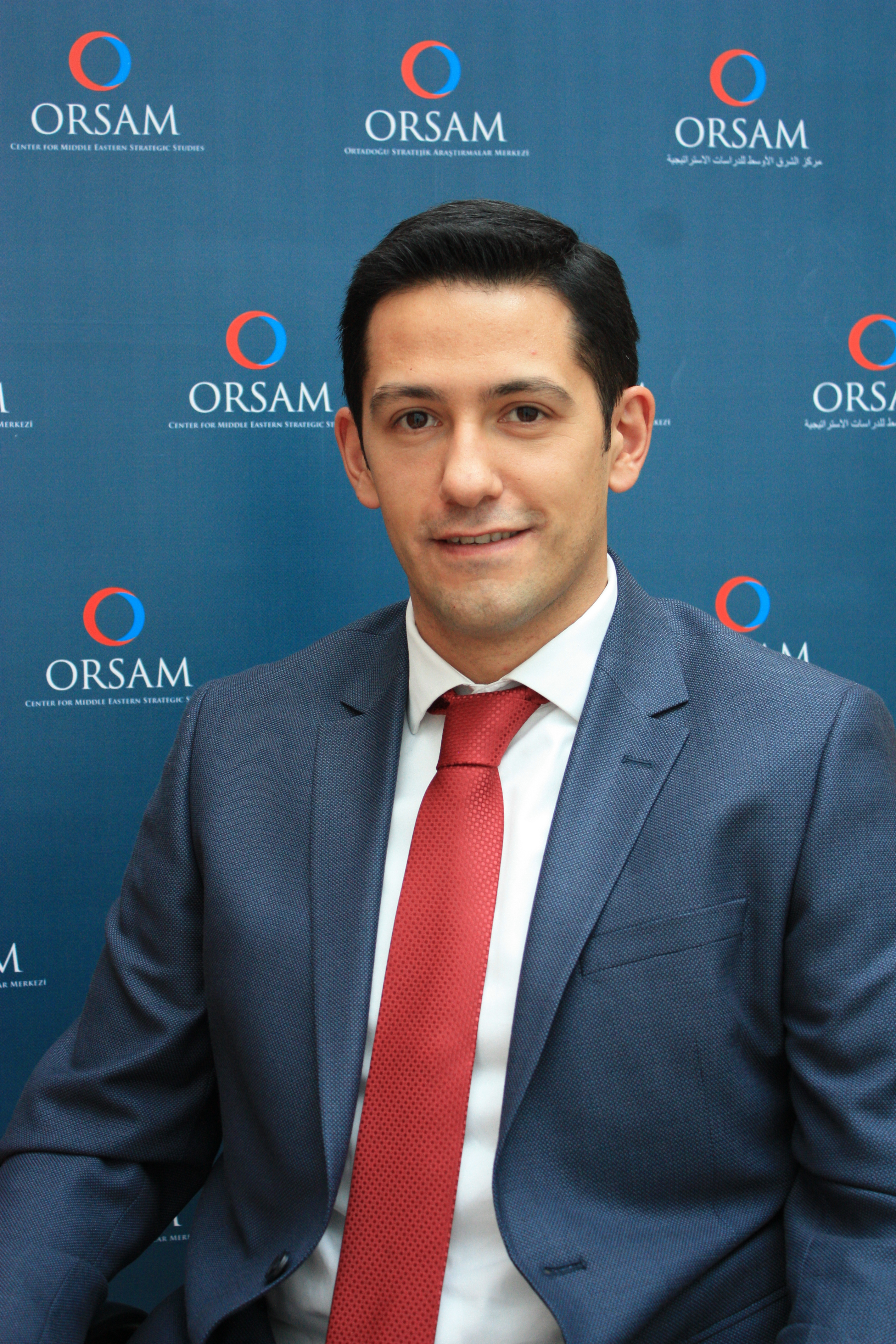
* This interview was made by ORSAM Middle East Specialist Oytun Orhan in İstanbul on 21 December 2012.