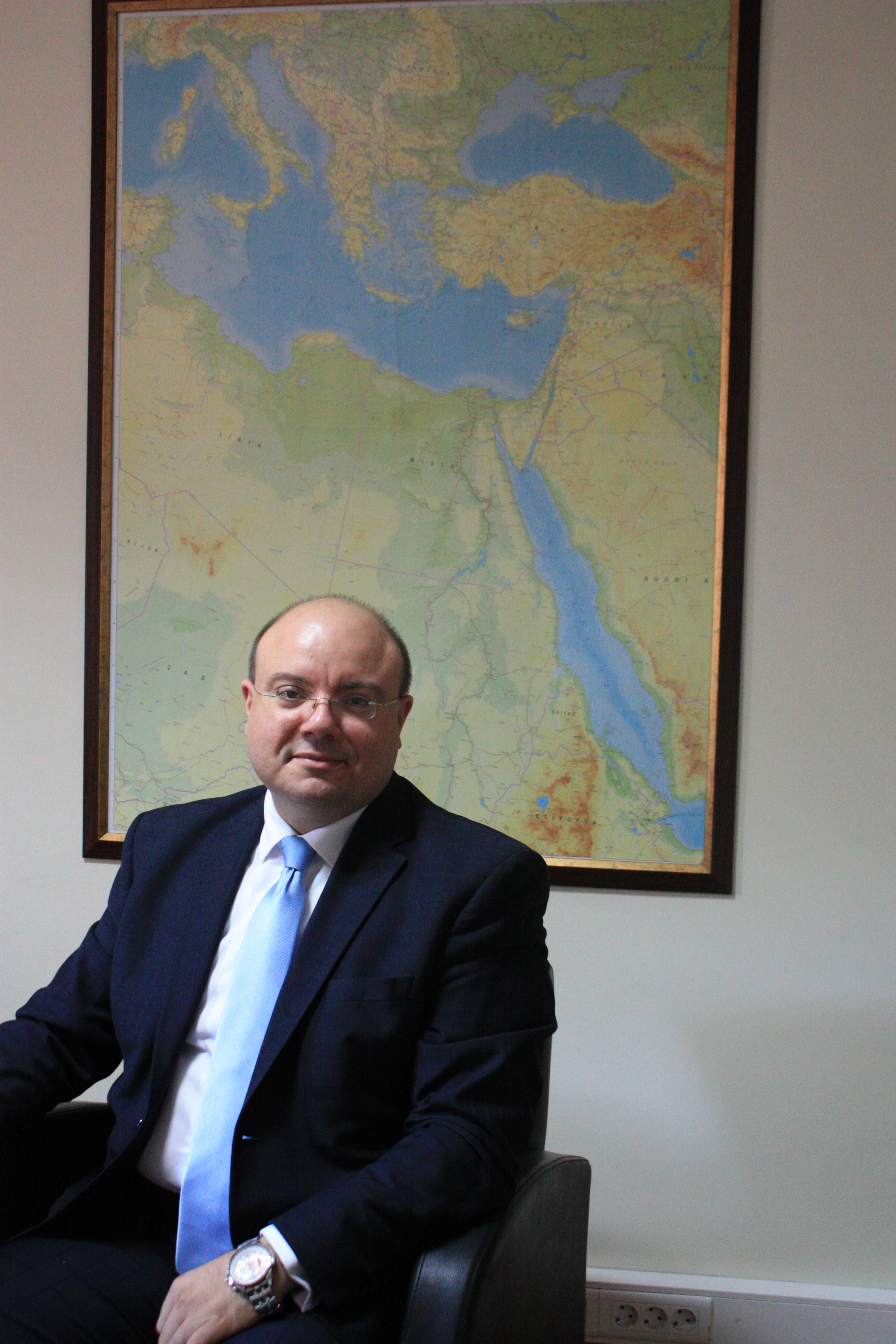
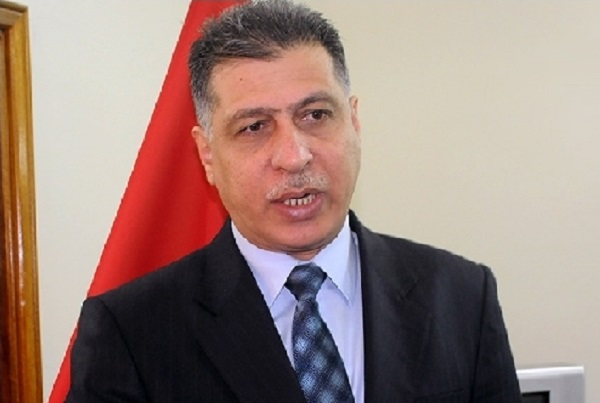
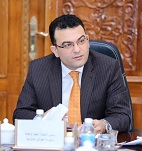
One of the biggest problems in terms of the future of Syria is not only the aftermath of the Assad regime, but also whether a chaos and conflict will take place in the country in case of a collapse of the regime, or not. This concern is the main reason of the indecisive approach of some groups in Syria and also a certain part of the world public opinion. But some Syrian non-governmental organizations have been striving to form alternative formations for state to function properly and to keep the order in the post-Assad period. The “Civilian Administration Councils” were added to these organizations in late 2012. Omar Shawaf, who coordinated the Council, was also one of the prominent figures who was active in the Syrian opposition for many years. We made an interview with Shawaf on the activities, goals of the Council and on the current situation in Syria, in their office in İstanbul.
“We Work To Prevent Chaos in the Post-Assad Period”
ORSAM: Could you please inform us about the “Civilian Administration Councils”, the establishment of which you announced not long ago?
Omar SHAWAF: Actually declaration of the Civilian Administration Councils through press conference is recent, but the establishment of Councils dates back some 8 months. So the first organisation in Syria dates back to 8 months. The objectives of establishment of our civil society movement might be listed as follows: First of all, we have been striving to prevent a chaos that might take place in Syria in the post-Assad period. If organisation and order were established, there would not be any chaos. Secondly, we are trying to inspire cooperation away from politics among people from different groups. Thus, we inspire the feeling of living together. In addition, we do not treat people, who work in our organization, differently based on their ethnicities, religious believes, or sectarian origins. So, we have been trying to prevent any sectarian tension in the country. Lastly, we are also striving to prevent any further possible conflict and chaos environment by filling the authority gap that would take place when the regime is toppled. Our organisation is a non-governmental organisation. We totally keep our distance from politics. We pursue our opposition activities on a social basis. Of course, we are associated with politics but we are not under the control of politics.
ORSAM: Could you tells us about your organization?
Omar SHAWAF: First of all, local administration councils were formed in districts, villages in Syria. Afterwards, district and village administrations were created in these areas. Then representatives were elected and a Provincial Council was created with a representative from each area. The name of this organization changed in time during that process. It was named committee in certain areas, while in some other areas it was called local council, or civilian council in some others. Currently, they have been carrying out considerable works. These formations have completely seized the initiative in some areas. For instance, the entire rural area of Aleppo, a major part of central Aleppo, the entire rural area of Idlib, a considerable part of central Idlib, entire Hasake, the entire rural area of Hama, some parts of Latakia's rural area, a certain part of Damascus' rural areas and some neighborhoods in the city center, Daraa's rural area, the entire rural area of Deir ez-Zor, Banias in Tartous and some rural areas are controlled by these councils. Currently, there are 120 councils across Syria. We need to reach 1250 councils in order to expand all across Syria. As these councils aim at operating as non-governmental organisations, we prepared an internal regulation. The representatives discussed the internal regulation in our congress. A different professional aspect of the regulation was analyzed in each session. For example doctors discussed the medical and health service-related part, lawyers discussed the legal aspect, and former municipal employees discussed municipal works and civil services. A person was elected at each session after the talks held among themselves, and a committee was formed to rewrite the internal regulation. While they did not change some parts they found acceptable, some other parts were changed. We did not interfere in this process. Then it was accepted with some 90 per cent of the votes during the congress. We handed the internal regulation out and also published it on internet. Everybody turned back to their districts and started to shape their organizations in line with this internal regulation. A representative shall be elected from each civilian administration council for the provincial council. After the formation of provincial councils, the representatives from these councils shall come and a meeting shall be held. A new central commission shall take our place, namely the central commission that currently coordinates the organization in this meeting. So that we will have handed back this initiative completely to inside. It is a totally democratic work. And we received help from the National Democratic Institute (NDI) for this democratic structuring. They sent instructors to Syria and Lebanon to inform us about the organization of the civilian administration councils. Our most important principles are transparency and honesty. While great interest is shown in this project all around the world, Turkey remains insensitive despite the fact that the project is carried out in Turkey. When I was a kid, a flood took place in Hama in 1970s. A German non-governmental organisation came to help and opened a canal for the flood. We are in 2012, and people still call that place “River of the German”. “We would lose our 4-5 children each year if it weren't for the Germans,” say the local people. Likewise, the Japanese built a school in a town in Aleppo. Despite the fact that the Baath regime named the school after their martyrs, the people still call it “Japanese School”. Turkey has been spending a considerable amount of money for refugees. However, the refugees do not constitute 10 per cent of those who live in hardship in Syria. In fact, Turkey could have transferred these refugees to many international organizations, and money provided for them could have been allocated for those who live in hardship in Syria. But they did not do it. The refugee issue has become a serious competition. There are more than 100 thousand refugees in Turkey. However, the number of Syrian people who migrated from Syria is 2,5 million. The 35 per cent of these people are homeless. 1 million people do not have even a tent to hang their hat. Therefore, the project that has been carried out is extremely important. When it is completed, people's power will have been established. So that, the activities to be carried out will be in conformity with the Syrian people's way of living, logic, traditions.
ORSAM: There are some other institutions that work in a similar way with Local Coordination Committees, Syrian Revolution General Council. What is the difference between the Civilian Administration Council and those institutions? How many people in Syria do we mean when we say Council?
Omar SHAWAF: 200 representatives attended the meeting from each council, one from each. When a council was created, the number of those who worked in this council was 10. Namely 2000 people in total. 10-20 people work voluntarily in each council. Currently, there are more than 200 thousand people who actively work in this project. This is quite a high figure. Other activities, on the other hand, are carried out either under a political or an organization umbrella. Nobody leads our project. There are people who are organized inside. Even our central commission is not led by anyone. All of us work in different fields as co-chairs. For example, I am responsible for Administration and Coordination, and another friends is responsible for external affairs. In other words, this movement is not and will not be controlled by a politician or a state. While we were in the process of establishing the commission, we paid attention to include people from all across Syria. The Commission includes Kurds, Assyrians, those from National Council, from National Coalition, and also figures who are not related to either of opposition organizations. This commission is a reflection of the people. We do not need legitimacy to work. Because we do not argue that we are in power. Our goal is to provide service to the people. And we do not to be authorized by anyone in order to do so. If we serve efficiently, then we make a reputation thanks to people, and thus we obtain authorization. Therefore, there is a tie of affection among us.
ORSAM: Another important subject is security. The most important problem in Syrian issue is disorganization of military structure of the opposition. While carrying out your activities, you also need to establish relations with military units in the region. Do you have any project in this field?
Omar SHAWAF: Say that we will form a civilian administration council in a settlement with 10 thousand population. Approximately 100-200 people will work voluntarily. Namely 1 per cent. So either a relative or a friend of everyone who live in the area participate in this project. People in the armed groups are also from the area. When you give the administration of that area to the local people, namely when you adopt a decentralized administration, you also completely solve the security problem. So there is only the Free Syrian Army, which seems to be organized, left behind. We have a meeting with them next week. They will publish a notice. They will give an instruction to help those who work in Civilian Administration Councils. In parallel with this, we launch a project. Employees in the Council will have an ID. So that all problems will be eliminated. Of course, it does not come to mean that there won't be exceptional cases. But we have been making major strides in minimizing these problems.
ORSAM: Thank you very much.
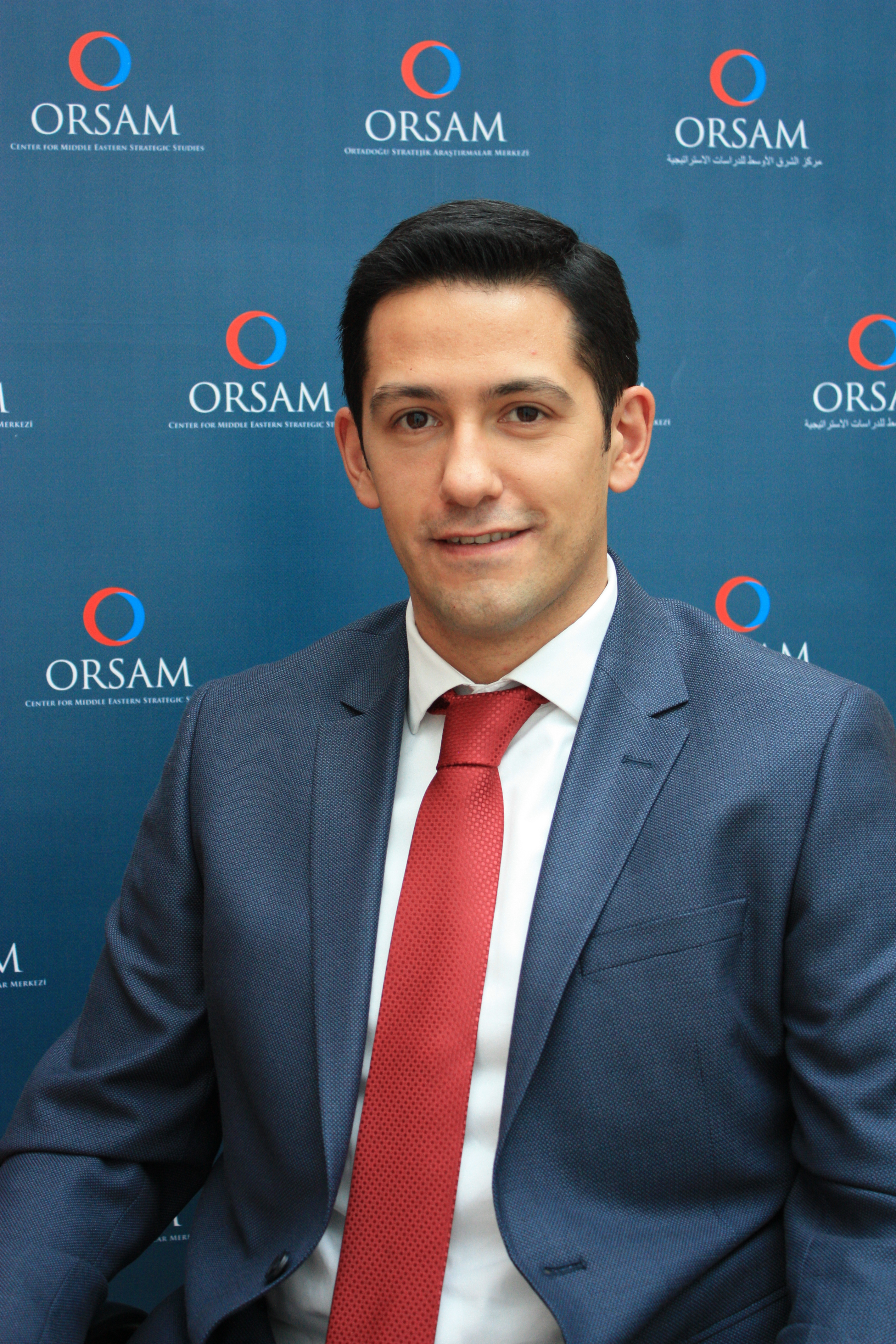
* This interview was made by ORSAM Middle East Specialists Oytun Orhan in İstanbul on 20 December 2012.