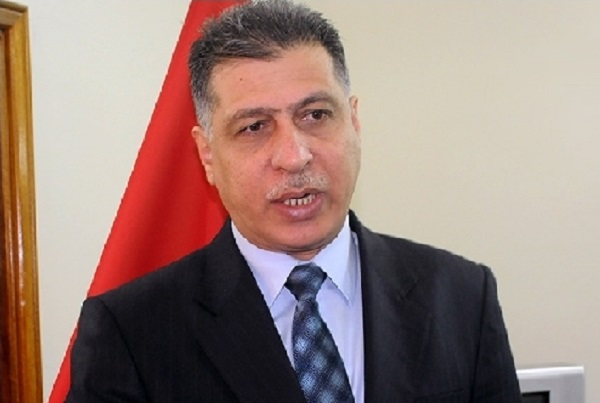
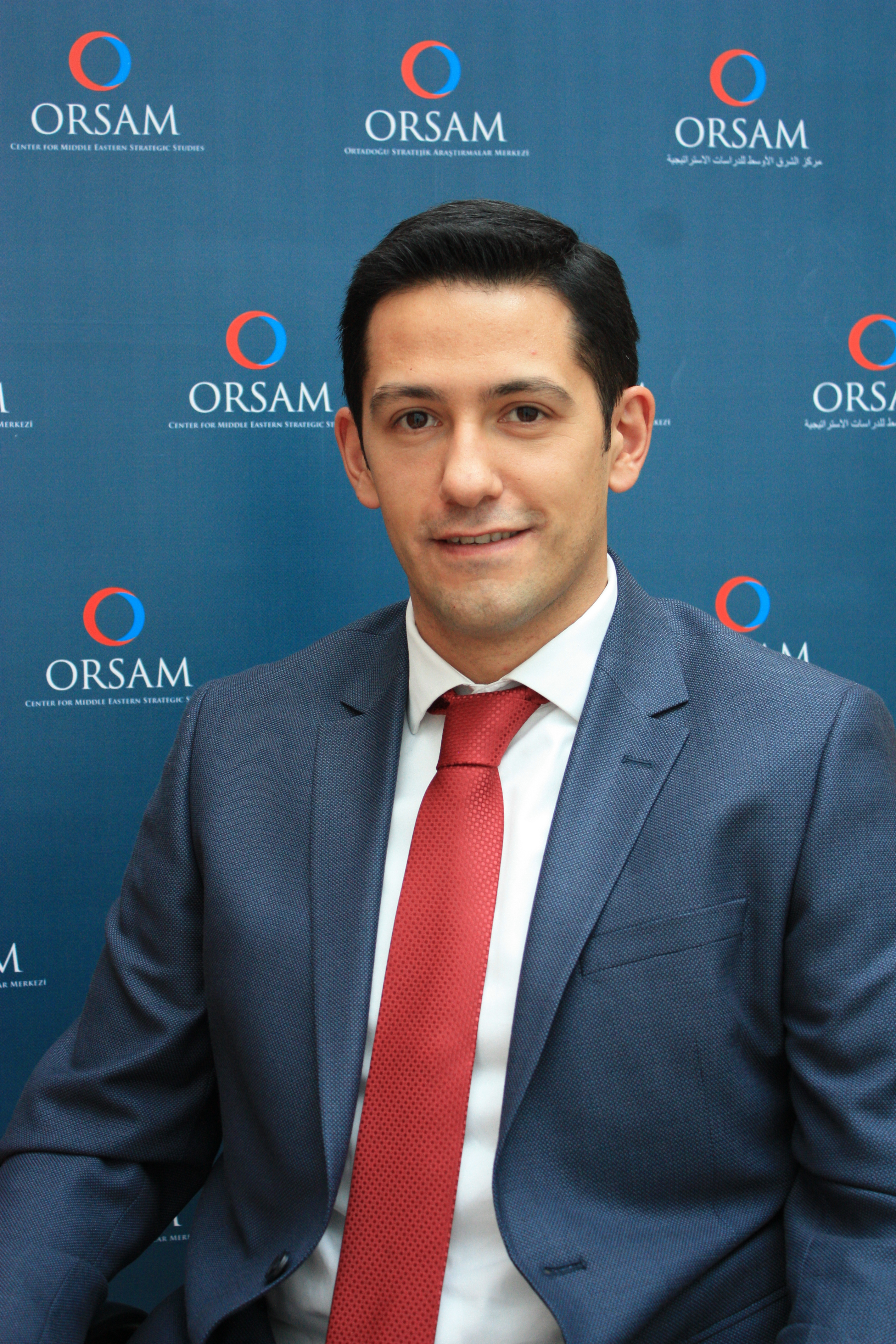
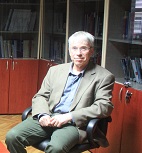
Yusuf Mehmed Sadiq: We are working for a good election to be held, but we cannot guarantee it. The Kurdistan Election Committee must be elected appropriately so that everyone can express their views.
We talked with Coordinator of the Goran Operation Research Unit Yusuf Muhammed Sadiq on the internal problems of the Kurdistan Regional Administration and its relations with the Iraqi Central Government.
ORSAM: Can you shortly tell us about yourself?
Yusuf Mehmed Sadiq: My name is Yusuf Mehmed Sadiq. I did my masters in the department of International Relations. I am candidate for political sciences doctorate. The subject of my thesis is “Factors Affecting the Politics of Kurdistan’s Future”. I am founder of the political coordinating room. I am a teacher at the Political Sciences Faculty at Suleymaniye University.
ORSAM: With your permission I would like to start off with a very general question. What can you say about the main issues currently discussed in the domestic politics of the Iraqi Kurdistan Region and the political situation?
Yusuf Mehmed Sadiq: As the Goran Operation, we are discussing the rules of the political games. There was no constitution in Kurdistan until today. We hope that the elections to be held will help in a constitution to being formed. We want a very free basis to being formed in Kurdistan and the electorate being able to cast their votes freely in the elections to be held in September 2013. It is a requirement for the election centers in Kurdistan to be free.
ORSAM: Do you expect presidential and parliamentary elections to be held in September?
Yusuf Mehmed Sadiq: We expect several elections to be held this year. One of them is the Kurdistan Parliamentary election. If the presidency law is used, then the presidential election should also be held this year. Elections of provincial councils should also take place.
ORSAM: You say that this year you will go to the ballot box 4 times. But most people say that no election will be held.
Yusuf Mehmed Sadiq: By law, these elections must be held. At least presidential and parliamentary elections should be held. But as an institution, we are going through a difficult time with the PUK and KDP. For instance, no parliamentary elections took place from 1992-2005. In February of 2009, provincial council and Kurdistan parliamentary elections should have been held. But they only put the parliamentary elections in July. They did not hold provincial council elections. PUK and KDP could play a game and delay the elections when they want. Thus, for these reasons we are going through a hard time with PUK and KDP. Therefore, what you say can also be true. The Kurdistan Parliamentary Elections, Kurdistan Provincial Council Elections or the Kurdistan Presidential Elections have been determined very carefully by law. In order to play around, they have formed a very loose law and therefore we are experiencing difficulties.
ORSAM: As the Goran Operation, you want the elections to be held. Then, when the elections are held, do you think that these elections will be suitable to democratic rules and be a balanced election, and that the structure of government established after the elections will function to the full degree? In other words, will it be like it used to be or will it change?
Yusuf Mehmed Sadiq: We are working for a good election to be held, but we cannot guarantee it. The Kurdistan Election Committee must be elected appropriately so that everyone can express their views. If proper elections are not held, we will consider those elections invalid. In Arab countries like Egypt, some part of the problems arose from the elections not being just.
ORSAM: Let’s presume that the elections were held and were not just. Goran and the other opposition parties did not accept these elections. As before, will the KDP AND PUK not continue this administration? Or in case of such a situation arising, what are the opposition parties planning on doing?
Yusuf Mehmed Sadiq: We will not accept the administration that will arise as a result of this situation. We will very easily resist them.
ORSAM: Will this resistance be through demonstrations as was the case in Suleymaniye in 2011?
Yusuf Mehmed Sadiq: It will not be right to say in advance what we will do, but demonstrations can also be one of the options.
ORSAM: Let’s speak a little about domestic politics. We both see and feel that the Goran Operation is a rising power in the Kurdistan Region. It also seems as if a serious leadership problem is experienced within PUK. Especially following Jalal Talabani’s illness, it seems as if a change can take place within PUK. It seems that this change can be effective in four ways: how do you think it’s effects will be on the domestic politics of Kurdistan, on the domestic politics of PUK, on Goran and on Iraq’s politics?
Yusuf Mehmed Sadiq: We can easily say that politically, PUK is one of the greatest powers in the region. As Kurdistan we are thinking of two possibilities. We can say that currently politicians of PUK are followers of KDP. PUK’s own basis is decreasing. Mam Jalal was able to form his own basis. Mam Jalal’s charisma and the characteristic he displayed within PUK has very much impressed PUK. Today, they do not even honestly tell Mam Jalal’s health situation. Right now there is no one in PUK who can take Mam Jalal’s place and can convince everyone. If PUK becomes the KDP’s follower, it will lose some of its basis and can conduct a work in Goran concerning it. According to the information obtained from the latest works of Mam Jalal, PUK can emerge with some powers of the KDP. After returning from his latest health check, Mam Jalal has held a meeting with Goran. In this meeting, he has said that there are some problems in Kurdistan and must be resolved and that concerning this issue, Kurdistan’s parliament system must be a parliamentary system. An agreement has been signed between PUK and Goran.
ORSAM: Is the main point in this document that Kurdistan must be governed by a parliamentary system?
Yusuf Mehmed Sadiq: The parliamentary system in Kurdistan should be like the one in Baghdad. In Baghdad, the President’s powers are limited. If these agreements are complied to, a political balance will develop in Kurdistan. The actors having a role within this balance are PUK, KDP, Goran and Islamists. There are several possibilities on their affects on PUK. The first of these possibilities is the sharing of the inheritance left by Jalal Talabani among themselves. This inheritance can be political, can be the tasks and significance within PUK. For instance, Barham Salih takes Jalal Talabani’s place in Baghdad. Kosrat Resul keeps Jalal Talabani’s place in the balances of Kurdistan’s domestic politics. Its partner Hero takes Jalal Talabani’s place within PUK. This is a tolerant and positive scenario for PUK.
ORSAM: Could Mullah Bakhtiyar have an influence within PUK?
Yusuf Mehmed Sadiq: Mullah Bakhtiyar is close with Hero (Talabani) Ibrahim Ahmed. Jalal Talabani’s son is married to Mullah Bakhtiyar’s daughter. In this situation, Jalal Talabani’s family can continue their domination over PUK. Hero Ibrahim Ahmed holds a significant portion of PUK’s base in his hands. The war on terrorism force, the intelligence force, security force and PUK’s finance is under the administration of Hero Ahmed. Now they are training Jalal Talabani’s son Kubat. Furthermore, they are dividing the powers of the security tasks between Pavyal and Aras Sheikh Cengi and its political aspect to Kubat. After Talabani, again Talabani’s family wants to maintain PUK’s domination. This scenario is a scenario that clearly shows itself. It seems that in the end some kind of disintegration will take place within PUK, because it is difficult to maintain unity. As Goran, we hope for the continuation of the talks we held with Talabani. A unity should take place so that we can repair Kurdistan’s politics. If PUK does not positively approach this unity, a major political conflict will emerge between PUK and Goran. In terms of Iraq, who would take Jalal Talabani’s place was not definite until now. Nuri Al-Maliki did not want an assistant foreman to be put in Jalal Talabani’s place. Jalal Talabani’s assistant foreman Hudayr Khuzai seems to be on Maliki’s list. The Iraqi President holds two important issues in its hands. As President, he can request from the government to withdraw its vote of confidence. He can submit it to the Parliament without any investigation. This is one of his authorities which are important. If the Prime Minister will want the Maliki Parliament to dissolve, the President’s approval will be required. These are two important issues.
The elections in the Parliament of Iraq are held through the Prime Minister’s request and the President’s approval. Therefore, by ignoring the other powers, Maliki wants a vice-president to be elected from his list. All efforts of the Iraqi government are to prove that Jalal Talabani’s health situation is not well and is unable to fulfill his tasks, because this way a vice-president will be appointed and this person is from Maliki’s list.
If Mam Jalal’s health situation does not recover, the person to be appointed as Mam Jalal’s assistant foreman will be Maliki’s advocate. The person coming to assist can request from Maliki to establish a government once again. Therefore, opponents of Maliki strive for someone else to being elected as President. The persons who can replace Jalal Talabani can also most probably be from the Sunnis. Currently, the Sunnis work the most for Ayad Allavi.
ORSAM: At this point, will the Kurds, as the Kurdish side, want to leave their post of Presidency?
Yusuf Mehmed Sadiq: Then, they can convince the Kurds for the Iraqi Parliament’s President to be from among the Kurds. Iran and Mesud Barzani will have to be willing and to approve this.
ORSAM: Let us address the relations between the Kurdistan Region and the Iraqi Central Government. There are extremely problematic relations between the two sides. What are the main problems between these two sides?
Yusuf Mehmed Sadiq: The main problem between the Baghdad administration and Kurdistan administration is the problem concerning revenue from petroleum. Many of the agreements the Kurdistan Region has made are for companies. What the region’s administration wants from Baghdad is for the money for these agreements to be paid. It seems as if the problems of disputed regions have been ignored.
ORSAM: How do you see the future of relations between the two sides?
Yusuf Mehmed Sadiq: If the Kurdistan Region does not insist upon the disputed regions, then the Iraqi Government can very easily pay the costs of these agreements. Disagreements concerning the issue of money can easily be settled. Disagreements concerning places are somewhat difficult. I want to provide a small note. Last year you followed the politics of the Kurdistan Region. On Nawruz, Mesud Barzani had delivered a very heated statement. Maliki had said “I know why Mesud Barzani is angry. He wants 2 billion dollars. I will give the money he wants; it’s not my father’s money. We can only agree upon the issue of finance”. Exactly in September 2012, the cost of 2 billion dollars for the petroleum agreements was paid.
ORSAM: We can see that concerning the Syrian Kurds, the KDP and PUK have come to the forefront. Does Goran remain in the background regarding the issue of Syrian Kurds or does it choose to stay in the background? As Goran, what is your view towards the Syrian Kurds?
Yusuf Mehmed Sadiq: There have been many coming to us from among the Syrian Kurds. We do not want the Kurds of Syria to be divided between PUK, the KDP and Goran. First Mesud Barzani was against the insurgency in Syria. Back then, Goran was supporting the insurgency of the Kurds in Syria and the Kurds. From that day until now, Goran has wanted the Syrian Kurds to reach an agreement between their selves. It has also suggested for an agreement to be reached with the other parties of Syria.
ORSAM: How do you evaluate the relations between Turkey and Goran? What are the things that must be done for the development of relations?
Yusuf Mehmed Sadiq: Whether in the central government or in Kurdistan, we are holding talks with the diplomatic missions of Turkey in Iraq. Our representatives visited Turkey several times and held talks with the responsible. We believe that Turkey is continuing its relations only through the KDP. This unilateral relationship established by Turkey can negatively influence Turkey’s politics in the future. The KDP is an important power in Kurdistan. But it does not encompass entire Kurdistan. We can show Russia’s unilateral relationship with Bashar al-Assad as an example. Today, this relationship can constitute a disadvantage for Russia. We hope that relations between Kurdistan and Turkey will not be between the powers, but between the two nations. Relations between nations will be stronger, continuing and solid. As Goran, we hope that our relations will Turkey will be on good terms, because in our eyes the Turkish government is pursuing a firm and continually recovering policy. Today, the government in Turkey has been able to bring stability to its politics by resolving Turkey’s political, financial and domestic problems. We hope that Turkey’s Kurdistan policy will also reach stability.
ORSAM: In the recent months, Russia has started calling upon the Syrian Kurds. In the recent days, Mesud Barzani went. Does Russia have efforts to develop its relations with Goran?
Yusuf Mehmed Sadiq: We want the Kurdistan Regional Administration to have good relations with regional and world states. We would not want the government of Kurdistan to be a part of the policies of other countries. Russia has a certain purpose. Russia wants to meddle into all relations. This desire is also to the disadvantage of Turkey. Turkey wants to be a bridge between the Kurdistan Region and Europe. The climate of Kurdistan will be the essential place for Turkey. Therefore, Russia being in Kurdistan is not to Turkey’s advantage. Last of all I would like to say this: Goran wants to establish relations with the other political parties and states not as a party, but as government.
ORSAM: Thank you for sparing some time to us.
* This interview has been conducted on 18 February 2013 by ORSAM specialists in the city of Arbil of Iraq.