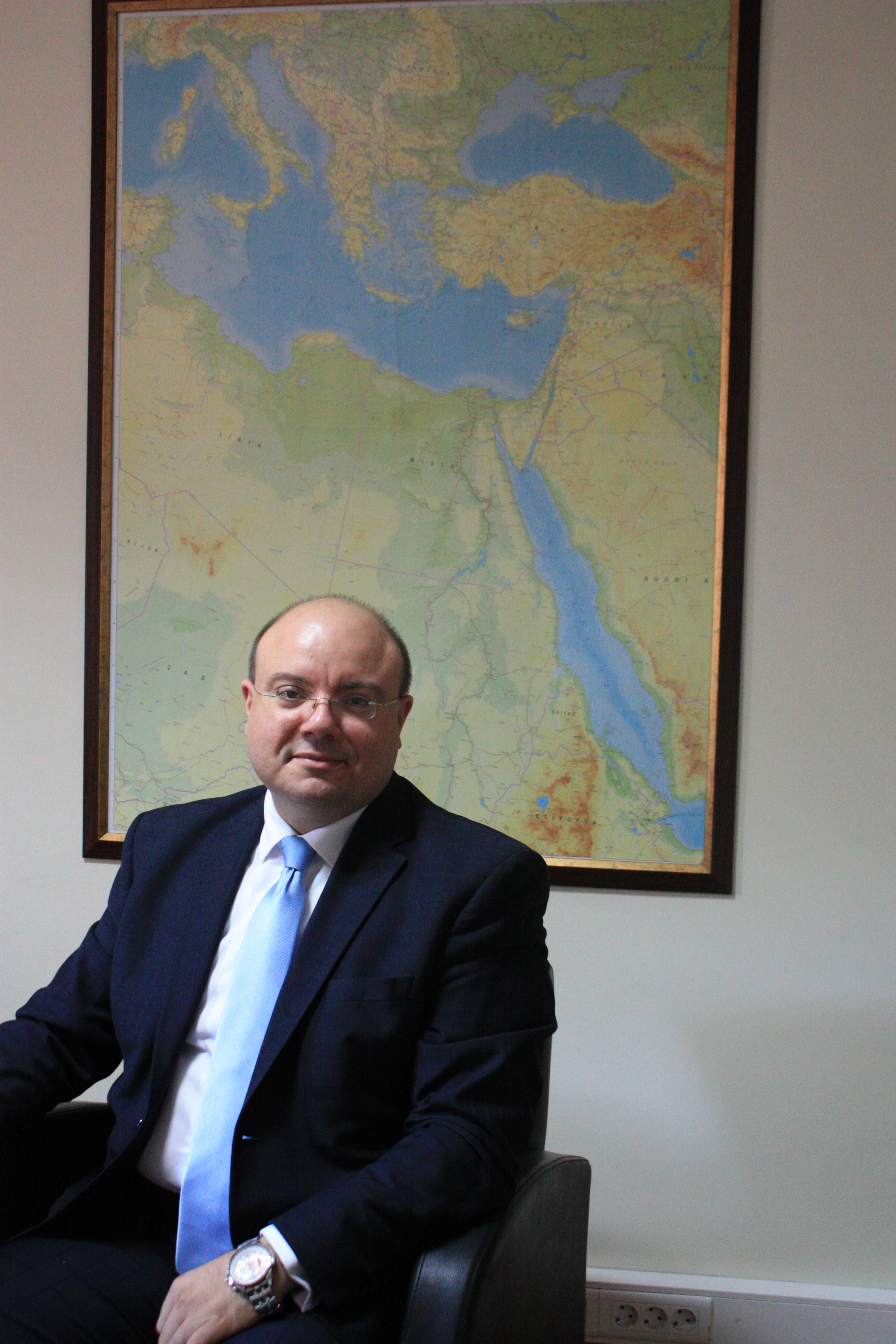
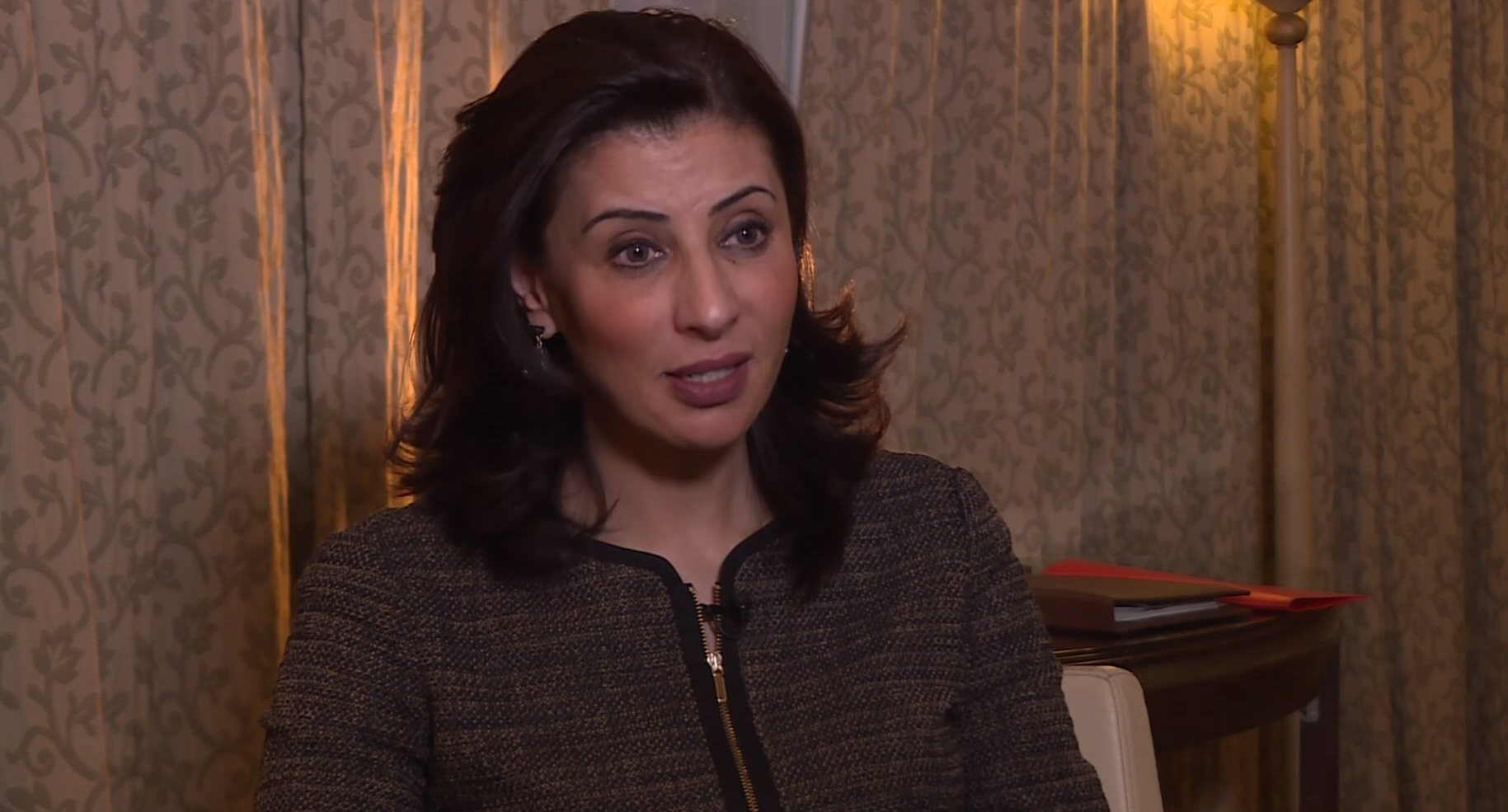
The family of Hisham Al Khatib had been repressed for many years before the civil war. His uncles were imprisoned for years, and were tortured throughout their imprisonment. He works in an aid organization called Sanid Al Hayriya.
ORSAM: Could you tell us about yourself and your life in Syria before the civil war?
Hisham Al Khatib: My name is Hisham Al KKhatib. I am from Muarrat Hurama village affiliated to Kafer Nebil district of Idlib province. I graduated from religious studies at Damascus University in 2007. My father and grandfather were preacher.
ORSAM: Could you tell us about the outbreak of the revolution and the role you assumed in the revolution?
Hisham Al Khatib: Indeed the revolution started a long time ago. Our village was looking forward to it. My family had to face very difficult conditions in 1980s. My uncle Ibrahim Al Khatibstayed in prison for 11 years. My other uncle Abdulrezzak Al Khatibwas imprisoned for 6 years. They were tortured throughout his imprisonment. Therefore, we joined the revolution when the revolution started. I was the Imam of Sidi Mukdad Mosque in Damascus. I pointed out the tyrants in my khutbah and preaches. I believe that this revolution is a war between believers and misbelievers. We have been repressed for 42 years. We could never freely express our views.
First of all, we took part in demonstrations. I could not participate in the demonstrations in my neighborhood as I am Imam and preacher. I went to Berza and participated the demonstrations over there in order not to be arrested and to provide my security.
In early May 2011, hundreds of citizens organized demonstrations after the friday prayer in Al Hasan Mosque. I participated along with them. We were arrested by Shabihas and security forces. First of all, we were forced to get in a car. We were beaten all the way. Some of us were beaten until our shoulders were broken. We were brought to the police department, and they took us three floors below. Each of us was put in different rooms. The size of rooms were about a square meter. They let us go to toilet only once a day. Food was very bad. My family and my fiance could not hear from me for five days. One day, a repairmen came to fix the broken pipes. He looked familiar from somewhere. I remembered his name and called after him. He looked towards me for a second, but he got scared because of the surveillance camera. Then he asked his friends to stand in front of the cameras and approached towards me. When he recognized me, he immediately left there on the ground of lack of equipment, and let my family know where I was. Within the same day, somebody whose identity I cannot reveal came and talked to the chief of department about me.
I was sent from the cell where I stayed all alone to a wing where other prisoners stayed together. Although it was very bad inside the wings, it was good to at least have someone to talk to. Besides, I could go to toilet whenever I wanted.
We were three people having been arrested from taking part in demonstrations. Others had been arrested from crimes such as theft or drug traffic. Those prisoners were angry at us, and “Why did you participate in demonstrations, you inglorious!” they swore at us. I saw a variety of torture instruments in the torture room. During the torture, “You were saying 'Allah!' in the protest demonstration. 'We have no one but you,' you were saying. Why does not He come and save you now?,” they repeated. There was an officer coming from Idlib among those who tortured me. This officer said to me that he would save me from torture after fingerprinting. He did so. The following day, they brought us to political bureau. They rearrested those who had facebook account. They sent the rest of us to prosecution. I pled not guilty to the charges directed against me. Then they released me.
ORSAM: Is it considered a crime to have a Facebook account in Syria?
Hisham Al Khatib: Yes, it was considered crime. Two students were arrested from this crime.
After being released, I went back to carry out revolutionary activities. I started to become organizedly active also with the influence of what I went through. In the first place, 15 of us started to smuggle medicine to Homs. Then we started to provide food products. While doing so, we never gave our real names to those who asked.
On 26 December 2011, a Palestinian friend of mine and I were reading in the Mosque. This friend of mine then became the head of battalion in Emeviyyin Brigade. His both brothers had been martyrized. All of a sudden someone from Shabiha entered in the Mosque. He said he wanted to talk to me outside for a couple of minutes. They arrested me when I went outside. At that moment, I thought they learned we were smuggling medicine. I was taken to a room with more than a hundred people. Someone who had just been tortured came and sat besides me. We talked for a while and he told me about the tortures he was subjected to. Then they took me to the interrogation room. During the interrogation, I saw that I was charged with the attempt to murder military men. I denied all the accusations directed against me and signed under the statement. I was taken back to prison. Some of the prisoners were Sudanese and some other were Lebanese. They had been arrested randomly. Therefore, the reaction among the people was on the rise. The security forces arbitrarily arrested someone from each family, and it was aimed to spread fear among the public. However, this policy brought along an opposite situation. The participation in the revolution gradually increased. According to what I heard, the whole family of 200 members participated the revolution after a 19-year-old girl had been killed by a sniper.
The accusations directed against me changed the following day. This time, they alleged that I carried arms and was involved in attempted murder against military men. Then I was investigated for Sheikh Ramazan Buti. They asked why I was not a moderate person like him. I put in a good word in for Sheikh, and told them he was my teacher. The officer who ran the query did not believe me. They bastinadoed and hit me for 120 times. I lost my consciousness and fainted.
During those days, Arab observers came to Syria. They started to visit prisons. The warden came and announced that an amnesty had been granted by the President. Then I understood that they wanted to transfer the prisoners to another prison. Exactly what I said happened. They started to clear all the evidence of torture from the prison. They transferred us prisoners to the Security Training Center called Neche. I met various people over there. For instance, I saw a singer named Sari Fadda who was also arrested. Yet, the singer always used to sing songs for Bashar Assad. Whether pro-regime or not, the regime adopted the same attitude.
On the 5th day of my imprisonment, they called me and Muhammad Suyufi. They said that Ali Memluk made an exception and that we would be released. Afterwards, we were taken to court. We were released within the following 4 days.
When I was released, I heard that my mother had been hospitalized and was in coma. I immediately went to see her. She must have sensed I was there that she opened her eyes. But she could not move as she was paralyzed. I had to go back to Damascus. But every night I saw my mother in my dream. 20 days later, I heard that my mother had passed away.
I continued to participate in revolutionary activities in Damascus. I got in touch with the same group. This time, we started to smuggle arms. We worked in Kazzaz district of Damascus. But we began to hide the weapons in other places as it was a risky area. We smuggled hand grenades and various small arms.
When I came back home on a Ramadan evening, I saw a military convoy entering in our neighborhood. In the convoy, there were 12 tanks and a great number Shabiha forces. They exploded the transformer in the neighborhood in the first place. The Shias from Seyide Zainab district killed 6 people. The older than 15 year-olds of the neighborhood were mobilized. They took to the streets through the weapons they provided with their own means. Then we realized that it was time to use the weapons we had stored back then. We opened the storages and started to distribute weapons.
As I was the first person to be arrested, I fled the neighborhood as soon as possible and went to Daraa. Then I went to village. My village was within the liberated area. I continued to keep in touch with my friends. Then I heard that, the resistance was ended as a result of an air intervention after two months of resistance. The population had to move to another district of Damascus.
I continued to participate in revolutionary activities in my village. Then I went to Izaz district of Aleppo. Religious courts had been established in Izaz. The task of the aforesaid courts is to find a solution to problems among the people. I worked for a week in those courts. Then I began to work in an aid organization called “Sanid Al Hayriya”. Thank God, this organization carry out very helpful activities. We became more popular in Syria. In the first stage, we distributed 5000 tons of flour. Then we received and distributed 5 million liters of fuel with the approval of Turkey's Ministry of Energy. Now we also provide other aid.
In addition, Sanid Al Hayriya began to carry out important projects outside of Syria as well. For example, we provide bread for 35.000 people in the camps on a daily basis.
ORSAM: What do you consider about Turkey's policies?
Hisham Al Khatib: The Turkish government is the opposite of Arab countries. While the Arab population support us, their governments do not. They act in accordance with the instructions of the U.S. On the other hand, although the Turkish government stands behind us, the majority of Turkish people are opportunist. They used to help us for God's sake beforehand. Now, on the other hand, they use Syrians. All in all, the Turkish government is like the Arab population, while the Turkish population started to look like Arab governments.
ORSAM: What do you think about the sectarianism in Syria?
Hisham Al Khatib: The regime started to create sectarianism among the people four decades ago. Hafez started, and Bashar maintained it. Because they knew that one day revolution would take place. They believed they could oppress the revolution through sectarianism.
Sectarianism was in all institutions of the state. For instance in the army, all officers were Alawite. In fact, the view of an ordinary Alawite officer or constable was more influential. This happened also in political life.
ORSAM: What about the relations between Alawites and other sects?
Hisham Al Khatib: I wandered around various districts of Syria. I saw that Alawites constituted a group and all other sectarian and ethnic groups constituted another groups in Syria. Briefly, the Syrian people were a group, while Alawites were another.
They unconditionally appointed Alawites to Security. Sunnis, on the other hand, were appointed in accordance with certain conditions. A friend of mine could barely achieve to enter in security. One day, he wanted to marry a girl. She was investigated. Her uncle was known as a member of Muslim Brotherhood. They asked him either to marry the girl, or to quit his job. My friend married that girl. And he took part in the revolution when it broke out.
The traffic police spoke the Alawite dialect to intimidate the people and thus to make them give a bribe.
Of course, there are both bad and good people in every nation. But, as a matter of fact, we started not to like even the good ones because of practices of the regime. I think that it is a normal reaction.
ORSAM: What do you think about Muaz Khatiband his recent attitude?
Hisham Al Khatib: I was acquainted with Muaz KKhatib. I know him as a sheikh, not as a politician. I attended the preach and lectures he gave in Emevi Mosque. Based on my observations, our Sheikh started to gain political experiences. I see that he has a steady political view. Within the National Coalition, only he himself addresses the pain of the people. He has been striving to put an end to the war. His main objective is to stop bombardments , and to make it possible for people to come back their homes. Concordantly, he aims at making Bashar Assad and his partisans to leave the country.
Some political parties call for Bashar Assad to be caught and executed. I think it is nothing but making a scene. Hence, I support Khatib's recent approaches. In fact, although our Prophet concluded the Hudaybiya peace treaty despite the fact that 70 companions had been martyrized. He forgave everyone after entering Mecca. I pray to God to help Muaz Khatib. I hope that the Syrian people do not suffer agony anymore.
ORSAM: Is there a message that you would like to give to the Syrian people?
Hisham Al Khatib: I would like them not to struggle for power. Because this is a mortal world. Take Riaz Assad example, for instance. When the revolution broke out, he was after many other things. But now, nobody even remembers it. Those who want to contribute do it silently.
*This interview was conducted by Lina Zekeriya Saguj in Reyhanlı district of Hatay on 26 February 2013.