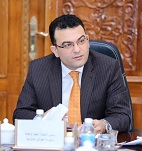
Abdulhamid Hajji Darwish: “Turkey's Solving the Kurdish Problem Would Solve the Kurdish Problem in Tehran, Syria and İraq as Well.”
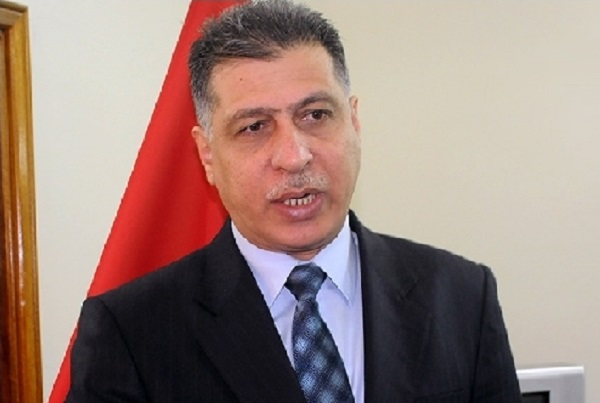
Abdulhamid Darwish is the most experienced and prominent figure of Kurdish politics in Syria. Darwish, who took part in the first political movement that was established by Kurds in Syria in 1957, has been in active politics since then. He was imprisoned and had to live abroad for many years. Darwish, who paid prices to this end, became one of the prominent figures in Kurdish politics following the popular movement in Syria. We had the opportunity to talk to Abdulhamid Hajji Darwish, who is still the Secretary of the Kurdish Progressive Democratic Party in Syria. Hajji Darwish shared his opinion with us on the future of Syria, position of Kurds, his own party and on the relations with Turkey.
ORSAM: First of all, could you shortly explain your political background?
Abdulhamid Hajji Darwish: I am Abdulhamid Darwish. I started my political career by forming a party in 1957. Right now, apart from one person, no one else is left that was by my side when I had first began my political life. My other friends have passed away. I am from Darbasiyah found in the area of Jazeera. I started political activities in a country where dictatorship prevailed since 1958. Under the leadership of Gamal Abdul Nasser, a dictator and fascist system spread to the Middle East. Since that date, I was either in prison or overseas. After Abdel Nasser, the Ba’ath Party came to power. I hope that the Turkish Republic will never encounter a party like the Ba’ath throughout its history, because the Ba’ath party is a racist and fascist party. It carries no morality that is either appropriate to the past or the present. Dictators have also come to power in Turkey and have ruled Turkey. But dictators tried people in Turkey and gave punishment to that person. They never punished anyone’s mother, sibling or relatives. My family was put in prison many times. They paid a price for only being my relatives. I hope that you won’t ask too many questions, because the answers I will provide concerning my life will not be pleasant.
ORSAM: Could you give us information about the Pêşverû Party you are still the Secretary of? Could you give information on issues like the structure of the organization, the regions in which you are strong and your proposals for a solution to the Kurdish problem in Syria?
Abdulhamid Hajji Darwish: We are present in all regions of Syria. We are a party that has gained acceptance within Syria. The Kurdish problem is a major problem for Syria that has to be resolved. The resolution of this problem depends on the resolution of the general problems in Syria. The resolution of the Kurdish problem will constitute a part of the resolution of the democratic problems in Syria, because this problem cannot be resolved without democracy being obtained in Syria. Therefore, before anything else, we are calling for democracy in Syria. We are struggling to eliminate the fascist government in Syria that is far from democracy. Our goal is to obtain democracy in Syria. The Syrian Kurds can gain their rights in this manner. Some of them misunderstand our party. They are biased towards our party. We want the Kurds and Arabs to live together in Syria. Our same view also applies to Turkey, Iraq and Iran. In all of these countries we want them to live in democracy, brotherhood and peace. Our desire is not to break away from Syria as some believe. The Ba’ath Party also thinks that we want to separate.
ORSAM: For many years you are in the center of politics. Therefore you know the Assad regime closely. How do you see the future of the regime in Syria? How do you think the current conflict will end up?
Abdulhamid Hajji Darwish: Today Syria is going through a very difficult time. The problems in Syria will not end with military solutions. The only visible solution –and I personally support this solution- is the abolition of the dictatorship system in Syria. An international force is required to protect Syria after Assad. I made this proposal a year ago. Assad’s departure will not resolve the current problems. We will enter a dark tunnel after Assad. The Free Syrian Army is not on its own. Everyone is putting up a struggle with their own ideas. There are numerous organizations struggling under different names. After Assad, the supervision of the UN Security Council can be necessary in Syria, because if a force is not able to be formed after Assad, the Middle East could remain in a ring of fire. Unfortunately, even the Americans have overlooked this until now, because they have not made any attempts to send Assad and fix the situation in Syria. Therefore, I greatly fear a Syria after Assad.
ORSAM: The Syrian National Coalition Leader Mouaz al-Khatib made a statement that “negotiations can be held with the regime”. Do you think that after this phase a political settlement will be possible? Secondly, could there be a risk of the country actually splitting after an international peacekeeping force arriving in Syria?
Abdulhamid Hajji Darwish: Actually if an international peacekeeping force does not enter Syria can everything take place. A peaceful solution is an acceptable, but difficult process. Who is the Free Syrian Army? There are many armies in different thoughts and in different organizations. In fact, even according to Bashar al-Assad, it has not been Bashar al-Assad himself, but the police forces and the army who have interfered in the incidents. The peaceful resolution of this problem is difficult. But peaceful solutions are to the benefit of the region and the Syrian population.
ORSAM: So, convincing the Syrian military opposition and the Syrian regime for a political resolution is very difficult. Therefore are you saying that it is necessary for an international peacekeeping force to enter Syria and to forcibly direct the parties towards peace?
Abdulhamid Hajji Darwish: Yes. That is what I think. I never believed in a military solution. A military solution –no matter from which side it comes from- will complicate the affairs in Syria even more. The best side is the opposition. However, the opposition is not a single view, single face, and single hand. If Assad brings a military settlement, he will turn Syria into a ring of fire. My view is that an international force should be a part of the resolution. I conveyed this view to many diplomats also.
ORSAM: How do you evaluate the talks the Kurdish Supreme Council, considered as the decision making organ of the Syrian Kurds, held with the Syrian National Coalition? Is it possible to reach a common ground?
Abdulhamid Hajji Darwish: In my opinion the Kurdish Supreme Council is the supreme council of the Kurdish opposition and the Syrian National Coalition must accept to hold a dialogue with the Kurdish Supreme Council. We do not have major, harassing wishes. The chauvinist minded Arabs in the Syrian National Coalition exaggerate this. About a month ago we met with Leader of the Syrian National Coalition Mouaz al-Khatib. He said that he has a positive look on holding talks with the Kurdish Supreme Council and on reaching a settlement. But there are some issues preventing these talks. These obstacles are formed by Kurds, Arabs and neighboring countries.
ORSAM: In the previous days, we read your statement in a newspaper published in the Iraqi Kurdish Region. It wrote that you had said the Syrian Kurds trained in the Iraqi Kurdish Region will be sent to the Syrian Kurdish region. Is this statement correct?
Abdulhamid Hajji Darwish: I did not make such a statement. I do not favor the sending of Kurds to Syria from Iraqi Kurdistan. I conveyed my stance to my brother Massoud Barzani. Sending power from Iraq to Syria will be a major mistake. Syria’s problem will be settled with the Syrian Kurds, the Syrian Arabs, the Syrian Turks and the Syrians of Syria. I made no such statement. In fact I can make a completely opposite statement to this. I was subjected to cruelty, annihilation, and torture. But I never changed my ideas and principles. Right now I am in a more comfortable situation compared to the past and I will not say anything outside of what I believe.
ORSAM: The PYD is one of the most powerful and organized parties of the Syrian Kurds. What do you think about the PYD’s role within the Syrian Kurdish opposition and its possession of a strong armed wing?
Abdulhamid Hajji Darwish: The military significance of the PYD is seen clearly in Syria. They have roles within the Kurdish opposition. I believe that the resolution of all these problems will take place with achieving democracy in Syria. Then, the scale beams and balances will change.
ORSAM: Last of all, what kinds of expectations do the Syrian Kurds have from Turkey?
Abdulhamid Hajji Darwish: The key to the settlement of the problems in the region is in Turkey’s hands. I also expressed this during the Rights and Freedoms Party’s conference in Turkey. Erdoğan has taken important steps in Turkey’s development and progress. With the policy he has pursued, he has provided Turkey with great services. If this continues and these steps continue to be taken regarding the Kurdish issue, he will take his place in history years later in a pleasant manner. I believe that he is taking positive steps towards the Kurds. But these steps must be continued and the problem must be resolved. Turkey has an important role in the region and a good history. It must continue on the path of resolving its own problems. The AKP has served Turkey under the chairmanship of Recep Tayyip Erdoğan. I previously visited Turkey several times. I went to Diyarbakir and Istanbul. There are still some deficiencies in the areas the Kurds live. I hope with all my heart that Turkey will resolve its own problems and the problems in the region. Whenever anyone goes Turkey, they sense that Turkey is a developed and democratic country. This perception leaves a good impression on the people in the region. Turkey resolving its Kurdish problem will also resolve the Kurdish problem in Teheran, Syria and Iraq and this situation will turn Turkey into being a torch. I hope that the democratic people in Turkey will strive to resolve all these problems.
ORSAM: Thank you.
* This interview has been conducted on 24 February 2013 by ORSAM specialists in the city of Sulaymaniyah of Iraq.