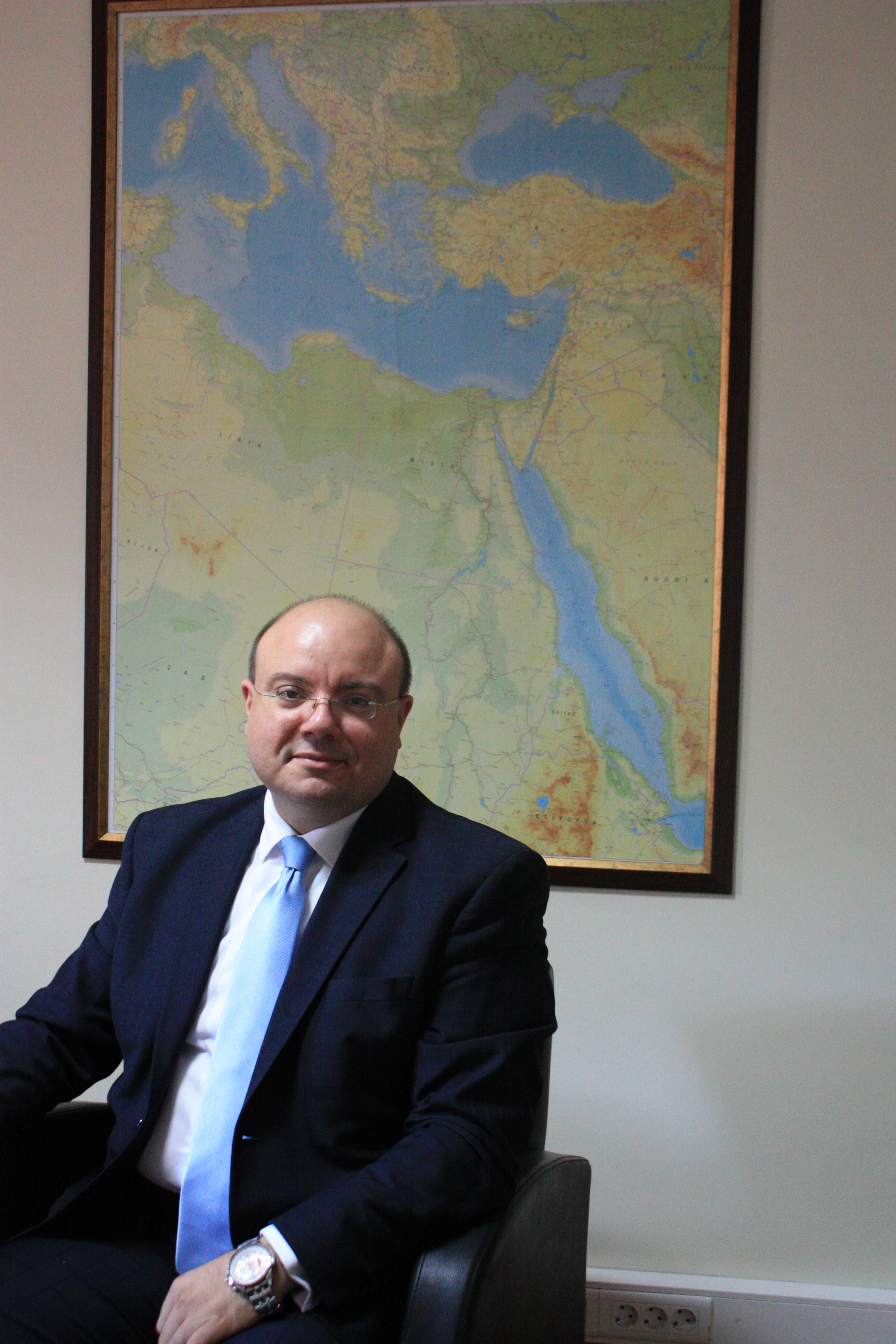
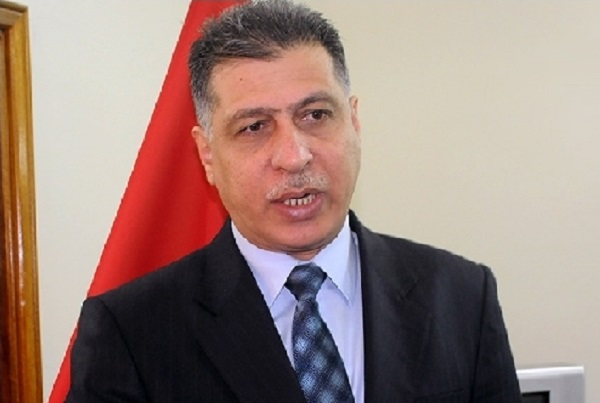
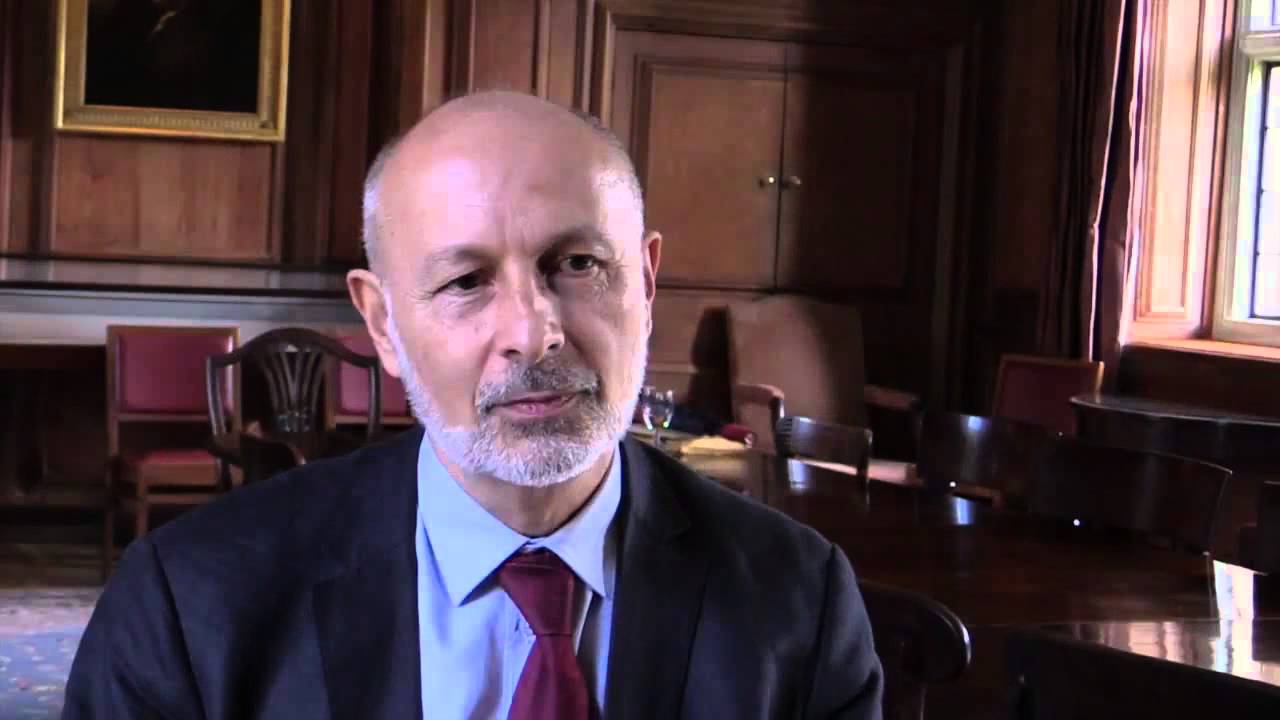
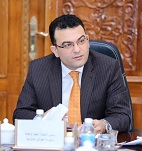
Gulf Research Center is one of the most prominent research centers in the Middle East, and well respected in the world. We had the chance to talk to Mustafa Alani, Senior Advisor and the Director of the Department of Security and Defense Studies, in Jordan. Alani shared his opinion on the Gulf countries' approach to the Arab Spring and Syria issue, their perceptions on Iran, and their views on Turkey's regional role.
MUSTAFA ALANI: “GULF COUNTRIES REFRAINING FROM UPHEAVALS SINCE THE BEGINNING”
ORSAM: How do the Gulf countries perceive the Arab Spring and Syrian uprising, as a threat or as an opportunity?
Mustafa ALANI: The GCC [Gulf Cooperation Council] countries feared the uprising from the beginning. They don't wish to see any problem in Syria. They understand the implications that the destabilization of Syria could have in the region. So they spent a lot of time trying to convince the Syrian regime to reform itself. But they lost faith as they realized that [Syrian President] Bashar al-Assad and his regime were not going to respond favorably to their demands and would stick to their position. This made the Syrian regime lose its credibility and legitimacy. And there is no chance that they will [continue] relations with this regime. … So the GCC policy is very clear that the regime must change in Syria and a democratic system should be established.
ORSAM: Do Gulf countries fear that instability could spread to their region?
Mustafa ALANI: Definitely. We think that the regime supported Iran and Hezbollah. Syria had a policy which regionalized the conflict. They opened a front in Turkey with terrorism, in Lebanon, and they are putting pressure on Jordan. So the regime has a policy to regionalize the conflict for a simple reason: If the conflict becomes regional, the pressure on the regime itself is going to be far less important [than] it is now. So we believe that this is the plan of the regime and we try not to help the regime to implement this plan. So we understand the implications of the problems in Syria; we understand the consequences of regionalization. But I think we have reached the point of no return. The regime cannot go back to the old days and control the country the way it used to control it and I think we have crossed the red line now. There is no compromise possible on this. Yes, there will be a high price to pay, we understand that, but we think it is worth paying the price for the removal of the regime.
ORSAM: Do you see a high risk of increasing sectarianism in the Middle East? If yes, what does that mean for the Gulf region?
Mustafa ALANI: It's possible. I mean the separation of Kurdistan from Iraq is possible. It gradually became more acceptable in Iraq. It has been 20 years now that Kurdistan in northern Iraq is … separated from the rest of the country. So I think the question is what sort of Kurdistan? Of what size? Because the problem is not whether Kurdistan is going to be independent or not. The problem is whether or not Kurdistan is going to control the disputed areas, like Kirkuk. I don't think there is a major concern about Kurdistan [becoming] independent within three or four years. However, the conflict is going to start over the disputed areas.
We believe that sectarianism is supported by the Iranians because this is the language they can speak to the Arabs, not as Arabs themselves but as Shias. This is where they can appeal to Iraqi people, Lebanese people or even Syrian people: the unity of Shiism as opposed to national or Arab nationalism. This is the card played by the Iranians, even in Bahrain. But we look at it as a controllable risk. There are a lot of measures which can counter act this — not in Iraq, because the US contributes to sectarianism in the country. However, outside Iraq, we think that it is still controllable. The problem in Syria is that there is a possibility that the Alawites will establish a sort of mini-state similar to Hezbollah. This is possible because if the regime is to collapse, Iran will lose its influence in Syria. By our calculation, it is thus possible that the Iranians are going to help to establish a Hezbollah-like mini-state in Syria in order to destabilize the new regime. So, certainly, sectarianism is going to be used for the disintegration of the regime.
Therefore, sectarianism definitely constitutes a serious threat for the integrity of Middle East countries and it is going to be used. The only way is to counter it, but it is not going to be necessarily successful. Sectarian entities could establish [themselves] in the region in Syria or even in Iraq.
ORSAM: How do you perceive Iran's role in the Middle East?
Mustafa ALANI: The nuclear issue is one issue. But we are more concerned and focused on Iran's interventionist policy. The interventionist policy is basically undermining the stability of our country and you can see its bad effects in Lebanon. If they repeat their experiences of Hezbollah in Yemen or Bahrain, or somewhere else, we will also face some major challenges. So the nuclear issue is only one issue.
I think that if you assess the Iranian situation, it is wrong to focus exclusively on the nuclear issue. The nuclear issue is only part of the problem and we believe that it is the international community's issue. It's not necessarily ours. We refuse to be in the front seat here. We have enough problems with Iran; it's the international community's role to take care of this issue. We are not going to be on the frontline. But we implement all the international US/EU sanctions. We did everything that was in our power. And we think that military intervention should not be removed from the table if there is a necessity for such an intervention. We still believe, though, that there is no urgent necessity. But if such an intervention becomes a reality, we will not object to a military action. In short, the major issue with Iran is not the nuclear issue but its interventionist policy in Bahrain, in Iraq, in Lebanon, in Syria and Yemen.
And the problem is that we have no capability to intervene. But we have no intention to interfere into Iranian internal policy. At the time of Saddam [Hussein], he would have interfered in internal policy to refrain them from intervening, and it was working very well. However, we lost this capability and we don't have anymore the possibility to make a counter-interventionist policy to make the Iranians understand the cost of this.
We cannot turn a blind eye. Iran is a neighbor and an Islamic country, and our intention is to establish a good relation[ship], but this good relation[ship] needs to be built. Yet, the Iranians never took any confidence-building measure to change our perception. And we found out that their intelligence groups were working inside the society in Kuwait and in Bahrain. So the problem with Iran is a problem of trust: Trust is missing. And I don't think there is any hope that the relation[ship] will be improved.
Moreover, we are worried that the US could solve the problem with Iran behind our back. We have no trust in the US as we have no trust in Iran. Because of the behavior of the US in Afghanistan and in Iraq, we don't trust them. There is a possibility in our calculation that the US could do concessions to Iran and they would agree on certain terms. The agreement doesn't concern us, but we don't want this agreement to [harm] our strategic interests.
ORSAM: What do you think about Turkey's role over the last decade? There is also increasing cooperation between the GCC and Turkey. What do you think about that process?
Mustafa ALANI: Definitely we see Turkey becoming more involved in the Middle East as a positive sign. It is important because Turkey, Iran and Israel are the three main non-Arab countries in the region and we have a bad relation[ship] with the last two. Therefore, Turkey could be a balancing power between us. Definitely it is important. But the problem with Turkey is that it is not a military intelligence power. Turkey has a soft power and an economic power but not a military power. So there is no balance here. Iran and Israel are intelligence and military powers but Turkey is not. However, it is in our interest as much as Turkey's interest to bring balance in the region.
ORSAM: Do you mean that Turkey should be more involved in the region as a military and intelligence power?
Mustafa ALANI: Yes, because the two other powers are not economic but military and intelligence forces. Turkey is a power with economic and diplomatic muscles, but Turkey's soft power is not going to work all the time. Of course, we are not encouraging Turkey to become militarized, but at the same time we think that there is something missing in the equation. Turkish power is not seen as a military power.
ORSAM: Do you think Turkey should take a side in the Middle East conflicts or should rather play a mediating role?
Mustafa ALANI: Turkey never interfered in Gulf countries' internal affairs, compared to Iran. Recently, however, Turkey changed this. Intervention in Kurdistan to protect its own strategic interests or the Turkish attitude during the Arab Spring or towards Libya could be beneficial, but at the same time could backfire. Indeed, the image of Turkey as a big and important country in the region but not interfering in internal affairs unlike Iran could be harmed. I don't know the direction Turkey is going to take because some interventions are welcomed and necessary, but Turkey should be very selective and look at the consequences its interventions could have.
ORSAM: What do you think Turkey's role should be in Syria?
Mustafa ALANI: I think Turkey should make a joint application with Jordan because both suffer from security problems and refugee problems. What the Turkish government did in northern Iraq in 1991 needs to be repeated here. It would be outside the UN Security Council because the Russians will not accept it. What happened in 1991 — people can say that there were different circumstances, but the reasons and the causes are the same. So I think this could help a lot the Syrian people. Syria would not be a Turkish safe haven but a regional safe haven. This would also send a strong signal: Turkey does not only take defensive steps but can also take offensive steps to help the Syrian people. This would be a humanitarian intervention which could be justified by three years of war.
Besides, Turkey is on the frontline, so it has an interest in what is happening in Syria and at the border. It is not only a regional issue for Turkey but a state to state issue. And here, I think the coordination between the GCC and Turkey is important. Jointly, they can make the regime change its attitude by [pressuring] it. A single state cannot.
ORSAM: What do you think about Israel's position regarding the Syrian uprising? Do they favor a regime change or do they want Assad to remain in power?
Mustafa ALANI: We believe Israel wants a regime change, but in a really weak way because an Islamic or nationalist government would not be good for them. In any case, a new regime will not be good news for Israel. The Israelis want to do what the US did in Iraq with Saddam Hussein for 12 years after 1991, keeping the country weak and under international sanctions. The Israelis are not working hard to topple … the regime. If the regime is overthrown by the Syrian people, they will deal with it. But the best scenario for them is that the Assad regime stay in power, but weakened and undergoing international sanctions. Then, they could do anything they want. This would also guarantee more stability and security than a new Islamic Arab or nationalist Arab regime, supported by Turkey and the Gulf states. Indeed, a weak regime in Syria cannot help Hezbollah or Iran so strategically; they preferred the “Saddam scenario” between 1990 and 2003: You put the lion in the cage and it is not able to do anything. This would be the best outcome for them.
The regime lost credibility and legitimacy and, if it survives, it won't be able to challenge Israel. Even more, they could tell the regime what to do as it would be really weakened. This is what the US did in Iraq after 1991; they made the regime revive but made the UN implement international sanctions against it. Similarly here, the Americans are going to weaken the Syrian regime as much as possible and then are going to agree with the Russians to let the regime in power with some sorts of reforms. The regime will then fall under the thumb of the outside.
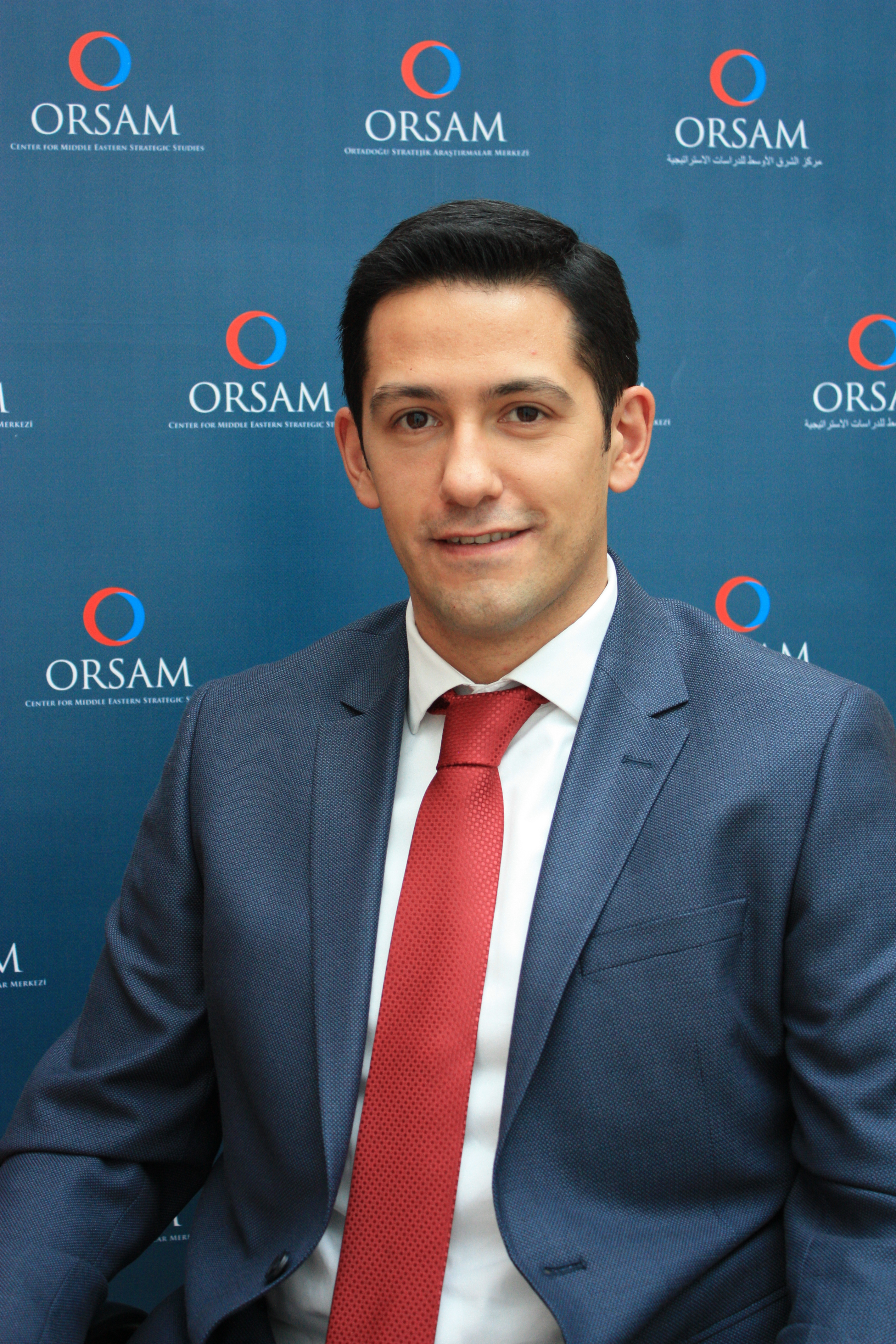
* This interview has been conducted on May 22, 2013, by ORSAM Chairman Hasan Kanbolat and ORSAM Researcher Oytun Orhan in Jordan.
20 July 2013