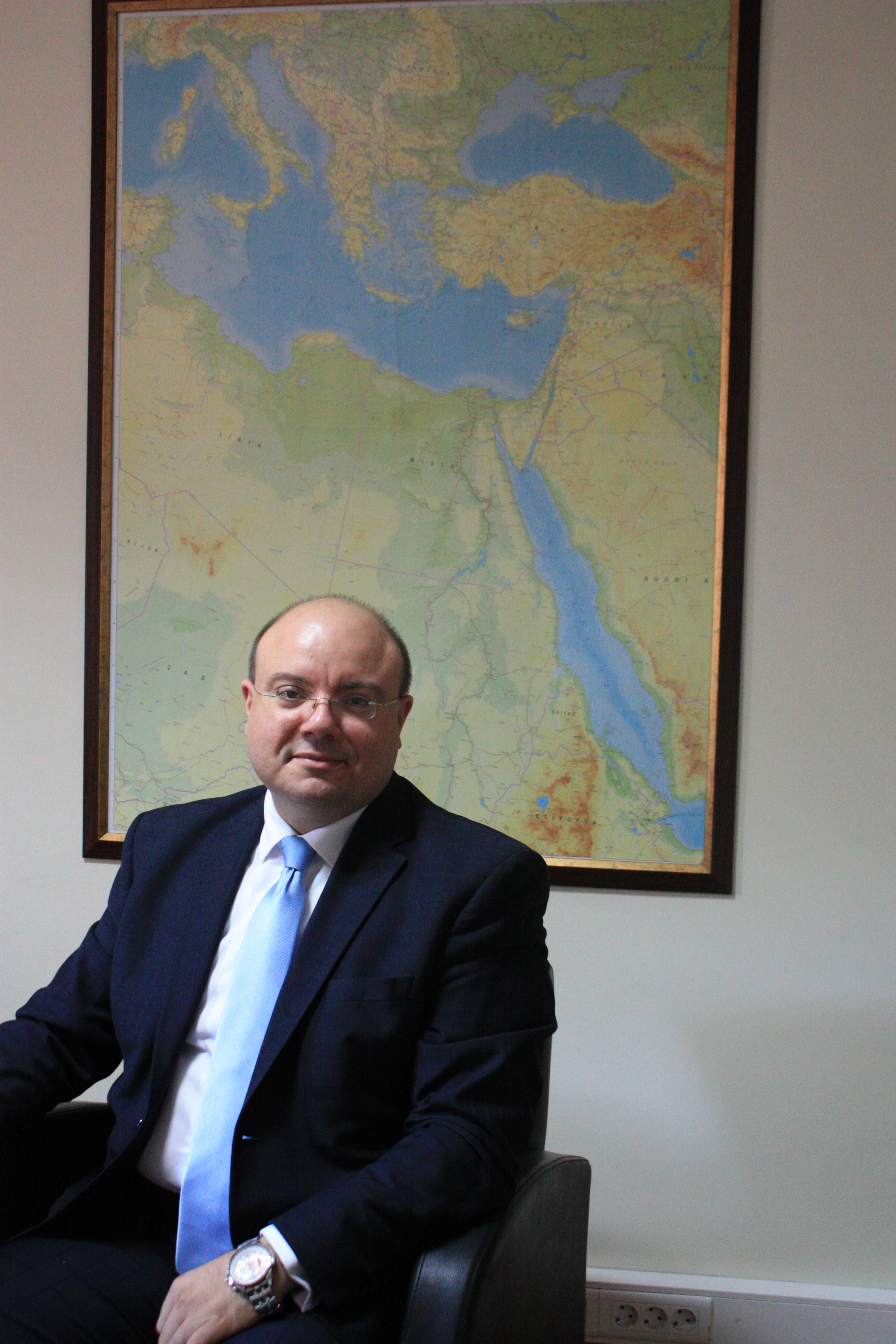
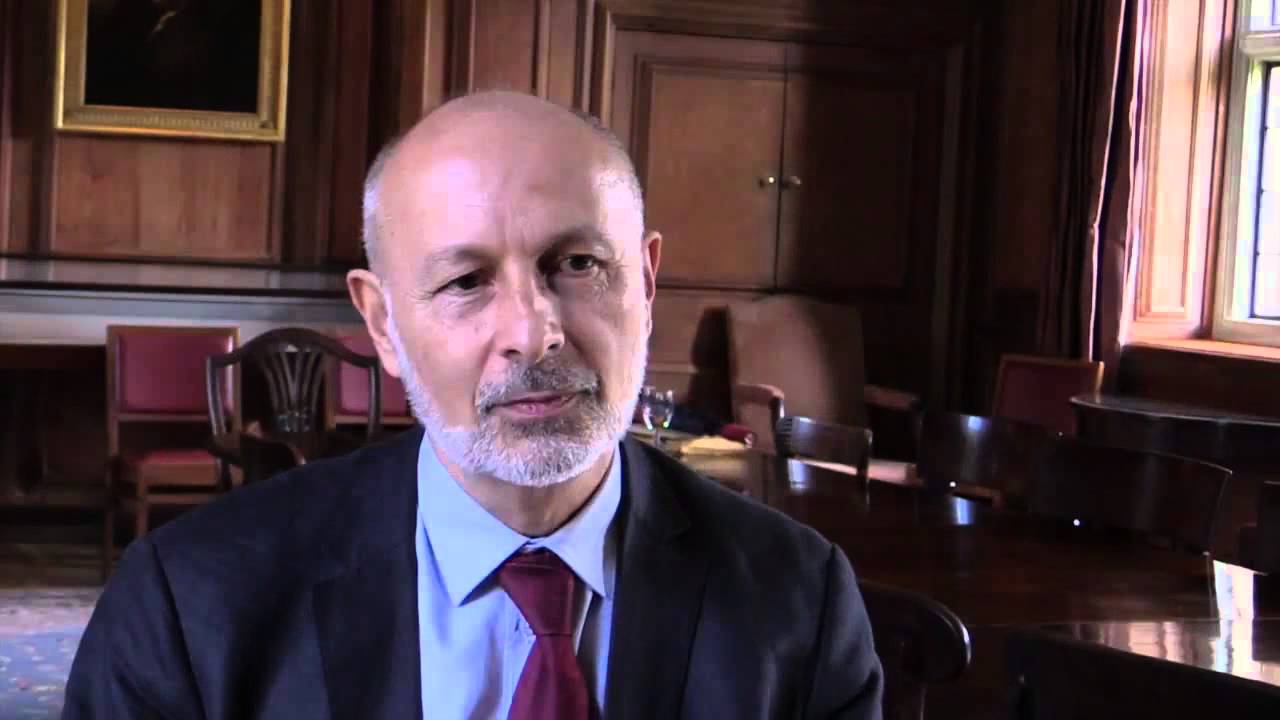
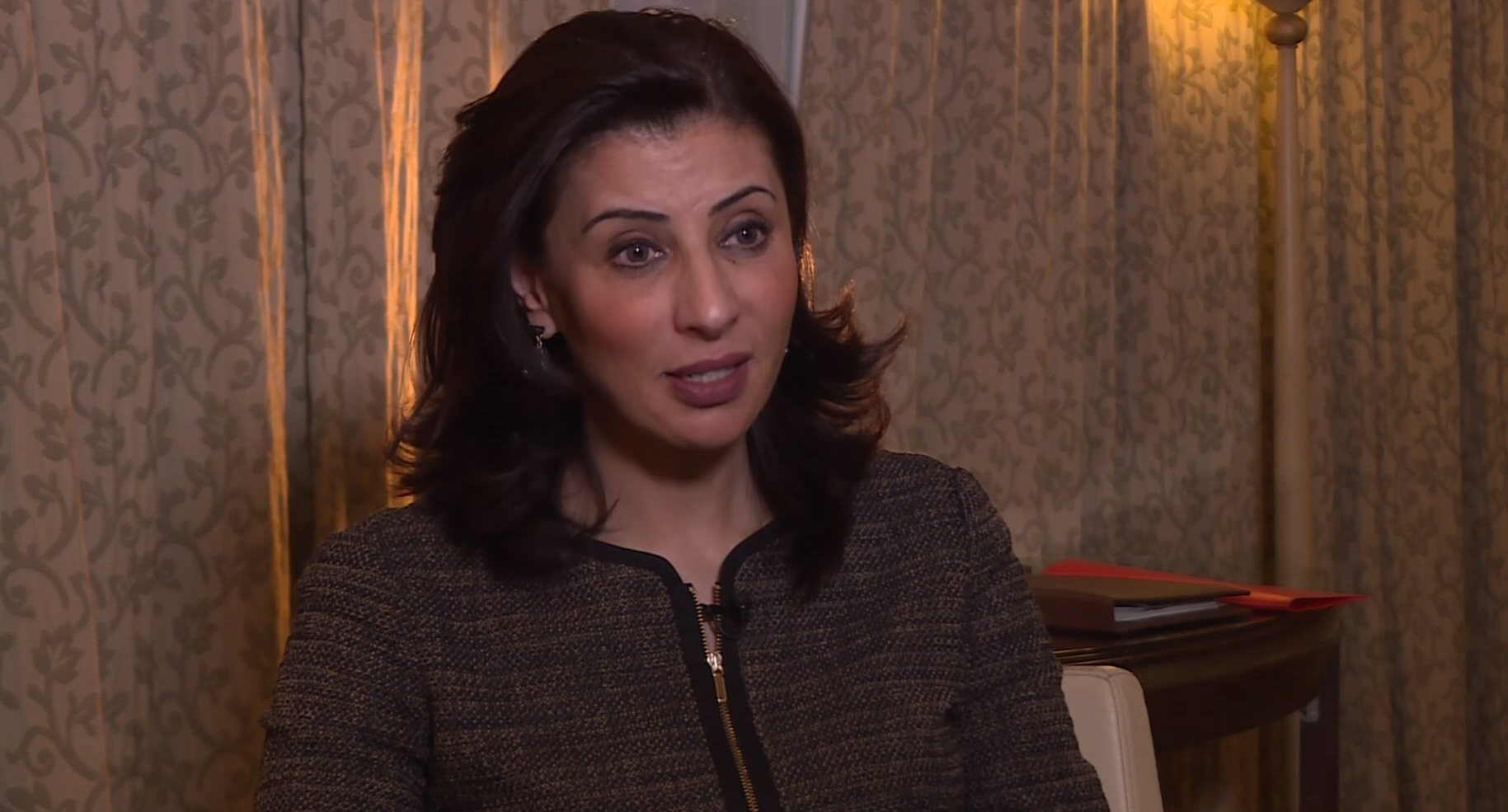
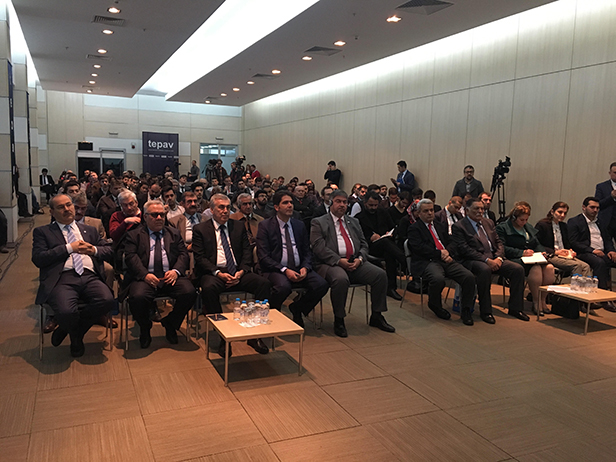
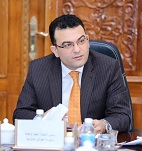
ORSAM Water Research Programme made an interview with ICID Vice President Hüseyin Gündoğdu on ICID, its importance, and irrigation and modern irrigation techniques in Turkey during the 10th European Conference on the implementation of the EURO INBO 2012 Water Framework Directive held in İstanbul on 17-19 October 2012. “Once again, Turkey will carry out an activity in cooperation with ICID to be held for the first time in the world. The First World Irrigation Forum on Agricultural Irrigation to be held for the first time in the world is going to take place in Mardin. I invite you all to the forum to be held next year. Because irrigation is so important, and as you know, today 70 per cent of our water resources are used in agricultural irrigation,” says Dr. Hüseyin Gündoğdu.
ORSAM: First of all, could you introduce yourself please?
Hüseyin GÜNDOĞDU: I work as a Senior Agricultural Engineer in Planning Branch Directorate in the Second Regional Directorate of State Hydraulic Works. During twenty five (25) years of experience on Irrigation and Drainage subjects, I have worked in various institutions and organizations. DSİ – General Directorate of State Hydraulic Works – comes first among those. In addition, I also worked in GDRS (General Directorate of Rural Services), Provincial Directorates, private sector and as a private consultant. At the end of 25 years, I was elected as the Vice President of ICID (International Commission on Irrigation and Drainage).
ORSAM: Could you tell us about ICID? When was it established?
Hüseyin GÜNDOĞDU: ICID is a non-governmental organization established in 1950, but it generally works in cooperation with water-related state institutions in the countries it works with. 110 countries are members of this organization. Each country has a commission and committee related to this organization, and in our country it is the General Directorate of State Hydraulic Works (DSİ). In other countries, the similar organizations like DSI are the members of ICID. The headquarter of the organization is located in India. It is a technical NGO which carries out technical scientific studies mostly on irrigation and drainage, works on techniques for efficient and productive irrigation, carries out research to improve water and increase the efficiency of use of water, and which spreads all these developments across the world. As I mentioned before, organizations that are members of this organization are generally public institutions of those countries. Nevertheless, ICID has been trying to spread to more people, institutions and organizations, and therefore in a conference held in Australia this year, it took new decisions to enable private sector and individuals to be a member as well.
Turkey became a member state of ICID in 1954. From time to time ICID and Turkey had some breaks in their relations. As is known, DSİ was also established in 1954. Despite the decline in relations between DSİ and ICID, Turkey started to attach importance to this organization again as DSİ approximately for the last 8-10 years, and to send specialists to working groups and technical trainings within the organization. Turkey aims at transforming its 60-year irrigation experience to the international organizations. Turkey is now a country which wants to be in a decision maker position in irrigation or water policies. Therefore, it was not enough for Turkey to support these working groups, and it was also focused on the necessity to take part in the administration. So that, it took part in the elections. Each year 3 people are elected in the aforesaid elections, but this year 6 candidates ran for vice presidency. During this process, Turkey received an offer from ICID. Because Turkey is an experienced from the forums, and especially the World Water Forum that Turkey held in 2009 is a quite important experience. ICID, on the other hand, wants to go beyond technical and take part in an activity embracing the whole world and different groups. To that end, ICID decided to organize an irrigation forum to be held triennially bringing not only the scientists but also farmers and decision makers in private sector related to irrigation together. As I stated before, ICID offered Turkey to pioneer this forum due its broad experiences, and Turkey accepted the offer. The first world irrigation forum is planned to be carried out in Mardin in the forthcoming year between the dates 29 September and 5 October 2013.
ORSAM: Why was the irrigation forum decided to be held in Mardin? Is GAP one of the underlying reasons?
Hüseyin GÜNDOĞDU: Every year, a technical meeting entitled Asian Regional Conference is organized in ICID. The structure of these conferences was changed into a forum. In ICID everything is systematical and proceeds regularly. Which activities to be carried out within the programs is certain three years in advance. Turkey applied for holding the 8th Asian Regional Conference three years ago, and it also stated that it would be held in Mardin. It is accepted, but as I said, the conference turns into a forum and Mardin keeps being the place of the forum. Why Mardin? Of course, GAP is one of the primary reasons, we want to show the regional development caused by GAP to the whole world. Besides, Mardin is a city that has been attracting lots of attention where many cultures live together.
ORSAM: Is there any organic bond between ICID and the World Water Forum?
Hüseyin GÜNDOĞDU: ICID applied for taking part in the governing board, and it will become clear in the elections to be held in the forthcoming month. However, ICID carries out many activities in World Water Forums; It works in cooperation with FAO, Asian Development Bank etc. on lots of thematic subjects, and they also organize subsidiary activities.
ORSAM: What is the current state of irrigation and drainage in Turkey? Is DSİ the competent body?
Hüseyin GÜNDOĞDU: In the past, GDRS (General Directorate of Rural Services) and this institution were responsible for irrigation. Drainage is known as the removal of surplus water from an area. Currently, the most competent body on irrigation and drainage is DSİ. Along with the agricultural reform and cooperating with some organizations affiliated to the Ministry of Agriculture, DSİ is the most competent body in technical terms.
ORSAM: When we compare the irrigation and drainage in Turkey with the other countries, what can we say in positive or negative terms in this respect?
Hüseyin GÜNDOĞDU: Irrigation by all means depends on the technological progress. Much more productive use of water is aimed through the current modern technologies. Turkey has been improving irrigation for the last 60 years, and today there is some 5 billion hectares of irrigation field. 3-3,5 million hectares of field waits for the irrigation investments. Our current irrigation systems were built according to the technology of those years. Right now we are striving to pass to a closed system, and when we do so there will be 30 per cent more water-saving. So, we need to turn towards water-saving technologies. Considering the current irrigation of Turkey as a whole, the closed system is some 10-12 per cent. We have lots of things to do, we need to use high-technology.
ORSAM: In our country, drip irrigation is encouraged, and certain banks in Turkey encourage drip irrigation as well. Is drip irrigation on the rise?
Hüseyin GÜNDOĞDU: Yes, it is considerably on the rise. As I mentioned, this rate reached 10 per cent for about 8-9 years, it was at the level of some 3 per cent beforehand. Turkey had some difficulty in producing drippers ten years ago. Now Turkey can produce dripper by using the technology. Our private sector made a break-through on this subject. The awareness among farmers increased as well. The importance of water on issues such as climate change, drought etc. started to increase. This awareness is quite important. There is a water-saving up to 30 per cent in the areas where drip irrigation is implemented. All these developments can be achieved through the use of high-technology. But of course it is not sufficient, because using the high-technology wisely plays an important role in the efficient and effective use of water. You produce drip irrigation systems, but you cannot use it wisely; then you cannot succeed either. DSİ and the Ministry of Agriculture have trainings on this subject.
ORSAM: Approximately how much water is used per hectare?
Hüseyin GÜNDOĞDU: The need for water depends on the plant species. Roughly speaking, 7-8 thousand cubic meters of water is used per hectare in an open-channel irrigation. But in drip irrigation system, this figure might drop below 5 thousand cubic meters of water. This figure indicates a major saving. If you use it wisely also in open irrigation, you can further drop this rate. It might be 4000-5000 cubic meters on average per hectare tops. But of course it applies to cotton plants, it might be different for corns. These figures depend on plant species, soil structure, and the weather condition. The figures I mentioned are average values.
ORSAM: Is there anything you would like to add?
Hüseyin GÜNDOĞDU: As you know, Turkey wants to share its experiences on water management both with the its region and the whole world, as well as to share its knowledge and experiences to them. Our country proved it by organizing a successful World Water Forum. Turkey will carry out another activity in cooperation with ICID to be held for the first time in the world. The First World Irrigation Forum on Agricultural Irrigation to be held for the first time in the world is going to take place in Mardin. I invite you all to the forum to be held next year. Because irrigation is so important; as you know, today 70 per cent of our water resources are used in agricultural irrigation. It is equal to a substantial amount of the current water resources. The developments on the subject are announced on the websites:
http://www.worldirrigationforum.org/ and http://www.icid.org/
ORSAM: Thank you for you time.
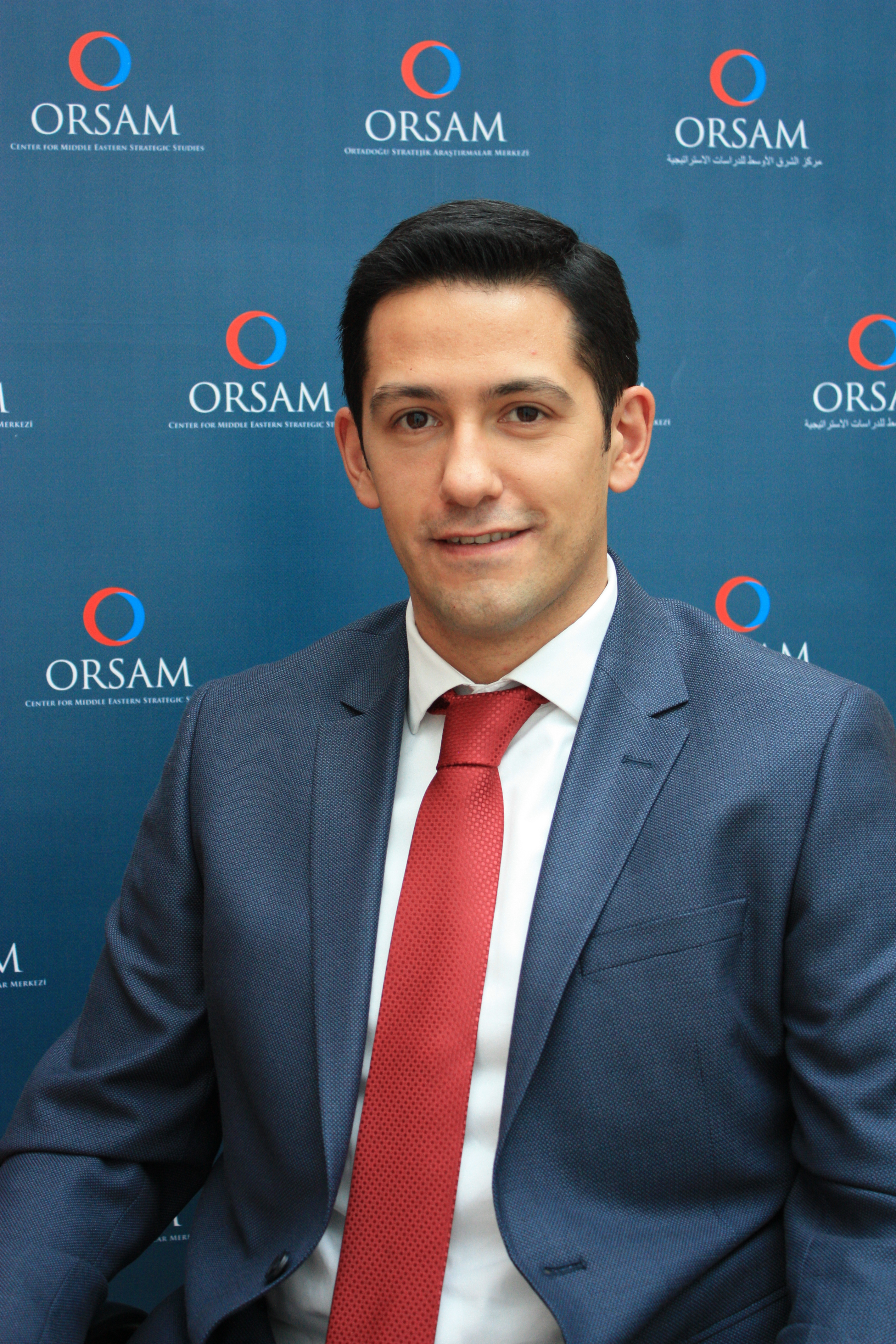
* This interview was made by ORSAM Water Research Programme Specialist Dr. Tuğba Evrim Maden on 18 October 2012 during the 10th European Conference on the implementation of the EURO INBO 2012 Water Framework Directive held in İstanbul.