Filtre
Type the word you want to search for
4 minute reading time
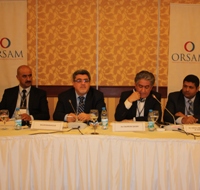
On 30 April 2014, national elections took place in Iraq. Not only Iraqi people followed these elections but also countries in the region and international actors watched them closely. On 19 May 2014, the Independent High Electoral Commission (IHEC) announced the first official results of the elections. Against this background, in order to analyze Iraqi elections and explore how these elections will affect the Iraqi politics, Center for Middle Eastern Strategic Studies (ORSAM) organized a workshop on 13 June 2014, entitled “The Future of Iraqi Politics After 2014 Elections.” In the workshop, there were academics and experts both from Iraq and Turkey. They delivered presentations and shared their observations from the field. In addition, there were 60 participants from press, diplomatic circles, public enterprises and think tanks.
Speakers underlined that ethnic and sectarian formations and parties were at the forefront again in the elections. The elections were based on sectarian and nationalist themes. They mentioned that ethnic and sectarian practices were still continuing in the country and there is a sectarian tension in Iraq. In Iraq, all political parties are represented in the parliament and because of this there is a lack of control mechanism and there are no real opposition forces. They underlined that there is no harmony between Iraqi communities, and owing to this it is difficult to live in a peaceful manner in Iraq.
Speakers explained that before and during the elections, Baghdad government used all Iraq’s resources and revenues for only one list, for PM Maliki's own list. At the time of elections, some groups were threatened and the voting process of these groups was also prevented. Speakers underlined that in this environment voters were subjected to psychological pressure and therefore some groups’ votes decreased in the elections. In the workshop, speakers also mentioned the election propaganda of the parties. In their election propaganda, Sunni lists called for the constitution to be changed. Shiite lists emphasized that these elections will determine the future of the Shiites. Citizen (Muwatın) group stayed away from these styles of slogans.
In the workshop, speakers mentioned three alternative government scenarios for Iraq. The first one is National Harmony Government. In Iraq, there are many different ethnic and sectarian divisions. Because of this situation, creating a national structure and identity in the country will prove difficult. The second type of government is Political Majority Government. In a Political Majority Government, the party must take one more than half of the seats within the Parliament (165 seats). Political Majority government is not just a sectarian or ethnic majority, but also needs to be a political. The last alternative is National Independence Government. No political group is dominant in this government option. All political formations should come together in order to form a government. Speakers said that this government structure has potential to end all the sectarian and ethnic divisions within the country. Many speakers emphasized that this government alternative is a better way for the country's political future.
Finally, The Islamic State of Iraq and Syria (ISIS) was mentioned in the workshop. Speakers noted that drastic changes in Iraq not only affect Iraq but also countries in the region especially neighboring countries to Iraq. Supporting the radical groups strengthes them and make them as a big threat for neighboring countries such as Syria, Iran and Saudi Arabia. Briefly, this threat could spread to countries which support the ISIS. If the ISIS threat continues in Iraq, it will have drastic impact on local politics, policies and security. In this respect, speakers said that countries in the region, international actors and organizations must take a responsibility to end this threat and must help Iraq.

23.06.2025
All Rights Reserved 2012 - 2026 | Orsam


 Google Calendar Add


