Filtre
Type the word you want to search for
5 minute reading time
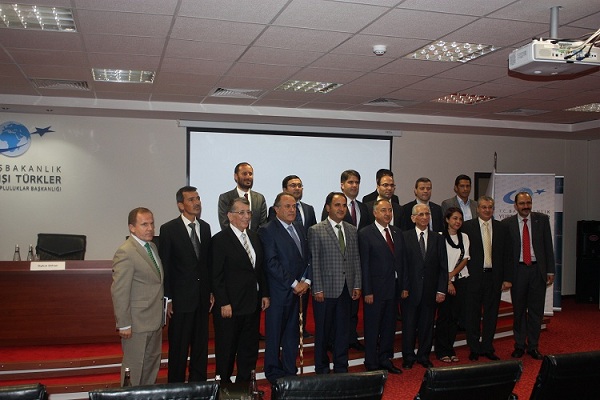
Center for Middle Eastern Strategic Studies (ORSAM) held a meeting with the cooperation of Turkish Economic and Social Studies Foundation (TESEV), TOBB University of Economics and Technology (TOBB ETÜ) and Young Friends of Turkey (YFoT) on 6thNovember 2015 at TOBB ETÜ. The conference was held in two sessions where a project report titled “Promoting Dialogue and Solutions: What European Legislators Think of Turkey?” was presented and the future of EU-Turkey relations was discussed.
Assoc. Prof. Dr. Birgül Demirtaş from TOBB ETÜ made the opening speech of the conference in which she noted the interest of Turkish civil society in EU-Turkey relations and underlined that the prepared report could be an important source in order to correct the misperceptions between Turkey and EU. She added that although EU-Turkey relations have not always been in a linear direction, the fact that important steps have been taken at the end of each period concerning bilateral relations should not be neglected. Having held the floor after Assoc. Prof. Dr. Birgül Demirtaş, President of YFoT Mehmet Ünlü informed the participants about the establishment process and the activities of YFoT which aims to improve EU-Turkey relations especially at the level of civil society. Having made an opening speech on behalf of ORSAM, General Coordinator of ORSAM Hakan Taşçı explained ORSAM’s activities and then underlined the important roles that the youth could play in the EU-Turkey relations as future leaders and the duties that fall to themselves in this direction.
After the opening speeches, Head of Political Affairs, Press & Information Section of the EU Delegation to Turkey, Ireneusz Fidos evaluated the current affairs and the future of EU-Turkey relations. Having indicated that Turkey became the major item on the agenda in Brussels and the other EU countries, Fidos expressed his thoughts that both Turkey and the EU used well the potential to accelerate the Turkey's EU membership process and to provide visa facility to Turkey. Having also touched upon the effects of Syrian refugees on the EU-Turkey relations, Ireneusz Fidos said that the refugee influx revived the bilateral relations.
In the second session of the conference; TESEV researcher Zerrin Cengiz, the President of YFoT Mehmet Ünlü and YFoT Representative in Brussels Samuel Doveri Vesterbye presented the report as its authors. While Vesterbye gave information about the project which bore the same name with the report as " Promoting Dialogue and Solutions: What European Legislators Think of Turkey?", Zerrin Cengiz explained the background of the EU-Turkey relations which were agreed to begin with Turkey’s application to the European Economic Community in 1959. Cengiz shared later the methodology that they followed during the preparation of the report and touched upon the details of the two-step methodology which included the analysis of the data collected and used in the research. According to the data acquired as a result of the negotiations between the members of the National Parliament among the EU countries and the members of the EU Parliament, 81% of the European legislators who participated in the research support Turkey's EU membership. Turkey can constitute a bridge between the West and the East, has shown economic developments within the last years and is able to make positive contributions to the Middle East-Europe relations. These are among the most important reasons why European legislators have a positive approach to Turkey's EU membership. Another finding of the research which draws attention is the prejudices of the EU community about Turkey. 94% of the European legislators who participated in the research think that the socio-cultural factors cause prejudices within the EU community about the EU membership of Turkey. The researchers Cengiz and Vesterbye put forward their policy proposals for both the EU and Turkey in the light of the data acquired during their research. Among these policy proposals are the extension in the public diplomacy works of both sides which will show the benefits of the EU membership of Turkey, the increase in Turkey’s visibility in the EU member states and also in Brussels, the EU’s giving priority to the encouragement of cultural diversity, the EU’s opening the closed chapters in order to encourage Turkey and to accelerate the full membership in the EU. When presenting policy proposals, the refugee influx which has become more intense in the last period was also mentioned and it was underlined that the EU should take responsibility in this respect by developing settlement plans within its own borders and humanitarian aid programs.
At the end of the conference, the questions and comments of the participants provided a larger perspective to the conference. Ireneusz Fidos and Samuel Doveri Vesterbye responded to the criticism of the participants about EU's response to the Syrian crisis by likening the EU to a big machine and said that it took some time to take action because of the procedures. Having answered the questions about the EU membership process of Turkey, Fidos emphasized that there was always a place for Turkey in the EU where there is diversity and that the civil society and the youth play important roles at this point.

23.06.2025
All Rights Reserved 2012 - 2026 | Orsam


 Google Calendar Add


