Filtre

Type the word you want to search for
5 minute reading time
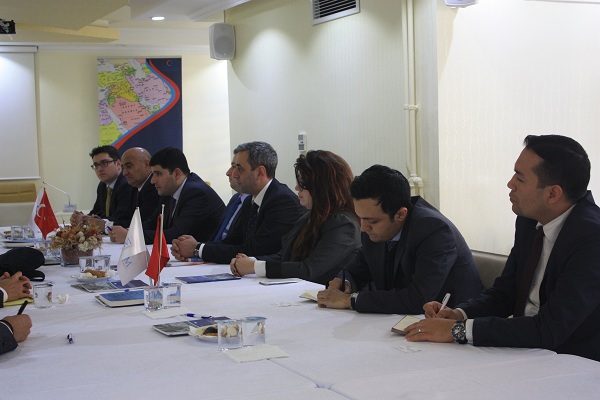
On 28 September 2015, a meeting entitled “Iraq, Turkey, and the US: Strengthening the Anti-ISIS Coalition” was held by ORSAM and Middle East Institute in Washington D.C., USA. Antony H. Cordesman from Center of Strategic and International Studies (CSIS), President of ORSAM Şaban Kardaş, Iraqi Turkmen Front Turkey Representative Hicran Kazacı and ORSAM Middle East Expert Bilgay Duman made their presentations under the moderation of Middle East Institute Turkey Program Director Gönül Tol. Other than numerous think tank representatives, foreign mission representatives in Washington D.C., bureaucrats, academicians, press members and students attended the meeting.
The meeting started with Bilgay Duman’s presentation of his report named: “A New Controversial Actor in Post-ISIS Iraq: Al-Hashd Al-Shaabi (The Popular Mobilization Forces)”. Duman started his presentation by summarizing the political and security situation in Iraq and continued with addressing the factors in the emergence of Al-Hashd Al-Shaabi. Afterwards, Duman gave information about the formation of Al-Hashd Al-Shaabi and said that this structure had become the executive of the struggle against ISIS in the field. Duman called attention to the militia formation within Al-Hashd Al-Shaabi, noted that more than fifty militia groups emerged in this process and this situation cannot be controlled by the Iraqi government. He emphasized on the efforts to institutionalize Al-Hashd Al-Shaabi and said that in order to legitimize this Shia dominated structure in the eyes of other groups, there are efforts to encourage participation from Sunni Arabs, Turkmens, Feyli Kurds, Yezidis and Christians. Nevertheless, Duman stated that the large majority of Sunni Arabs and Kurds are against it and in the future, ethnic and sectarian conflict could escalate because of the unregulated structure of Al-Hashd Al-Shaabi. Besides, Duman also emphasized the Iran factor in terms of Iran’s military, material and operational support to Al-Hashd Al-Shaabi. However, Duman stated that this support from Iran intends to gain control over Al-Hashd Al-Shaabi. This situation raises concerns of all groups including Shias and creates a perception that Iran directs Al-Hashd Al-Shaabi for its objectives. Duman posited that all these factors need to be considered together and concluded his words by saying Al-Hashd Al-Shaabi could emerge as a new instability factor in Iraq’s future.
Hicran Kazancı took the floor after Duman and began his speech by giving general knowledge about Turkmens in Iraq. He stated that Turkmens are the most affected groups in Iraq after 2003 and they are also the ones who are most affected by ISIS. He said that Turkmens were living in almost all the provinces ISIS occupied so that hundreds of thousands Turkmens forced to migrate. Kazancı emphasized that hundreds of Turkmens were exposed to violence and lost their lives and added that Turkmens suffered losses both in terms of population and geographical size. He stated that Iraqi government is insufficient to protect Turkmen provinces although the only objective of Turkmens is to protect themselves and their provinces they do not have the power to do so. Kazancı underlined that Turkmens are avoiding conflict with any ethnic and religious groups even though from time to time there are tensions because of the conjuncture in the region, Turkmens want to have good relations with all the groups.
After Kazancı, Cordesman made his presentation. In his presentation, he explained the effects of war and instability in Iraq after 2003 on the country. He named Iraq a “failed state” in terms of its economy and security and indicated that there has been a continued instability for decades in the region so that this situation did not start in 2003. He posited that in addition to political instability, ethnic and sectarian dissidences deepened because of wars and underlined that a strong security structure could not be built up in Iraq. Cordesman stated that economic development could not be achieved in the country and Iraq is one of the most corrupt countries in the world according to international transparency indexes. He stated that Iraq is ranked as 120th in Human Development Index out of 180 countries and Iraq increases budget allocation to security every year so that the government have to cut their spending on human development. He underlined that after ISIS‘s dominance, Iraq has entered a new phase and this process has deepened ethnic and sectarian conflict in the country.
Şaban Kardaş, who spoke last, drew the attention to Turkey’s position in the struggle against ISIS. He stated that Turkey is the first country to put forward ISIS as a threat element and since 2011, it has been confronting this threat. Within this framework, Kardaş posited that Turkey is aiming to develop strategies both for Iraq and Syria and added that Turkey is the most affected country by ISIS after Syria and Iraq. He stated that Turkey was affected broadly by the incidents from the seizure of Turkish consulate in Mosul to ISIS’s attacks in Turkey so that ISIS has become a serious threat to Turkey. In addition to the negative effects on Turkey’s economic activities in the region, Kardaş highlighted the migration from Syria and Iraq to Turkey. He stated that Turkey houses two million refugees within its borders and has spent more than $ 7 billion caring for Syrian refugees from its own resources without any help of other parties. Kardaş said that there are new dynamics emerging along with ISIS and concluded his speech by emphasizing that radicalization; armament and changing political boundaries are the most important factors that deeply affect the region.
The meeting ended with the question and answer session.

23.06.2025
All Rights Reserved 2012 - 2026 | Orsam


 Google Calendar Add


