Filtre

Type the word you want to search for
3 minute reading time
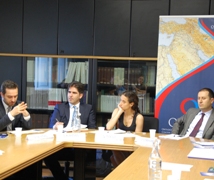
The Center for Middle Eastern Strategic Studies (ORSAM) in coordination with the Italian research institute of Istituto Affari Internazionali (IAI) organized a meeting in Rome entitled “Turkish Policy toward the Syrian Crisis and the Impact of Refugees” on June 6th 2014. This meeting was based on the framework of introducing a study, which was produced as a result of six months of intensive research, conducted by ORSAM with support from Konrad Adenauer Stiftung titled ‘The Situation of Syrian Refugees In the Neighbouring Countries: Findings, Conclusions, and Recommendations’. Those who attended the IAI building in Rome for the meeting included diplomats, Italian press representatives, researchers as well as Turkish authorities and press.
The meeting began with a speech given by the president of ORSAM, Dr. Saban Kardas. Kardas’ speech discussed Turkish policies toward the Syrian crisis. He explained that in the first stage, lasting six months, Turkey tried to encourage a peaceful end to the Assad regime’s demonstrations, a reformation, and the use of non-violent means to bring this about, but due to pressure brought about by the Syrian government not keeping their promises they adopted a policy supporting the opposition. Following Dr. Kardas, a researcher from ORSAM, Oytun Orhan, offered the findings from ORSAM’s report entitled “The Status of Syrian Refugees in Neighbouring Countries”. Orhan specifically gave information about the project and shared its conclusions. He shared some foundational information regarding the number of Syrian refugees who have registered in the four neighbouring host countries, and also knowledge concerning the Syrian provinces from which the refugees came and to which areas they are immigrating in the host countries. He later compared the status of the Syrian refugees in the four neighbouring host countries by analyzing camp conditions, ethnic-sectarian polarization, immigration to third countries, radicalization trends, and local-refugee relations in each country. He shared the report’s findings which were described as follows; Turkey was in the forefront concerning conditions within the camps, Lebanon and Jordan were under the greatest risk regarding trends of radicalization, the desire to immigrate to a third country was greatest in Turkey and Lebanon, and the four nations all shared similar conditions with regards to the relations between the local people and the refugees. The conclusion of the meeting was a speech by SETA’s Foreign Policy Program Coordinator, Ufuk Ulutas, who explained the Turkish policy towards the Syrian refugees. In his address Ulutas spoke about the general conditions of Syrians in Turkey, and gave information comparing Turkey with other examples which showed the refugee camps’ conditions are the best in Turkey. Ulutas also shared opinions concerning the efforts being taken within the AFAD coordination for the Syrians living outside of camps. The program ended with a question and answer session.

23.06.2025
All Rights Reserved 2012 - 2026 | Orsam


 Google Calendar Add


