Filtre

Type the word you want to search for
3 minute reading time
A delegation of Turkish academics led by ORSAM President Assoc. Prof. Şaban Kardaş paid a visit to Iranian universities and research institutions on 19-20 April 2014. Allameh Tabataba’i University, Tehran University Caucasus Studies Institute, Tehran University Department of History, Institute for Middle East Strategic Studies, Institute for Political and International Studies of the Ministry of Foreign Affairs, Institute for Iranian Contemporary Historical Studies, Tehran University World Studies Faculty and Institute of Iran and Eurasian Studies were among the universities and institutions that were visited. Turkish and Iranian foreign policies within the context of regional issues were discussed in the meetings.
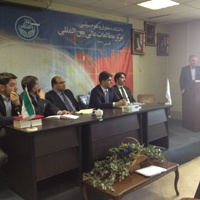
As part of the visit, a conference was organized for Turkish delegation in the Faculty of Law and Political Science at Tehran University, with cooperation of the Eurasian Studies Research Group and Caucasus Studies Institute of Tehran University. The conference, entitled as “Examining Regional Transformation: Turkish View”, was moderated by Dr. Farhad Ataei, who is a Faculty Member in International Relations.
Assoc. Prof. Şaban Kardaş gave the first speech of the conference. He mentioned new tools and strategies in the making of Turkish foreign policy. Arguing that security-oriented politics was laid aside and economic-based approaches have been endorsed, he explained principles of new Turkish foreign policy. Kardaş stated that the new Turkish foreign policy based on multilateralism in regional politics was determined to extend cooperation through several economic, political and humanitarian instruments such as tri-lateral mechanisms, high-level strategic cooperation councils, economic interdependence, development assistance and cultural diplomacy.
SDE Vice-President Assoc. Prof. Mehmet Şahin, who was the second speaker, stated that Turkish policy of ‘zero-problems with neighbors’ that had been initiated before the Arab Spring was a declaration of will and only with those states that responded to this declaration positively could Turkey expand its relations. He further stated that Turkey did not abandon this policy during the Arab Spring process and Turkish foreign policy was not responsible for the subsequent regional political earthquake. He stressed that the current radicalism was to the disadvantage of Turkey, Iran and Muslim Brotherhood, and Turkey and Iran should engage in cooperation in this regard.
Assist. Prof. Bayram Sinkaya indicated that the determinant in Turkish-Iranian relations was not regional cooperation but convergence and divergence in politics of the respective countries. In the 1990s, the policies of the two states had diverged. In the 2000s, they converged again and bilateral relations have gradually become rationalized. Bilateral and regional relations began to be considered separately and economic relations have been developed through a win-win strategy instead of ideological controversy. With the advent of Arab Spring, there happened a divergence in regional level but this has not affected bilateral relations and rationalization has continued.
The last speaker, Dr. İnanç Atılgan, talked about Armenian question in historical context. He introduced his book, ‘Archival Documents of Viennese Armenian-Turkish Platform’ edited together with Garabet Moumdjian as an example for Turkish-Armenian dialogue and added that optimism should never be given up. He stated that unless the issue was dealt with in the context of the formation of nation states in the period of the World War I, a one-sided view that considered only the experiences of the Armenian nation would come out. The controversy could be resolved through working together.
Pınar Arıkan
ORSAM Advisor, METU

23.06.2025
All Rights Reserved 2012 - 2026 | Orsam


 Google Calendar Add


