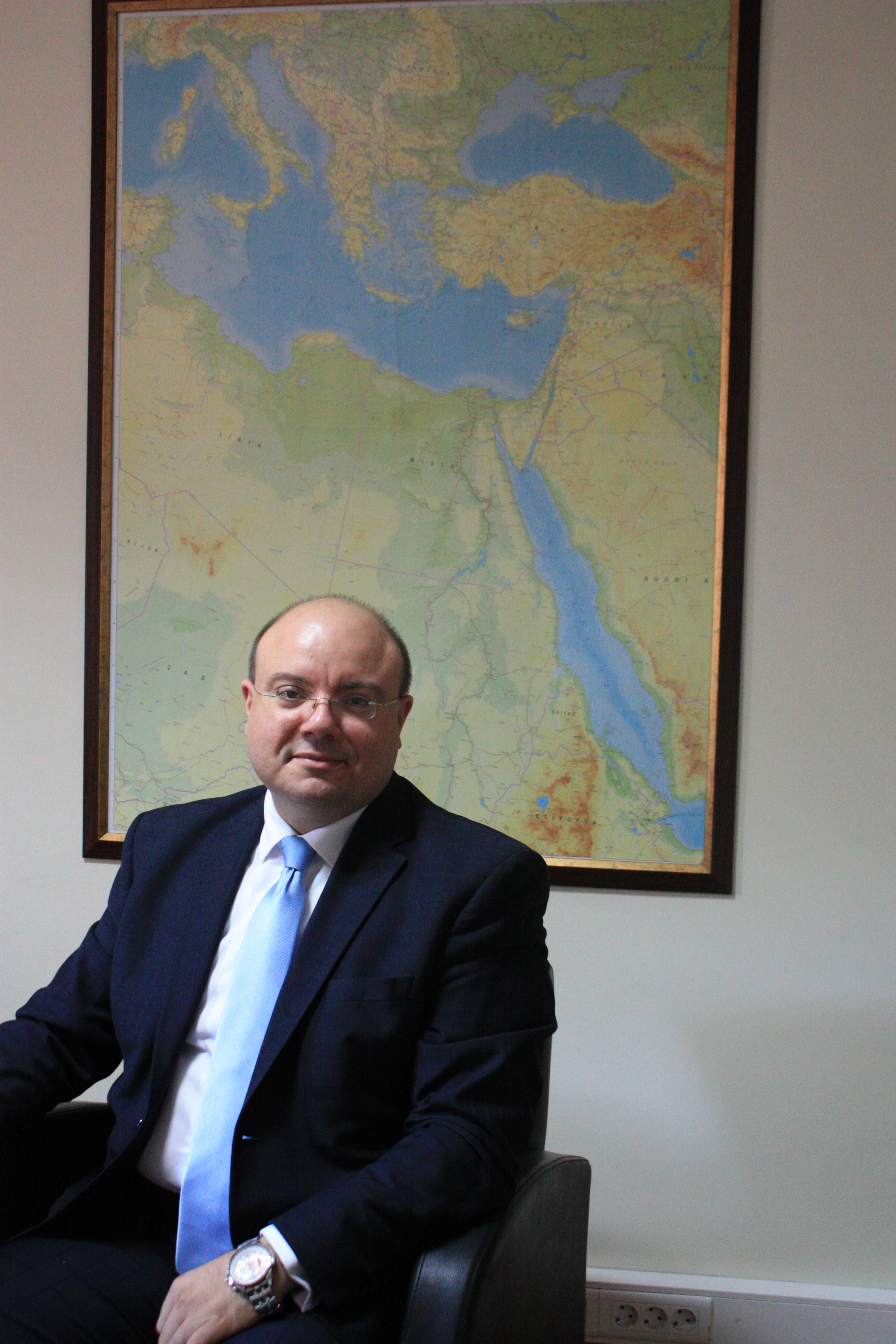
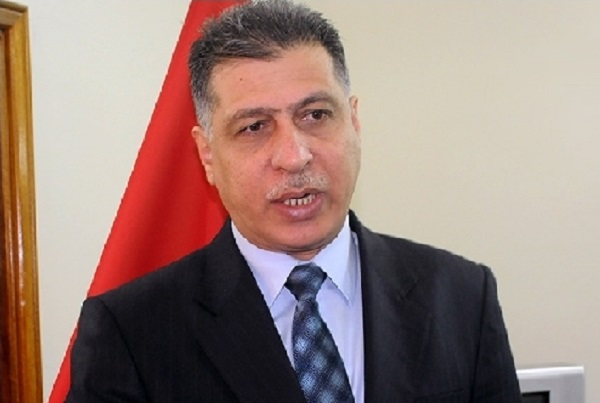
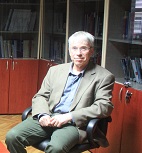
The Syrian Kurdish political structure has an extremely fragmented structure. Currently, some 16 parties have been carrying out political activities on behalf of Syrian Kurds. One of the parties which strives to gather under a single roof and act in unison with Kurdish National Council and High Kurdish Council is the Reform Party of Syria. When we were in Erbil, we had the opportunity to talk to Cedan Ali, North Iraqi Representative of the Reform Party of Syria. We talked to Cedan Ali about the outlook of the Party on the Syrian issue and Syrian Kurds.
ORSAM: First of all, could you introduce yourself please?
CEDAN ALI: My name is Cedan Ali. I am the Northern Iraq Representative of Kurdish Reform Movement in Syria. At the same time, I am the representative of Syrian Kurdish National Council.
ORSAM: Within the framework of the events that have been going on in Syria for 1,5 years, could you summarize the situation of Syrian Kurds and their outlook on the events?
CEDAN ALI: The uprising in Syria broke out on March 15th, 2011. Since the first day of the uprising, Kurds have been involved in this process. The first Kurdish party in Syria was crated on June 14th, 1957. We have been opposition to the regime since that day. A Kurdish insurrection took place in Kurdish areas in 2004. Lots of people were arrested. Besides, people died and were injured. The first group being involved in the anti-regime uprising in 2001 was Kurds. The expectation of Syrian Kurds from Syria in the future is; a democratic, pluralist, parliamentarian, and a decentralized country which guarantees the rights of all nations and communities. Following the uprising in Syria, we see that our dreams come true. Therefore, we strive for a successful revolution with minimum loss. We have asked for a peaceful alternative from the very beginning. We were in favor of an unarmed revolution. However, oppressive method the regime resorted to, its using force to suppress the people led them to have to protect themselves. Thanks to the splits within the army, the people found a way to protect themselves. Those who left the army strived to provide security for the people. What I hoped as a Syrian was that the nations which argued for democracy and freedom to support the Syrian people. However, unfortunately the Syrian people are hopeless about the international and internal forces. Despite this hopelessness, we continue to give victims. We are determined to overthrow the regime.
ORSAM: Could you give us some information about the political party, of which you are the representative?
CEDAN ALI: We are related to Syrian KDP which is the first party in Syria. Then our name changed. The first split within the Kurdish movement took place on August 5th, 1965. Those who split from the party formed the left wing, while those who remained in the party formed the right wing. We are in the latter group, not in the split one. The left wing told they were Marxist, and we were the right wing for them. Afterwards, Hafez Assad came into power in Syria. After that day, each party in Syria started to split. We remained in our party until 2008. As the party, we went through administrative and financial crisis. The problems causing to crisis mostly stem from financial reasons, rather than political reasons. The Secretary-General of the Party Abdulhamid Hadji Dervish, who currently lives in Sulaymaniyah, has been in this position since the formation of the party. So, we could not stand exclusion, oppression and dictatorship anymore. We aimed at making a reform within the party. As we could not achieve it, we left the party and changed our name into Hareket-ül Islah (Reform Movement). Our party is one of the 16 parties within Syrian Kurdish National Council. The Chairman of our Party is Faisal Youssef. There is a position called secretary or secretary-general in Kurdish parties. We call it spokesman. Instead of political board in other parties, we call it the executive board. Also instead of central decision-making committee, we call it general coordination. We are present in every region where Kurds are densely populated in Syria.
ORSAM: Is there a particular region where you are prominent?
CEDAN ALI: We are more powerful in Derik, Amude and Qamishli.
ORSAM: Could you tell us about political views of your party? For example, what do you suggest for the solution of Kurdish problem in Syria?
CEDAN ALI: Following the formation of Kurdish National Council on 26 October 2011, the party programmes of 16 Kurdish parties were combined with the programme of the Council. We just want Kurds to be have self-determination. Of course, we want self-determination within territorial integrity of Syria. Besides, we argue for a decentralized, democratic, pluralist parliamentary system. All Kurdish parties share the same opinion after the formation of Syrian Kurdish National Council.
ORSAM: In the past weeks, Turkish Foreign Minister Davutoğlu paid a visit to Erbil, and held a meeting with the representatives of Kurdish National Council. How do you assess Turkey outlook on Syrian Kurds within the scope of the aforesaid meeting?
CEDAN ALI: We believe that the democracy mechanism in Turkey is well-developed. However, the ruling party in Turkey needs to solve the Kurdish problem as soon as possible. Davutoğlu's visit and his talking to our representatives was a very positive step for us. We know that Turkey is not against according rights and freedoms to Syrian Kurds, but we also know that the presence of PKK is not wanted in Turkey. This is an understandable attitude for all Kurdish parties in Syria. Since the outbreak of events in Syria, Turkey has adopted a positive approach. It argued against opening fire on the people, and hosted the opposition. In addition, its embracing the refugees please us as well. However, we expected more support from the Turkish Government as a neighboring, democratic country, and as an Islamic government.
ORSAM: Thank you.