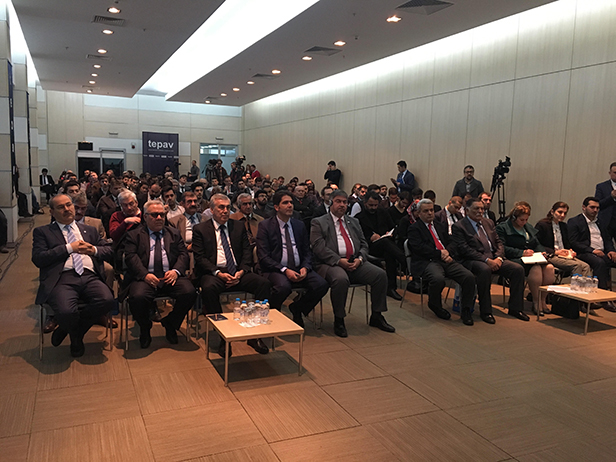
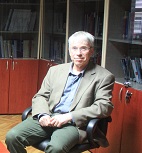
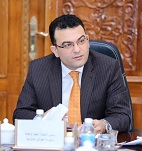
The Goran Movement is one of the rising powers of the politics in Iraq's Kurdistan Regional Government. The Movement aims to emerge stronger in the regional parliamentary elections on September 21. Despite its rising importance in Iraqi politics, Goran couldn't establish strong relations with the countries in the region yet. In this regard, the visit of Goran MPs and academicians to Ankara has a particular importance. In the interview we had with Dr. Ako Hama Qarim, who works at a political research center affiliated to Goran Movement and is a faculty member at University of Sulaymaniyah, during his visit; we talked about the Goran Movement's outlook on the relations with Turkey and about Syrian Kurds.
AKO HAMA QARIM: “TURKEY TAKES PART IN THE SUNNI-SHIITE CONFLICT IN THE REGION.”
ORSAM: Could you introduce yourself in brief?
Ako Hama Qarim: My name is Ako Hama Qarim. I did my PhD in Political Science. I am a faculty member at University of Sulaymaniyah, and also I work as a researcher at a political research center affiliated to Goran Movement.
ORSAM: You have studies on Turkey's soft power in the Middle East. What do you think on this subject, and how do you see Turkey's Middle East policy in general?
Ako Hama Qarim: Yes, I studied what kind of soft power Turkey was in some part of my PhD. Turkey's role in the region is increasing with each passing day. However, if Turkey attempted to play a role in sectarian conflict in the region, its role would decrease. On the other hand, Turkey wouldn't face any problem if it pursued an open and honest foreign policy. Currently, Turkey holds a strong position and it would be for Turkey's benefit if it was not involved in the conflicts in the region. Turkey argues for democracy. Its reinforcing democracy inside would help form a more solid ground for an outsider's look into the country. Stability should be restored in the regions where such conflicts take place. Human rights should not be ignored under the name of security.
ORSAM: How do you assess Turkey's policy towards Iraq and Iraq's Kurdistan Regional Government?
Ako Hama Qarim: Turkey pursues this relationship in an extremely pragmatic way, and has been trying to have equally close relations with both Iraq and Iraqi Kurdistan. However, Turkey's relations with Iraq have not been changing for the better nowadays. On the other hand, the relations with Iraqi Kurdistan are relatively good within a pragmatic framework. The relationship with Iraqi Kurdistan is more of an interest-based relationship. Turkey gains advantage in political, economic and energy fields, as Iraqi Kurdistan gains advantage in same fields. There is also mutual interests of both sides in terms of security. Iraqi Kurdistan helps solve the PKK problem both in Syria and Turkey. In my opinion, Turkey is in favor of Sunnis in Iraq and against the Shiite government in power. Shiites, on the other hand, are backed by Iran. I believe that the conflicts in the region stem from religious beliefs. Which is about Shiites and Sunnis. Iran, Iraq and Syria side with Shiites. Turkey, Qatar and Saudi Arabia are on the side of Sunnis. Turkey is involved in this conflict as well.
ORSAM: How do the Iraqi Kurdistan and the people consider Turkey? According to the general view in the region, do they consider Turkey a threat for their security, or an opportunity to open up to the West?
Ako Hama Qarim: Kurds see Turkey from a very positive point of view on economy and trade. Because there are a great number of Turkish companies in those areas. Nearly nine out of ten Iraqi Kurds consume Turkish products, which also applies to food, textile and technology sectors. Such factors create a positive impact for Turkey's image. Also, Iraqi Kurdistan sees that Turkey's current government has been working on solving the Kurdish problem and granting Kurds their rights. For instance, there has been initiatives on education and broadcast in native language. Such developments are very positive for Turkey from an outsider's point of view. In political terms, it is also good for Turkey to have opened its borders. Turkish politicians' visits to the region indicate that they want to establish a steady relationship. Another advantage of opening the borders is the fact that Kurds crossed the border to Turkey and saw what kind of country it was. Because Turkey is frequently considered different than it actually is from outside. Increasing the relations would eliminate misunderstandings as well.
ORSAM: What do you think about the situation of Kurds in Syria, and Turkey's approach to Syrian Kurds?
Ako Hama Qarim: Considering the current situation, it is a good opportunity for Kurds in Syria to establish their autonomy and to stand up for their rights. Of course, this should not pose a threat for Turkey. Another important factor is the problems among Kurds in Turkey. Kurds should get rid of the differences among themselves. They need to put the differences aside for a common cause, and discuss what would be the best for themselves. Unfortunately, I do not see such solidarity among Kurds. They cannot make progress in developing capacity in Syria and demanding their rights because of the conflicts among themselves. Meanwhile, Turkey should stop seeing Kurds in Syria as a threat. Turkey thinks about it in an old-fashioned way. It is wrong to consider the problem like PKK a threat. It is necessary to start off with a clean slate, and adopt a new approach accordingly. Iraqi Kurdistan argues that common grounds such as language and trade are always stronger than threat and military options. Turkey should come to the table with Kurds in Syria. Also Turkey would benefit from this situation. So that, peace would be established both in domestic politics and also in terms of security. If Turkey put forward and emphasized Syrian Kurds' differences, it wouldn't give a good impression for Turkey at all. Kurds in Turkey and Syria share the same dialect, tribes relatives, and background. Putting forward those communities as threat to one another would turn against Turkey.
ORSAM: Thank you.
* This interview was made by ORSAM Middle East Specialist Oytun Orhan in Ankara on August 15, 2013