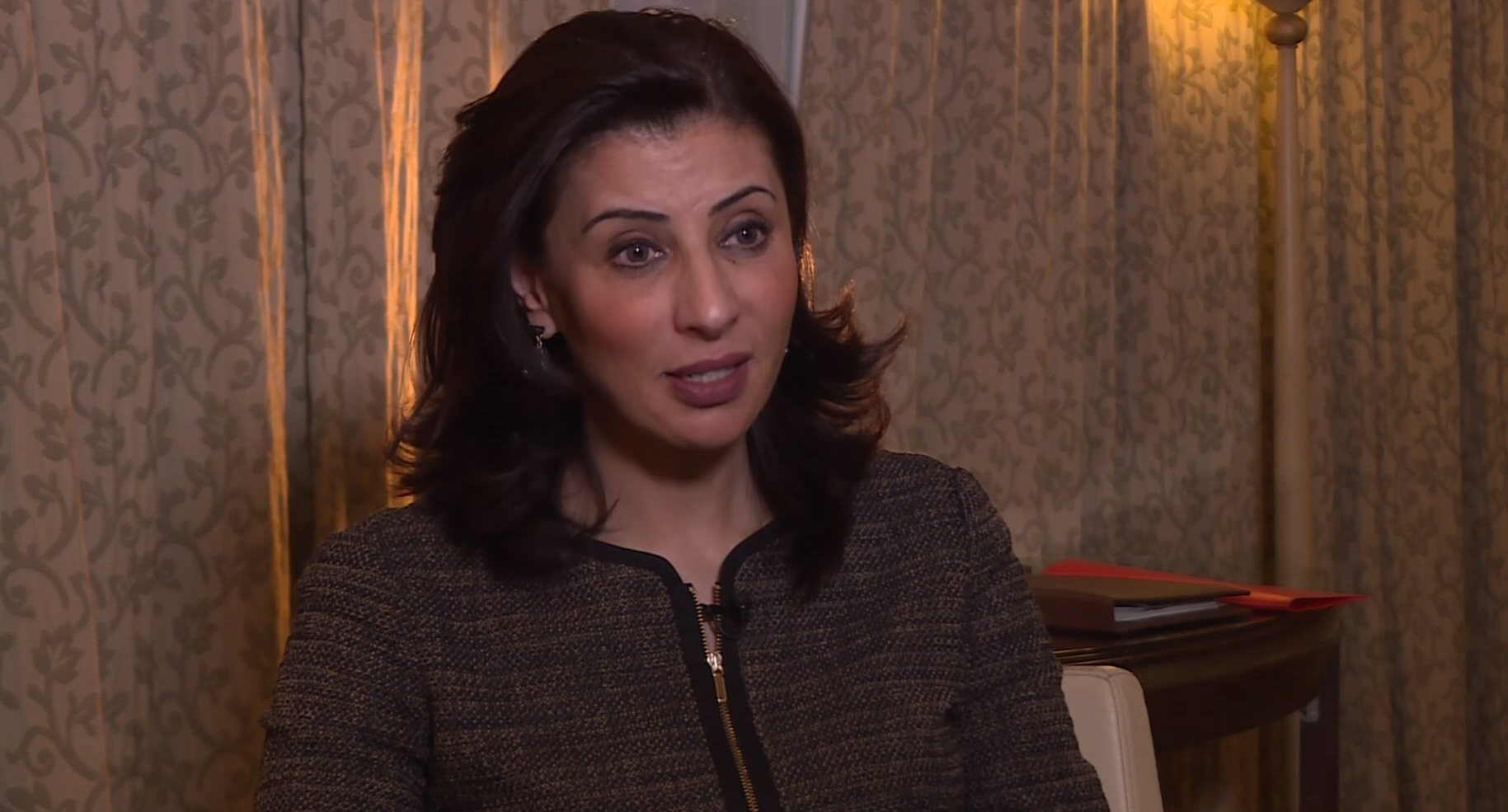
In IKRG, there are camps for refugees coming from Syria. The camps where Syrian refugees are settled can be listed as follows: Domis camp in Dohuk, Selam camp in Sulaymaniyah which is not under the control of United Nations, Zeytuna camp in Erbil, and Shihan camp again in Dohuk. We talked to Nadjia Hafsa, Legal Officer in the United Nations High Commissioner for Refugees (UNHCR), about the situation of refugees in Domis camp and the outlook of local people on Syrian refugees.
ORSAM: Can you inform us about the Domis camp in Dohuk where Kurdish Syrian refugees were settled?
NADJIA HAFSA: This camp was opened on April 29th. 14,410 Syrian refugees have been living in this camp since September 3rd, 2012. Everyone in the camp is Kurdish. Iraq's Kurdistan Regional Government has been pursuing an “open door” policy on Syrian refugees. Not only UNHCR, but also the international organizations such as WFP, UNICEF, WHO, IOM; and also Ministry of Internal Affairs within Kurdistan Regional Government and local authorities are interested in this camp. Expenses of the camps are financed by UNHCR. Water and electricity, on the other hand, are provided by Kurdistan Regional Government. Asayish provides security of the Domis refugee camp.
The distribution of Syrian Kurds in provinces they arrived in the camp might be listed as follows: 72% Al-Hasakah, 10% Damascus, 7% Aleppo, and 4% other provinces. A considerable part of those who came from Al-Hasakah come from Qamishli. The number of those coming from Damascus and Aleppo has been on the rise in the recent period. By the way, those who come from Damascus are mostly from the rural areas rather than central Damascus. Those from Damascus and Aleppo immigrate due to the economic downturn in the country. Other than that, of course, they flee to Iraq to escape from the violence. Currently, there are 14,410 registered refugees in the camp, but only 3,166 of them stay there. The rest of them, more than 10,000 refugees, live in central Dohuk. Those people look for a job, and work in the city.
ORSAM: We know that another camp was opened in Al-Anbar province, other than the Domis refugee camp. What can say about this camp?
NADJIA HAFSA: We opened El-Kaim camp in Al-Anbar. In this area, namely the area located across the Deir-ez Zor Province in Syria, borders were opened on July 23rd, 2012. The number of refugees in the aforesaid camp reached almost 4,000 as of September 3rd, 2012. As the camps are not sufficient yet, some of the refugees stay in schools. There are still refugees waiting on the border to enter in Iraq. The capacity of camp has not been exceeded yet. The majority of those who stay in this camp come from Deir-ez Zor, and they are mostly Arabs.
ORSAM: In some military operations the Syrian army carried out on the borders of Turkey, Lebanon and Jordan, sometimes the operations went beyond the Syrian borderline. Did any border violation or a conflict took place between the opposition forces and Syrian security forces in the areas where the aforesaid camps are located in Iraq?
NADJIA HAFSA: According to the UNHCR' guidelines, refugee camps is supposed to be 50 kilometers away from the borderline. It is completely different in Turkey. Turkey did not give the control of camps to UNHCR, and it controls these camps itself. Therefore, the camps might be located in a close distance from the border. However, any conflict directly affecting the camps for they are supposed to be 50 km away from the border according to our regulation has not taken place. For instance, the Domis refugee camp is 70 kilometers away from the border. Other than that, many conflicts have not taken place on Iraqi border unlike other border countries. However, the Iraqi army opened fire against those who tried to enter from Mosul to Iraq not long ago, and some people were killed. On the other hand, no conflict took place on Al-Anbar borderline.
ORSAM: In Turkey, some problems took place between the local people, who live in the areas where Syrian refugees were settled, and Syrian refugees. Has any problem taken place between Syrian refugees and local people? What do the local people think about Syrian refugees?
NADJIA HAFSA: There is no problem here between the local people and Syrian refugees. Because, it is a little different here. There is bond between the Kurdish local people and Syrian Kurdish refugees. As all of those who settled sin Dohuk are Kurdish, the local people in the area consider the refugees as their guests and thus there is no problem among them. No conflict, tension or event has taken place so far. But it is impossible to say that refugees haven't had any impact. For instance, the rental prices are on the rise in Dohuk. Job opportunities are decreasing. The situation might create problems in time.
ORSAM: What do you say about Syrian refugees' tendency to come and go back as from September 2012?
NADJIA HAFSA: In the beginning, on average 500 refugees came per week. Afterwards, when the Assad administration withdrew from Kurdish areas and Kurds seized the control, the number of people turning back was on the rise for a while. However, currently the number of refugees is more than those who came here in the beginning. Thus, we can say that in the beginning there was an upward tendency, then it decreased and currently it is rapidly rising. We explain the aforesaid tendency as follows: In the first period, mostly Kurdish young men, who were poor and involved in conflicts, immigrated. Soldiers and armed young men immigrated. Therefore, they came on their own. Thus, during the first period, there was on average 500 refugee flow per week. During the second period, on the other hand, there was a sudden decline in the number of immigrants, and even some refugees started to go back to Syria. It was because Kurds took over the control of Kurdish regions in Syria. Now we are in the third stage and the number of Kurdish refugees has reached higher levels than the average number of those who arrived per week in the first period. The third period might be explained by the fact that families started to immigrate due to the economic downturn. Currently, there is a considerable flow of families for economic reasons, rather than the flow of individuals for security reasons. Therefore, the number of refugees is rapidly rising. For instance, the majority of Kurdish people arriving in the first place were coming from Al-Hasakah. But now, most of them come from Damascus and Aleppo. This is completely related to the economic downturn. For instance, about 3,000 Syrian Kurdish refugees have come to Dohuk in the last two days.
ORSAM: President of Kurdistan Regional Government Barzani not long ago stated that they gave military training to Syrian Kurdish young people. What can you say about the camps where those who desert army or who are on their own are settled and where they are provided with military training, except for the Domis camp?
NADJIA HAFSA: There are three more camps which are not under the control of United Nations. These camps might be listed as; Selam camp in Sulaymaniyah, Zeytuna camp in Erbil, and Shihan camp is Dohuk. Some 1000 people stayed in each camp, but now there are approximately 600 people in each camp and 1,200 refugees in total. But as I mentioned before, these camps are not under the control of UN.
ORSAM: Could you inform us about the process of passing to military camps? Who are accepted to the aforesaid camps? How are they accepted?
NADJIA HAFSA: When Kurdish refugees from Syria come to camps in Dohuk, families and single people are separated into two groups. Those who come alone, who are young and poor in general are placed in a separate section in camp. Besides, those with military backgrounds are placed in another section as well. Officials from Kurdistan Regional Government come here and ask these single young men if they want to join military camps or not. Those who want to join the military camps leave the Domis refugee camp. For instance, there are currently 580 families in the camp, and this figure equals to 2,540 individuals. On the other hand, there are 460 single individuals in the camp. These individuals are asked if they want to join the military camp or not. The number of people arriving in the camp is increasing with each passing day.
ORSAM: Thank you.