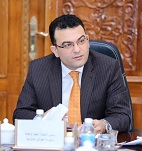
An Interview with Omar who came from Syria to Turkey and moved in Reyhanlı district of Hatay
Omar, who is a teacher, lost many of his relatives as a result of the attacks launched in Aleppo. Firstly, he settled in a village near the airport, but he decided to move to Turkey when the attacks were launched there as well.
ORSAM: Could you tell us about yourself and your life in Syria before the civil war?
Omar: My name is Omar. I am 33 years old and single. I graduated from the University of Aleppo. I am Mathematics, Physics and Chemistry teacher. I live in Aleppo.
ORSAM: What are the reasons that made you leave Aleppo?
Omar: I resided in Al Izaa neighborhood of Aleppo. Our neighborhood witnessed similar scenes with Palestine/Gaza. Lots of demonstrations were organized. Also, air bombardments targeted the villages of Aleppo. When I attended a funeral ceremony, we were attacked through an air strike. 12 people were killed in the attack, and 25 were injured. 7 of those s25 injured were martyrized afterwards. Those attacks took place before the conflicts that broke out between the regime forces and Free Syrian Army in Aleppo.
ORSAM: What are the developments that led you to leave the city?
Omar: During the month of Ramadan, attacks were launched in Seladdin neighborhood and eastern parts of Aleppo. My brother lived in Seladdin neighborhood, and he fled to where I lived as the attacks increased. When a bombshell fell near our house, we realized that we had to leave Aleppo.
On April 2011, we left Aleppo and moved in Teftanz village. However, it was almost the same in Teftanz village as well; it was under a constant bombardment like in Aleppo. Our house was set on fire by the regime forces. More than half of the houses in the village were destroyed by the army. Also, 400 people were martyrized and 45 of them were my relatives.
Before the revolution broke out, many people in my family were sought by the regime. In 1980s, my 8 uncles were sought. 5 of my uncles, on the other hand, had fled abroad. The majority of sAl Gezal family are well-educated. For example, all of my siblings and I are all university graduates. We were also against tyranny. We are one of the first groups taking part in demonstrations.
During the Ramadan, when the army entered Hama, the locals of the village made a raid on the police station and besieged it. The army entered our village on late October 2011, and one of our family members was martyrized. Then, on January 2012, another raid was carried out. 3 other members of family were martyrized.
When the revolution started, we did not have any weapon. Therefore, the locals of the village started to sell whatever they had to purchase weapons. Nobody distributed weapons and everybody bought weapons that they could afford.
Afterwards, the army wanted to enter the village once more, but it had to reach an agreement with the Free Syrian Army when encountered an armed resistance. In accordance with the agreement, the army settled near the airport of the village.
ORSAM: What are the terms of the agreement?
Omar: The army attempted to enter the village, but it called for an agreement when it suffered more than 50 losses. In the first place, armed conflicts stopped, then an agreement was reached. In accordance with the agreement, the half of army withdrew, and the other half settled in an area near the airport of the village.
The house of my sister was close to the area where the army settled. We had a truck. We installed loudspeakers on the truck, and started to address to the army. “Whomever wants to leave the army, we can safely take him to his home,” we addressed.
Concordantly, anti-regime demonstrations were held without cease. The demonstrations were monitored by the army. But they could not do anything due to the terms of agreement.
The army intended to enter the village for the third time on April 2012, but they showed up in a totally different way then. They resorted to missiles and airstrikes in the attack. Furthermore, the attack was carried out by a brigade composed of 7000 soldiers and 100 tanks called 167 Death Brigades.
After that, the Free Syrian Army decided to leave the village to prevent any further damage to be given to the locals of the village. When the army entered, a great number of people were martyrized and 400 houses were set on fire.
ORSAM: Have you ever witnessed a scene that affected you deeply?
Omar: When the regime forces besieged a place where the locals took shelter in, they took the young members of families out and executed 10 people. 5 of those who were executed were my close friends. Although my uncles was 72 years old, he was executed by the regime forces for supporting the revolution.
Another example is about Hadji Salih Gazal. Despite the fact that he was 80 years old, they burned him alive. Of course, he was also executed for supporting the revolution. A 104 year-old from Al-Mesul family was coldbloodedly killed, despite his age. While killing him, “are you still alive, enough is enough!,” they were shouting. After three days, they left the village, and the Free Syrian Army entered the village again. The life in the village started again.
ORSAM: After all that happened, why did you decide to leave Aleppo and move in the village?
Omar: They did not organized bomb attacks on us from April 2012 until July 2012. Because the airport is close to the airport, and they did not want to give damage to the airport. Also, the army gave many losses. Hence, we had to leave the village on July 2012. First, we wanted to go to Murret Nasrin. But when the attacks were launched, we decided to move in Turkey.
Due to the fact that I did not have a passport and my family's passports had expired, we had to cross the Turkish border illegally. On the 15th day of Ramadan in 2012, we moved in Reyhanlı and rented an apartment. We are in good shape now. Thank God, I had saved money as I worked hard.
ORSAM: What are your positive and negative views about here?
Omar: The Turkish people are hospitable in general. However, before coming here, the rents ranged between 200 TL to 300 TL. But I could rent an apartment for 800 TL. Some are up to 1200 TL. This is the negative side of Turkey.
The positive side, on the other hand, is that I can go to Aleppo when I find a chance because here is located near Syria. Besides, the local people of Reyhanlı speak Arabic. It seems too hard to learn Turkish at this age.
As for the distribution of aid, I can say that there is no such thing. Everybody is thief and opportunist. I was in good shape. But I am in need of some help due to the fact that I am not currently working and I have a lot of expense. Sometimes, my sister in Saudi Arabia send us money.
Somebody gave us a food aid package in the first place. But this was the first and the last time we received such aid. You need to have someone that knows you to receive aid. In other words you need to have an in.
Here, there is no such thing as aid. People will either go to tents, or they will have to continue to live in Syria and live under the attacks. I know very poor families. They do not want to stay in tent. Nobody is extending them a hand. I do not understand why; is it because of the mismanagement, or something else? When I talk to Syrians here, it feels like we are going through the same things in Syria, and nothing has changed. Lastly, I hope that this crisis come to an end as soon as possible. And I hope that God doesn't forget anyone.
*This interview was conducted by Lina Zekeriya Saguj in Reyhanlı district of Hatay on 22 February 2013.