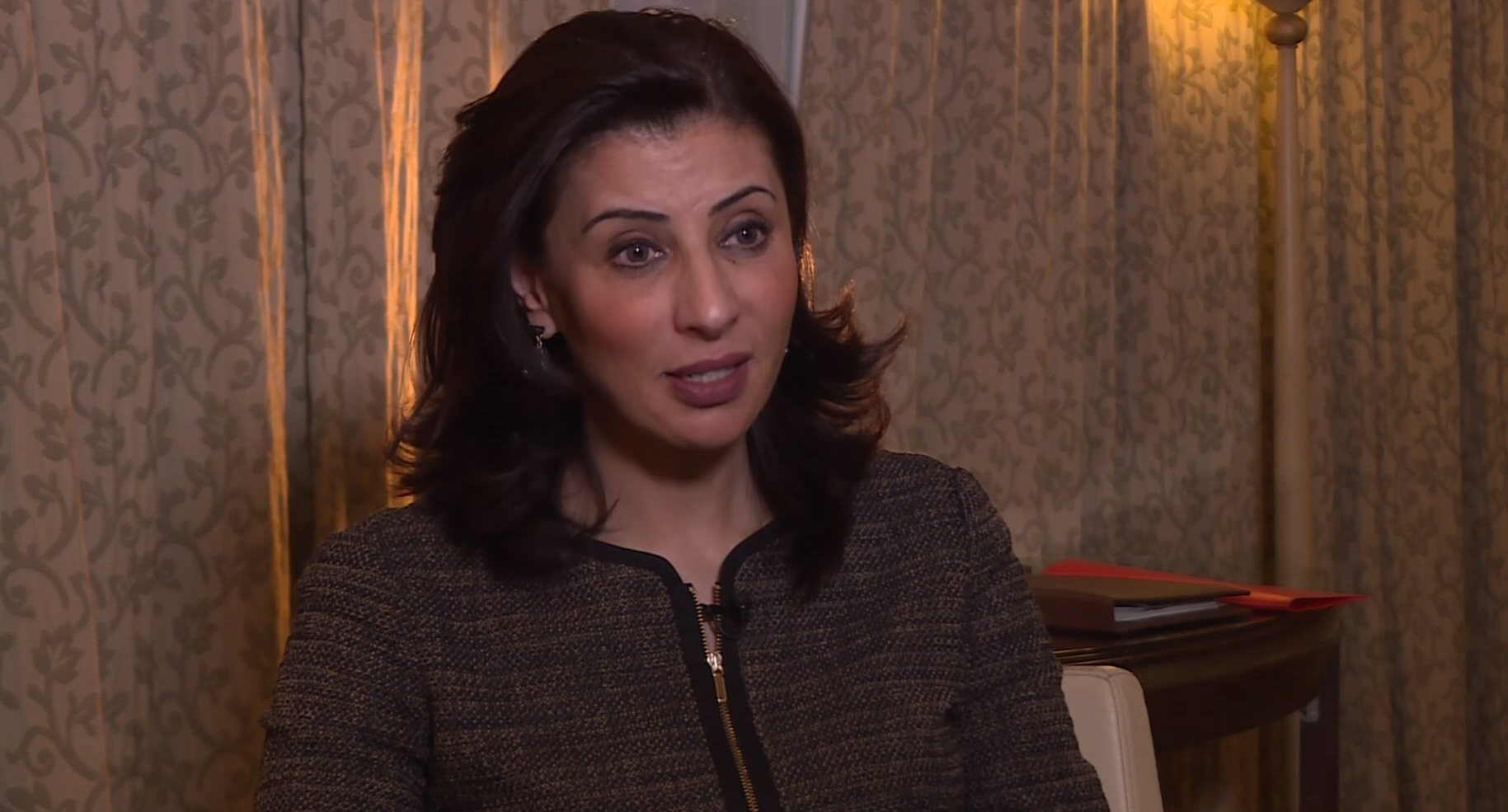
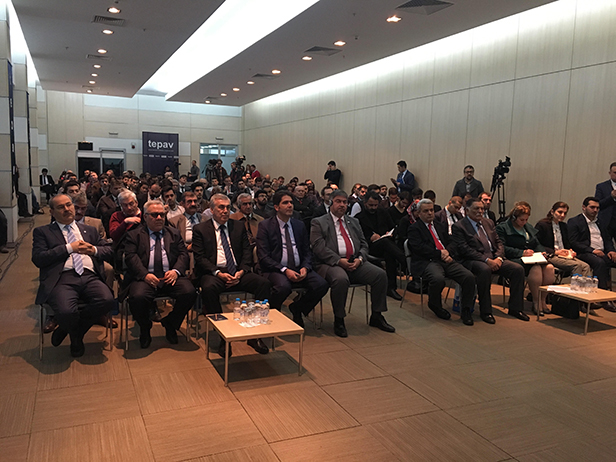
Serving as a Distinguished Research Fellow for the Middle East in the Institute for National Strategic Studies (INSS) at National Defense University, Judith Yaphe is one of the leading specialists on Iraq, Iran and the Persian Gulf Region. In the interview we conducted with her in Jordan, we talked about the Arab Spring process; the civil war in Syria; and Turkey – Israel relations.
JUDITH S. YAPHE: “I BELIEVE THAT THE U.S. – TURKEY COOPERATION ON SYRIA WILL INCREASE”
ORSAM: Would you please start by introducing yourself very briefly?
Judith S. YAPHE: My name is Judith Yaphe. I am a distinguish research professor at the institute for national strategic studies, a think-tank based at the National Defense University. I am a specialist of the Middle East and especially of Iraq, Iran and the Gulf region and of US security policies towards the region.
ORSAM: First of all, I would like to start with the Arab Spring. How do you see the general situation in the Middle East after the Arab Spring and do you think that the process will lead to a democratization in the region or face more instability in the region?
Judith S. YAPHE: I think in many ways it’s too soon to tell. Because this is a process that seems to have happened overnight, but it didn’t really. There are a lot of underlying factors like the lack of jobs. At the beginning, this was a demand for jobs, for a more liberal economy, as well as for political reforms but that was forgotten rather quickly. It didn’t start with a demand for regime change, not anywhere, but it happened quickly. And the reason it happened so quickly was partly because several of these governments or the major institutions in the government – and I’m thinking here Tunisia where it was not the military but it was the party, Egypt for sure was the military – decided very quickly that to protect their own interest and in order to maintain their power, they had to remove the greatest threat, the greatest risk to them. And the greatest risk was the leader. Certainly true of Ben Ali in Tunisia, certainly true of Moubarak. He was very quick to make that analysis and to go but it didn’t stop anything.
I asked myself when this process began, transition government sounds good and they all swore to the great principles of change and reform of these revolutions but we looked around and the people that were in Tahrir Square, that made these changes possible disappeared. Where were the youth? Where were the women? Where were the students? Where were a lot of the people that really took risk and were out there demonstrating? They just sort of disappeared and what took over were prominent people from the old regime in Tunisia, appointees of Ben Ali, who decided to take over. They knew better so they controlled the transition. In Egypt it was the military. And if you look at it, those two examples are the two most successful. After that you have varying degrees. It’s hard to call them outcomes yet because we are in a process here that is going to last for a long time. But, it was easy for these movements to be taking over these revolutions. Their contacts were probably better in Egypt than other places but still they did have the sailing force. The institutions that had been there, certainly the military and also the Brotherhood which was pretty well organized in almost every country clandestinely or even in a modest public way but they were there, were well organized. And as I think we saw for example in Iraq where it was the Shia party that came out so successfully, they had the structure that could take over and make decisions and do things to protect the community right away. The Sunnis in Iraq didn’t have that. Society in general in Egypt didn’t have that. And I think that’s so much of what we are seeing here. The rest of the struggles are fights for interest groups’ control. We seem to include Yemen in this Arab Spring but that’s been going on for a very long time. Whereas it may not be quite a switch, it is benefiting from that. And it will perhaps count as one of the successes, we’ll see.
So this is very complicated but certainly what happened in Syria is all of this at its worst. The repressive regime is getting serious backing from Russia, which certainly doesn’t believe in reform and does not believe in Islamists. They are afraid of Iran and yet here they are part of the bonding with Assad. As for Iran which has a lot at stake, I think in many cases they too are willing to stand by the regime because that’s what protects their interests. But if Assad were to be a great risk, “goodbye!”. Because I think they are also planning for alternatives: people that they know who would be loyal or represent their interests. You never do anything without a Plan B. The Russians have them a lot at stake here. And this is enough to keep this going and going. And I don’t know how you are looking at it but people I think have been very influenced by some reports recently suggesting that the free army extended its realm. But it will not end today, neither tomorrow nor next week. Will it last for years? I don’t know, I don’t think anybody does.
ORSAM: Nobody can foresee the future of Syria but what are sure about it is that it will never be ruled by a strong central government anymore. When we look at the Middle East, there are two examples which have weak central authority, historically Lebanon, and also Iraq after the invasion. So can we say that in Syria we will also see the same models which we have in Lebanon and Iraq?
Judith S. YAPHE: This is a great question. In Iraq in a way, the American army was there, the military was there so it guaranteed a certain amount of protection while Iraqis were working this out. You didn’t have immediately violence. There is no such thing in Syria. So how they will work that out is a really serious question. It’s possible that Syria will fragment. I’m not a military person but it seems to me they are trying to maintain a secure route to the Mediterranean, and to Latakia. If Syria were to divide, it is where Assad would take up temporary. But I don’t think anybody has the answer. I think though that it’s going to be a lot harder to resolve the issues there. I keep hearing things I can’t prove about how many Alawites still support Assad. They wouldn’t abandon him because they are just so afraid to be alternative but there are a lot of Alawites who are abandoning. But I don’t know what the alternatives are. Certainly it’s true that Assad still commands the national power, he has got a pretty tough military, he has got a lot of support. Some people say the Iranians are sending thousands of troops. It doesn’t sound right to me, I don’t think the Iranians do that. But they are sending them a lot of things, like equipment and they are teaching them a lot of good strategy. And Hezbollah is helping them to fight and they are pretty good fighters. So we have this trio against a still fairly weak opposition. We are not helping the opposition as the others do with the regime. So I don’t know, this could go on and on. This has already done a lot of damage, like with the refugee situation. Turkey already welcomed 500 000 refugees on its territory and there is the same amount minimum in Jordan.
ORSAM: What about the spillover effects of the Syrian case? For example the Sunnis in Iraq are uprising against the Maliki government…
Judith S. YAPHE: I would not call it an uprising yet, but there are trying to organize themselves, they have to do something to protect themselves against the use of the army, the recent crisis that was risky. There are so many areas where you could have a crisis in any moment; they have been doing skirmishing in the disputing territories. The Kurds are pushing within any weakness. But yet, I’m not so sure they are. They don’t want to lose what they have but I am not sure they want to leave Iraq because there are certain things that they need, they have to depend on you, they have to depend on Turkey. How do they get their oil? How do they get anything in and out? I have a suspicion that the Iraqi Kurds and Barzani would love to take over and to be the great force behind this movement, but I’ve interviewed enough Syrian Kurds to say that he is not popular, that the Syrian Kurds regardless of whatever else is going on see Turkey as the primary target. And I also think that there are lessons to be learned from Iraq. And one of the lessons is that Kurds are not important when the central government is under major attack. When Saddam was under major attack, he took care of the south, the Shias as primary threat. And he took care of the Kurds after everything else was under control. I think that’s also Assad’s plan. He doesn’t care of the Kurds for now, they are not the major threat. But from what I’m reading in the press, the strategy of what they’re focusing on, how they’re focusing on certain targets, that’s smart. You just can’t go out and fight everywhere, you have to concentrate your forces and he has got the preponderance of force, he has got the weapons, he has got the planes and he has got the bombs.
ORSAM: What do you think about Israel’s perception of the Arab Spring and situation in Syria? Do they perceive it as a threat or an opportunity?
Judith S. YAPHE: Both, it’s both. I think they are afraid of what might replace Assad, because after all they have had a tacit understanding: there hadn’t been any major attacks until last year when Assad gave a green light to the Palestinian militants to play around in the border areas and then Israel was attacked. There has been more pressure on the Golan again, shooting back and forth. But, you know, this is going to be a lot of concern, because they had their red and green lines with Assad, all sides knew what they could do. But I don’t think they want to work with Syria. However, they are not going to allow anything that they will see will lead to a major risk. The moving arms around or Hezbollah still going to be Lebanon, they will take care of that. And if it looks like it might be a nuclear attack, they will take care of that; easy, quick, surgical, not a big problem. As I listened this morning to an Israeli general, he is not happy of the attitude of Iran in Syria and warned the Iranians. But you know, there is this argument within Israel over how imminent the threat from Iran is in Syria, and it comes out every once in a while. I think, however that the Iranian intervention in the Syrian conflict has helped us deal with the Iranian threat as we see them trying to build up their leverage and alliances in Syria. And that’s something we can take care of, and probably the Americans won’t be too upset about that. Erdogan may not be too upset about that neither. Because Obama made B. Netanyahu call Erdogan and apologize. Isn’t that wonderful? Everything is good. No.
ORSAM: How do you foresee the future of Turkish-Israeli relation?
Judith S. YAPHE: Erdogan and Netanyahu are such characters, such difficult personalities. I don’t see it in the short term. Erdogan has elections. Is Israel popular in Turkey? Is America popular in Turkey? For a long time we were very unpopular, I’m not sure that’s a proof but I don’t know. I don’t follow Turkey. I follow Turkey especially in its involvement with the Arabs, and with Iraq but domestically, I don’t know how to read internal politics. Erdogan is such a strong personality. I remember seeing pictures of the interview with your ambassador before the relations were broken and it was stage managed to make it look like it could be insulting for the Turks. That was stupid. Why does he do these things? You know, if it is going to be an improvement, they are going to have to make some real effort. And at least from where I am sitting, I haven’t seen much and I don’t know that you’ll see anything soon. I can’t assess the depth of resent and what Erdogan, for the elections or for whatever purpose, will make of it. But I know who to ask. We have some excellent Turkish scholars in Washington. We have an excellent Turkish scholar at my university, NDU, Omer Taspinar. We have other Turks there, in the think-tank, who are very, very good. And the interest is high. So it would be easy to get more understanding.
To be honest with you, I have to say, I probably shouldn’t say that but I do think it’s true, there is a great reluctance, not only from the administration. Americans don’t want to get involved in any major conflict in the region. That’s one of the reasons why we hold back on Syria. It’s very unpopular: get involved in another war. So I think that there is no easy way to do it. Even, it crosses parties’ lines. it’s not the Democrats vs the Republicans in Arab politics. But there are very few Republicans that are really outspoken: “we’ve got to go in, we have to implement a no-flight zone” But they are the very few voices like John Mac Cain that speak up for intervention. That is a message for the difficulties that the administration faces in Syria. That’s an honest answer, I think it’s an acceptable one.
So if you take me back, I think Turkey and Israel have to wait. I think Israel is willing to take certain risks with the United States: “Ok, we are not gonna bother with Iran now, that’s fine. But look, we understand you have a local problem.” So I think that they either are willing to risk that or maybe there is a tacit understanding, I don’t know but that’s the way it feels, because we say it publicly: Israel has the right to defend itself. And if you want to interpret that, it means that they have the right therefore to watch who is crossing into Lebanon, or what Hezbollah is planning on doing. But I don’t think the Hezbollah is planning a war but there is a problem. And I think that given this apparent softness of the Israelis, they are willing to take certain risks within limits. But I would like to see, and I think the meetings have been positive between Erdogan and Obama. I’m hoping that they will spill over towards more cooperation because we need Turkey and I think it is important for Turkey to have the role that it wants to have. I know there is a lot of talk about Turkey as being a model. And at the same time Turkey has its rivalries for that kind of moral authority. So the stand against Syria is appreciated. The Egyptians for instance agree with this. The Egyptians want to come back as a major force as well, but they are far from it. They want to play that role they used to. So I think there is here an easy kind of alliance. And Syria is precipitating it because the danger I think is high for Iran but is also high for Turkey.
ORSAM: Thank you very much.
* This interview has been conducted on May 22, 2013, by ORSAM Chairman Hasan Kanbolat and ORSAM Researcher Oytun Orhan in Jordan.