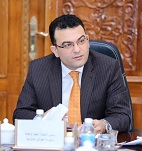
lah Bedreddin: “The Moment the Syrian Regime Collapses, Another Political Party to be Formed by the Youth Will Emerge. None of the Former Political Parties Will Remain.”
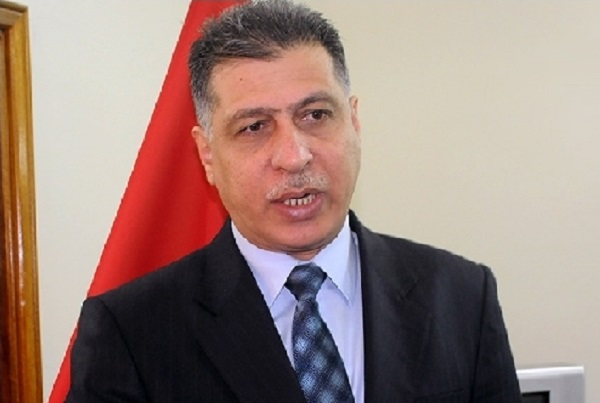
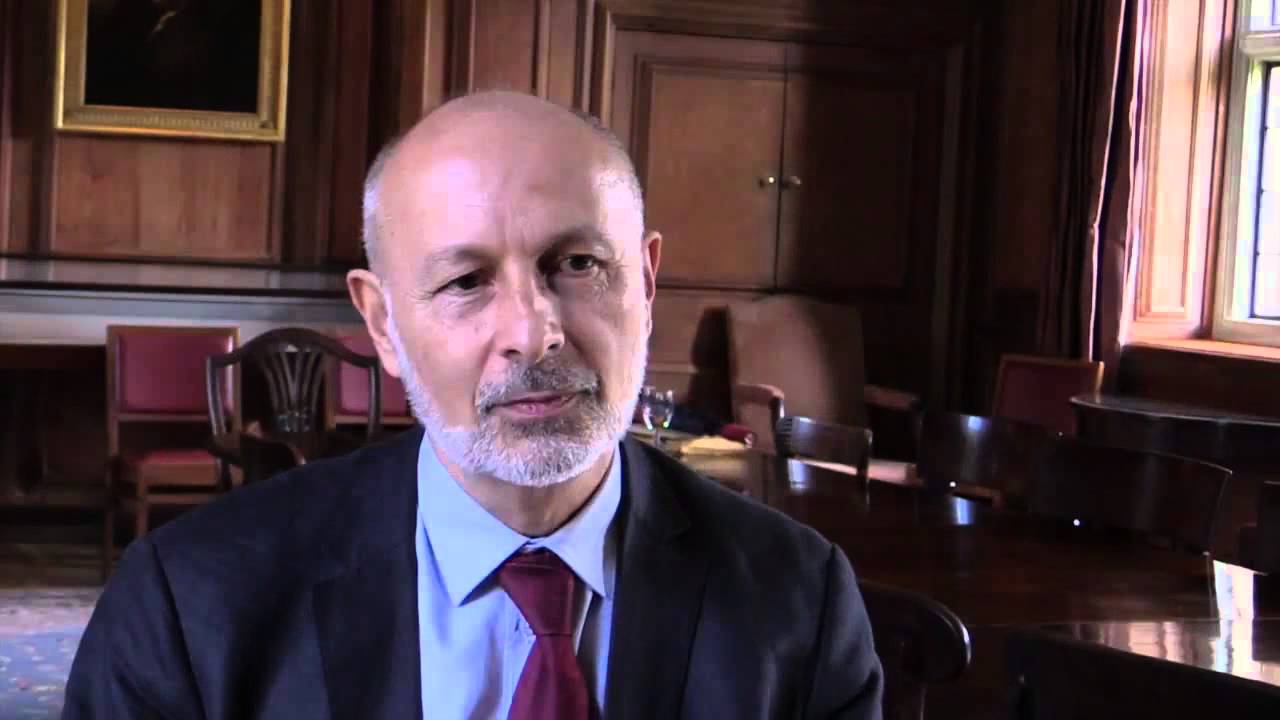
Salah Bedreddin, a prominent figure of the Kurdish movement in Syria, actively participated in politics for many years. Bedreddin believes that the owner of the revolutionary movement that has been taking place in Kurdish regions of Syria in the recent period is not the political parties, but the young people who take to the streets. Hence, he does not take part in the active politics, but maintains his support for the Kurdish youth movements, which he considers as the real owners of the revolution, as well as his relationship with the aforesaid movements. We had the opportunity to talk to Salah Bedreddin in Arbil, Iraq where he still lives. Bedreddin shared his opinion with us on the future of Syria, the expectations of Kurds and on the relations with Turkey.
ORSAM: First of all could you shortly describe yourself?
Salah Bedreddin: For 40 years I am within the opposition in Syria. Right now I am working on my own. I have works and writings on Syria becoming free. I am closely acquainted with the entire opposition. They also know me but I am not a member of any party.
ORSAM: Do you have any relations with the Syrian National Council?
Salah Bedreddin: No. I have no relations with any party. I do not think that I will in the future either.
ORSAM: How do you evaluate the current conflict in Syria, how do you think this conflict will result?
Salah Bedreddin: 16 Kurdish parties formed the Kurdish National Council in Syria. These parties do not represent the Syrian Kurdish opposition. They declared that they were not close to any side when they were first formed; they are neither on the side of the regime, nor on the side of the opposition. The PYD is a part of the regime. The opposition in Syria does not allow the Kurds to form a party. The youth is holding demonstrations on the streets. In the party programs, the Kurds have not the side of the regime, nor of the opposition. But today the regime has very much weakened. There is the possibility for it to fall. After two years, the Kurdish parties are also saying “we favor the regime to fall”. The opposition existing currently in Syria is not classical opposition. This war is only the war of the youth demonstrating in the streets. We want the regime to fall and to be free. I am on the side of the youth showing theirselves on the streets. I believe that in the future, victory will belong to the youth and to those suffering.
ORSAM: No matter how much the youth is out on the field, we know that the PYD has an armed wing. Do you think that the revolution will be controlled and directed by the PYD or by the youth on the streets?
Salah Bedreddin: The PYD was the regime’s project. The PYD did not exist in the first 8 months after the demonstrations had started. After 8 months a meeting was held between the PKK and Assad at Suleymaniyah. Director of military intelligence Assef Shawkat, married to Bashar al-Assad’s sister, came and made that agreement. Assad and the PKK agreed that their enemy in Suleymaniyah was Turkey. The Assad regime gave them weapons and permission to enter the country. If someone possesses a weapon, he will try to prove himself. I don’t know how many groups the PKK has in Syria but not all of them are working for the Kurdish problem. Some of them are working for the regime’s interests. Actually, clearly they were together with Hafez al-Assad. Their programs are not directed towards Syria, but towards Turkey.
ORSAM: The Kurds in Syria have desires for federalism. Do you think that their desire will become true?
Salah Bedreddin: The war is in two stages. We are currently in the first stage. The first stage is the collapsing of the regime. The second stage has many steps and the Kurds are one of these steps. I do not think that with their desire for federalism, the Kurds will wage war with the Arabs, because the suitable timing is not right now. This desire is the Kurds’ rights. I hope that they will obtain their rights in the future. Apart from the Kurds, there are also other groups encountering problems: Christians and Turkmens. There are also problems of religion and sects. But all of these problems are the subjects of the second stage. The Kurds saying “we want federalism” right now has political purposes. For the time being there is no ounce of truth. While we were saying “we want federalism” during Hafez al-Assad’s period, those speaking out right now were saying “we don’t want it”.
ORSAM: Among the political movements among Syrian Kurds, which ones do you think are the most strongest? Or as you just mentioned is the youth who do not support any of the movements stronger?
Salah Bedreddin: The moment the Syrian regime collapses, another political party to be formed by the youth will emerge. None of the former political parties will remain. In fact, this not only goes for the Kurds, but also for the Arabs. There are also many parties among Arabs. These parties also have no meaning. No one knows what they are. 60% of the public is young. Therefore, 60% of the future belongs to the youth.
ORSAM: Which ones are the most powerful youth-led movements?
Salah Bedreddin: Foundations like Local Coordination Committees, Free Syria Army have coordinators for the youth also. Especially in the province of Hasakah, in Afrin there is a Free Kurdish Army. These are a part of the Free Syrian Army. The name of this group is Al-Assembly Military Kurdi Hur. It consists of 4 forces (divisions): Salahaddin Eyyubi, Yusuf Azmi, Kaval Hattat, Al-Bab (the Kurds and Turkmens together). All these together are an assembly. Its leader is a colonel having parted from the Syrian army. Right now the war in Syria is this. The association of young coordinators and the Free Army. People from the outside are giving support to them. There are some among them where whichever one wins, they will take that side. However some we call them Shabiha and the PKK is considered as Assad’s shabiha. If the talks held between Öcalan and Turkey create results, the situation of Syria will very much change.
ORSAM: What kind of a change will there be?
Salah Bedreddin: Right now the PKK and Assad have a link between them, but if Turkey and Öcalan come to an agreement, there will no longer be a link. Logic shows that this is what will happen. Turkey and Syrian population are friends. Öcalan has sent a letter to Qandil. According to it, Öcalan has said relations will improve. Öcalan is a very powerful leader.
ORSAM: There are Syrian peshmerga forces in the Iraqi Kurdish Region trained by the peshmerga forces there. How do you evaluate the possibility of these pershmerga forces returning to Syria?
Salah Bedreddin: In my opinion, the time for this has passed. There is war in Syria since two years. 1000 people came to Iraq and received training, but they did not return to Syria and they don’t have to return. A dialogue is necessary between the regime and opposition of today. This issue is political. If these peshmerge forces return, a conflict will take place with the PKK.
ORSAM: The most powerful youth-led organizations are which ones?
Salah Bedreddin: There is no one to chair all of them. These consist of 4-5 groups. Sometimes they are united and sometimes are separated. One month something else will happen, while another month something else will. For instance there is a group. It threw its chairman into prison and that group disbanded. Then another group formed. These were neither parties nor military organizations. The war in Syria has one characteristic Wherever the Kurds conduct a demonstration, these youth will go after them, but if a problem arises all of them will disperse.
ORSAM: What are your thoughts on the Serekaniye events?
Salah Bedreddin: Some Arab tribes from Rakka and PYD groups from Kamishli have gone to Serekaniye. These tribes have caused unrest in Serekaniye and created disorder. I believe that the regime has a finger in this matter. Unrest is very bad for Muslims. There are all kinds of people in Serekaniye: Arab, Chechen, Circassian. The Free Army has the right to control all areas of Syria. These are an important part of the war. When the Arabs had arrived there, members of the PYD were saying “All of these are Erdoğan advocates”. But as you know a while ago the PYD and these groups had reached an agreement. Now all of them are friends. It has emerged that they are not advocates of Erdoğan but of Assad. The PKK alleges that Al-Qaeda has come to Serekaniye from Turkey. This has no truth to it. Until now Turkey has not wanted to create problems there. What Turkey wants is not for all groups to fight with each other, but against the regime. In the future this desire might change, but until now there has not been such an approach.
ORSAM: How do you evaluate Turkey’s approach towards the Kurds of Syria?
Salah Bedreddin: I was in Turkey in February 2012 as a guest of the Foreign Ministry. I met with Undersecretary Feridun Sinirlioğlu and Deputy Undersecretary Halit Çevik. I told him “we are neighbors with Turkey. We have a border of 900 km. Kurds exist in both countries. In this situation, the two countries must work together”. I suggested a committee with three feet to being established: Turkey, Iraqi Kurdistan and Syria. These three sides are arranged by agreement. Assad leaving will be to the benefit of all of them. The Kurds and Turks in the Middle East must understand each other and come to an agreement. I believe that without the Kurdish problem being resolved in Turkey, this issue will not come to an end. I am very hopeful for the talks being held between Öcalan and Turkey. I hope it will reach to fruition.
ORSAM: How do you see the future of Syria? Will the Assad regime collapse?
Salah Bedreddin: The Assad regime will collapse and Syria will not disintegrate. A new constitution will be implemented. In this constitution it will state that the Syrian nation does not only consist of Arabs, but various nations also exist. Each nation will obtain their rights within Syria’s integrity. Assad wants Syria to disintegrate. Disintegration is Assad’s plan. 50% of Syria is either not Arab or not Sunni. Radical Islamic groups have no future in Syria. The Syrian nation is secular.
ORSAM: Thank you.
* This interview has been conducted on 26 February 2013 by ORSAM specialists in the city of Arbil of Iraq.