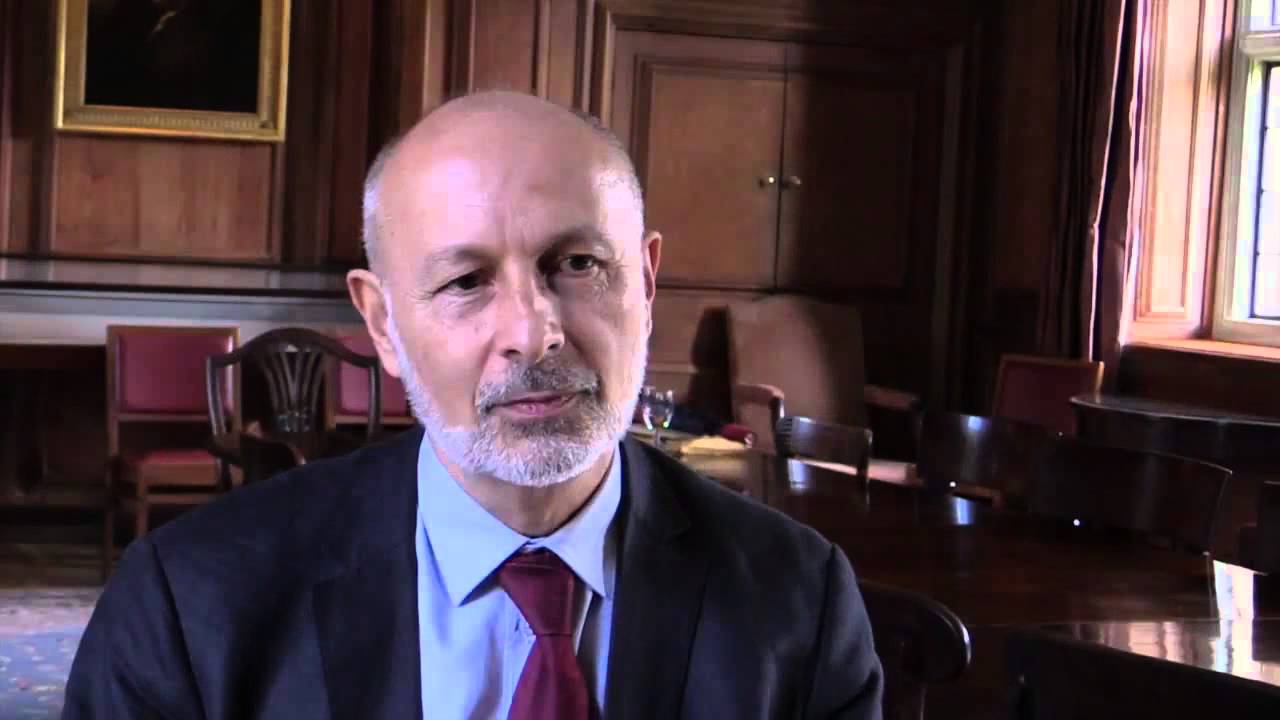
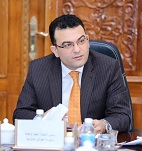
ORSAM: We see you as the most prominent figure of the think tanks in Turkey. You are the pioneer of the think tank sector in Turkey. Thus, your experiences are very important to us. First of all, could you tell us how did the idea of establishing the Turkish Foreign Policy Institute, of which you are the president, come about?
Seyfi Taşhan: I was a businessman until 1971. In the meantime, I have worked as a journalist. Also, I worked as a radio broadcaster for a while. After some time I got tired of the business life. I wanted to publish a publication to promote Turkey. The main purpose of the publication was both to promote Turkish foreign policy and also to inform Turkey of the developments abroad as objectively as possible. There was a split between right-wing and left-wing in Turkey during that period. The center was split into two parts as center-right and center-left. Prof. Fahir Armaoğlu, Prof. Suat Bilge, Artemur Kılıç and I discussed what kind of journal we were going to publish. Finally, we decided to publish the “Dis Politika-Foreign Policy” journal both in English and Turkish. The first issue of the journal was published in 1971. But then I saw that it is difficult for only two-three people to publish a journal. Therefore, I thought it was necessary to establish an institute to support the journal. I traveled around the world to figure out what we would do and how. I paid visits to think tanks in the US, Italy, the United Kingdom and France. I thought it is possible to establish an institute in Turkey, partially close to the government but also independent in its activities. But what was going to be the form of this institute? The security had a broad control during that period. The activities of associations in the field of international relations and cooperation with foreigners were subject to the permission of council of ministers. In other words, we wouldn't be able to establish an association or foundation. So instead we established a small limited company. We founded the Turkish Foreign Policy Institute (FPI) in 1974, then we started to work close to the Ministry of Foreign Affairs. We carried out activities of generating ideas in Turkey in due course. We held conferences bringing academic circles, authorities from the general staff and ministry of foreign affairs. In the first place, we published the Foreign Policy journal only in English. We were the only organisation in this field of activity during the Cold War years. The idea became popular in 1991 with the dissolution of the USSR. Lots of think tanks were founded and closed down in late 1990s. ASAM, for example. We established the Turkish Foundation for Strategy and International Relations in 1987. The foundation could receive financial support from the Ministry of Foreign Affairs. Thus, we transferred some shares of the Turkish Foreign Policy Institute to the Foundation, through which FPI became affiliated with the Foundation. We held lots of international conferences. The government provided us the top floor of the Hacettepe University's Rectorate building. We were hosted by the University for a decade. Our organisation has been associated with Bilkent University since 2000 upon the request of late Prof. Dr. Ihsan Doğramacı. We have delivered speeches about the Turkish foreign policy across the world. Sometimes these speeches gave results that could affect even the foreign policies of the foreign countries. We worked, and continue to do so today.
ORSAM: It is hard for think tank sector to survive even today. There is no strong tradition for the government to work in cooperation with think tanks yet. The self-enclosed structure of state during the Cold War years must have caused to major problems…
Seyfi Taşhan: We sent a friend of ours to the then Foreign Minister in order to establish the Institute. “Foreign policy is government's business. Private sector cannot interfere in this,” said someone next to the Minister. But yet, we established the Institute despite this statement. Afterwards, the aforementioned Minister took part in a conference (who was not in office then) held by our Institute, and said, “the government should support this organisation, we need such organisations”. The U.S. senators, congress members have been invited to Turkey since 1973. The U.S. officials did not accept official invitations back then. We were the only private organisation. And the government invited the U.S. officials through our organisation. Also, we held a great number of talks in the U.S. during the embargo. After all, we achieved to cooperate with the government. For instance, we published several books on the Armenian issue upon the request of the government. Financing was generally for projects. Our financial source was my savings and the money after I sold the apartment.
ORSAM: Which steps should be taken to promote the think tank sector in Turkey?
Seyfi Taşhan: In almost all models in the West, the government supports think tanks to introduce its foreign policies and receive help in generating new foreign policies. However, in the U.S., the government does not quite support such organisations. It is different out there. Foundations, namely communities, are very powerful in the U.S. For example, there are many think tanks supported by Jews. It is a matter of finance. Businessmen in Turkey should see the importance of this sector. I had a guest from Norway, a foreign affairs researcher, last year. He said that a large oil company in Norway wanted to invest in Turkey. That's why he came to Turkey, to make an examination on the issue. Here it is, a think tank. We, on the other hand, try to keep the organisation alive through the money we are granted for conferences. This office is my property. There is a secretary and an accountant in the organisation. It is the only expense which is financed by the small budget allocated by the Ministry of Foreign Affairs. We have to find another financial resource for projects. But what really matters is the ones who scientifically contribute to our studies. For instance, those who help us when we prepare to publish a book. The heads of department of International Relations from a great number of universities in Ankara are the members of our Council of Administration. They support and help us.
ORSAM: How should Turkish politics and bureaucracy support think tanks?
Seyfi Taşhan: Above all, one should know that think tank is necessary in every field. For example, think tanks should be established in the field of education, and education policies, as well as defense, agriculture etc. policies should be examined. It is a job for volunteers. It is hard to use think tank as a stepping stone in Turkey. In the U.S. and sometimes in Europe, think tank employees can find a job in government bodies. We had an esteemed member – God rest his soul – of Council of Administration in our organisation in early 1980s. He invited businessmen to his villa in Istanbul. We discussed in what ways they could help us. One of them took me aside and asked, “How many membership would you grant to us in the council of administration if we were to support you?” “There are military men, professors and those who are not affiliated with any party in our council of administration. We would grant you three membership,” I answered. He did not like the offer and said, “You will grant us the majority.” I did not agree, so we did not reach a settlement. Then they established a foundation, of which all members were businessmen. They only survived for some two years. Foundations have to find a financial resource to survive. Today the government sees only a couple of foundations close to itself and supports them. Those foundations can keep on as long as they receive the support of the government. At this point, politics is at stake. The government supports no one for free. Our organisation, on the other hand, is both close to the government and also impartial. We can objectively discuss with academicians. The members of our Council of Administration who enter politics have to leave the organisation.
ORSAM: The think tanks in Turkey cannot somehow be institutionalized. ASAM carried out studies for a decade, but at the end, it could not survive. Today, SETA can be given as an example to an organisation at this scale. Nobody knows what happens in 10 years from now. The key point is to become institutionalized. What do you suggest about this?
Seyfi Taşhan: In the Italian model, think tanks are considered some sort of government body. A share is allocated from the government budget. Which shows that they are under a political control. In France, on the other hand, think tanks are almost a branch of the French Foreign Affairs. In the United Kingdom, they are provided with the government funds. Other financial resources are looked for to carry out projects. Of course, this situation applies to foreign policy think tanks. Relevant ministries need to support the think tanks in other fields. For instance, the Ministry of Education needs to see that it should have a think tank working in the field of education and support it. In our country, people donate only for the hereafter. Nobody donates for this world that we live in. Therefore, the only choice we have left is the government. Lastly, the government should see, understand the benefits of the civilian mental and agree to support the civil mentality.
ORSAM: Thank you.