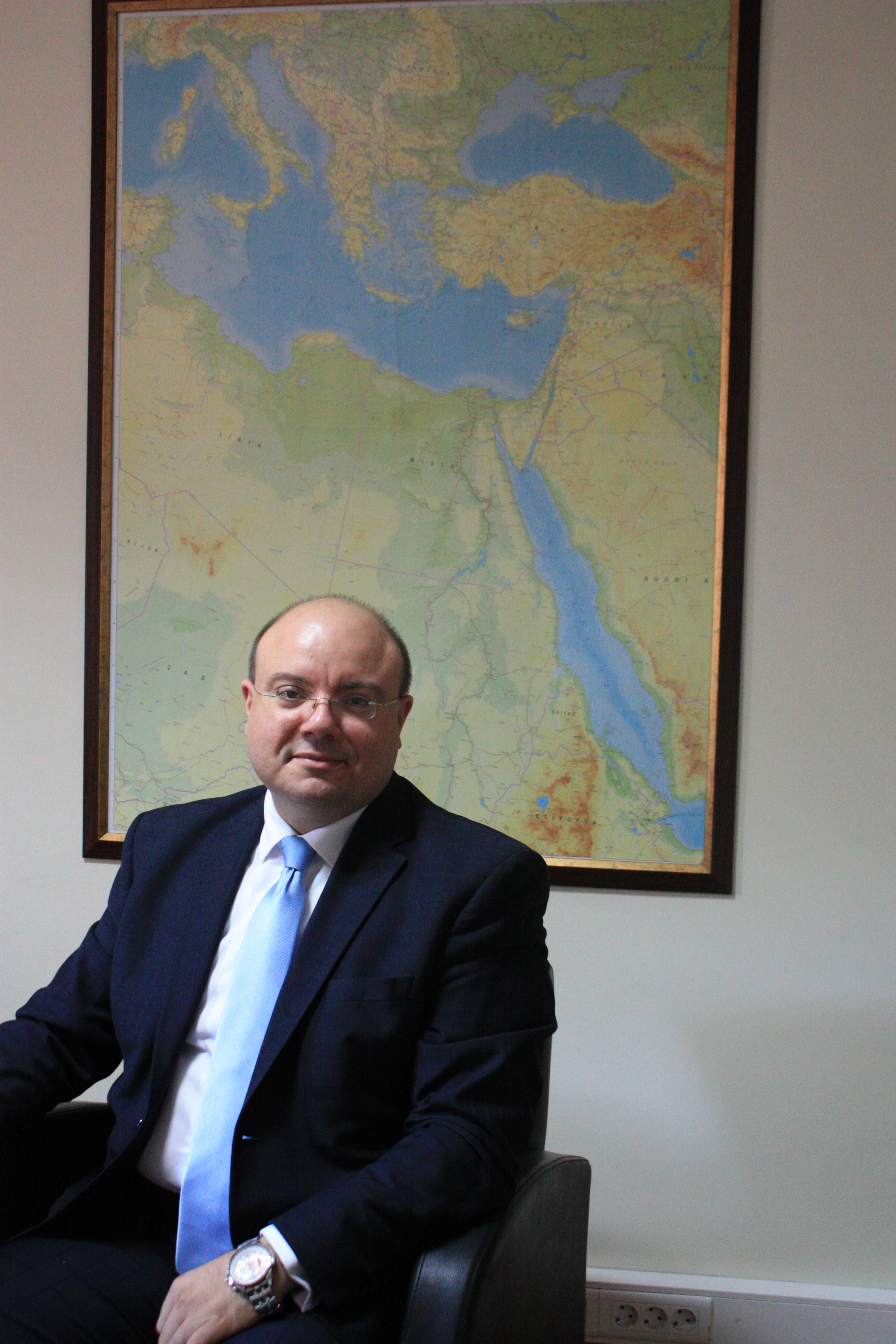
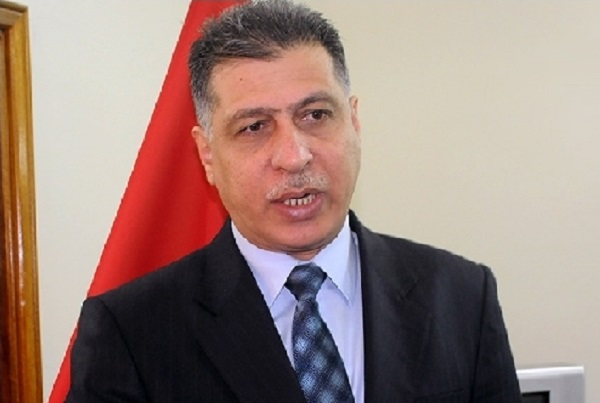
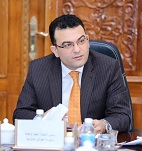
Gazwan Masri, a Syrian businessman born in Aleppo, has been living in Turkey for 30 years. The leader of MUSIAD, Misirli (Masri) is known for his opposition to the Assad regime and his close relations with Syrian opponents in Turkey. Gazwan Masri is also closely interested in Syrian refugee camps in Turkey. We talked to Gazwan Masri, who regularly visits the camps, about the situation of Syrians and their problems. During the interview, Masri also shared his views about the course of Syria problem and Turkey's Syria policy.
“Turkey's Current Policy Will Bear Fruit in the Future”
ORSAM: First of all, could you tell us about yourself?
Gazi MISIRLI: My name is Gazi Mısırlı (Gazwan Masri). I am of Syrian origin and have been living in Turkey for 30 years. I am a businessman. I have been working in many non-governmental organizations. I worked as Deputy Director of Foreign Affairs in MÜSİAD. Currently, I work as the Representative of Chairman and responsible for the Middle East. Besides, I am the Vice-Chairman of IBF (International Business Forum).
ORSAM: Could you tell us about your role in Syria problem? What do you do for the solution of problem?
Gazi MISIRLI: When you hear bad news such as death and destruction from your own family, you feel obliged to help your country. We provided people who started to come to Turkey border with food, drinking water and clothes. Then we talked to Governor if there was any possibility for Syrians to cross the border. A decision was issued in Ankara and a sports hall was provided for the accommodation of people. In the beginning, 160 people arrived. Then they were followed by 8000 people. When Foreign Minister Davutoğlu came to border and saw the scene, he decided to build tent cities in the area. First of all, a tent city was set up in Yayladağı, and Syrians were placed in the tent city. In a quite rainy night, 1800 people were allowed to cross the border. As people moved in tent cities, needs started to emerge. In addition to needs such as clothes, food etc., people also started to have problems about language. We assumed this role and launched a project in cooperation with the Turkish government. Currently there are 14 camps with more than 140 thousand people. We try to help not only those who stay in refugee camps but also those who rent an apartment and settled in the area. Right now, there are some 70 thousand Syrians who rent an apartment and settled in Hatay, Reyhanlı, Gaziantep, Kilis, Urfa and Diyarbakır. We strived for those people to get a residence permit. The government reached a decision to grant residence permit for 5 months. Currently, all Syrians who come to Turkey with their passports are granted permission to reside for a year. Then injured and sick people started to come to Turkey. People went through the same problems about language. In cooperation with Ministry of Health and Provincial Health Directors, we brought Syrian doctors to Turkey. We eliminated the communication problem between patients and doctors. The injured come to hospitals and they receive treatment without any problem, then they are sent to camps or to apartments provided for them. Afterwards, they either go back to Syria or taken to refugee camps.
ORSAM: What are the main problems of Syrians who live in camps in Turkey? What are the solution-oriented works carried out?
Gazi MISIRLI: Turkey earlier announced that they could host 100 thousand refugees. However, all the people in villages are now on the borderline due to the bombardment. During the summer months, people were taken from the border and placed in schools. However, everyone had to move to another place when schools were opened. In this case, new camps were opened with the capacity of 15-20 thousand people. But it is not enough to just open new camps. Also health services, education services are provided, and daily needs as well as security needs are met. There is no difference between setting up a new camp and establishing a city from scratch. Toilets, baths, health centers, playgrounds, TV halls, education rooms. Literally a 20 thousand-city is established. There are approximately 24 thousand people in the refugee camp in Ceylanpınar now. The Turkish government and Turkish Red Crescent have been woking in cooperation to meet the needs of people. The most important deficiency I observe is the language. Sometimes there are misunderstandings between Syrian refugees and Turkish officials. As Syrians who live in Turkey, we frequently pay visits to the area. In addition, psychologists were sent to the area and they carried out studies. In the reports they prepared is written that Syrian women and children need a rehabilitation of approximately 10 years. What we need to have in mind should be not only the collapse of the regime, but also the establishment of new Syria after the revolution. 2,5 million houses are completely or partially destroyed. 3 million people left their home. Schools, hospitals, infrastructure are totally destroyed. A bombshell destroys all houses in a 1 km-area. At least a decade is needed for reconstruction. As long as world continues to keep silent like this, destruction will rise. Destroyed buildings can be rebuilt, it's not a big deal. But what about the people? Currently, 100-200 thousand people wait to cross the border. Should the border was opened today, it is estimated that some 100 thousand people would cross the border in a day. There are 140 thousand people in camps. At least 10 camps should be opened for 100 thousand people to arrive. It is a controversial issue if Turkey can absorb it or not. Primary concern is that there is still a blackout despite the fact that it is already winter. Those who wait in the borderline struggle with cold weather. Our friends visited some houses. Some 25-30 people live in a 2-room apartment. Even if you give flour to those people, they cannot bake bread. Because they do not have electricity, fuel. As we always say to Syrians who live abroad; those people need money, blankets, tents, clothes, shoes etc. We do not receive ant international aid. Only Turkey and Saudi Arabia provide support. No other country has come to aid to Syrians waiting on Turkey border. Syrian doctors joined hands to solve the health problems and they set up hospitals on the border. Medical attention is given to those who come down with hard living conditions (cold, dirty living space, polluted water) in border zone. The injured people, on the other hand, are brought in Turkey. Turkey's all health services are provided for all Syrians for free.
ORSAM: You have also been closely following the political developments in Syria. How do you assess the current power balance between the regime and the opposition in Syria, as well as the Syrian National Coalition that was created recently?
Gazi MISIRLI: There has been a major development in Syria in the last two-three weeks. The opposition forces have made great progress especially in rural areas. Cities that are located far from Damascus and Aleppo are completely controlled by the opposition. Even barracks started fall down. The most important military schools are seized by the opposition. All revolutionists realized that Damascus would be the place to end the problem and thus they turned towards Damascus. Major operations started be carried out in Damascus. Blockading Damascus Airport is a major development. Because there are barracks around the airport. After all these developments; Iranian plan, Turkish plan, Russian plan started to appear on all TV channels. Afterwards, a statement of Syria's Vice President Farouk Al Sharaa was broadcast on a TV channel. However, it is no certain information whether this statement belongs to him or not. Analyzing these plans, we see that everybody believes the regime will collapse soon. If you have followed the Russian media for the last two days, you must have seen that all Russian citizens and press members started to leave Syria. It comes to mean that even Russia lost its confidence. International arena started to discuss the figures to be replaced with those in the current regime in case of its collapse. There's no unity among the opposition. Military units have different commanders. Syrian National Council is on the political wing, but a National Coalition was formed as the Council was not trusted. Right now, Coalition started to take all steps that Syrian National Council had taken a year before from scratch. When could the Coalition take the place of the assembly? Whenever states fulfill their commitments, then a political structure might be seen. If they do not fulfill their commitments, there would not be any difference between the Syrian Council and the Coalition. Currently a major international crime is being committed. There has been a constant destruction and death for 20 months. Syria has been collapsing, but other states are incapable of doing anything. The Syrian people accuse all states except for Turkey, Saudi Arabia and Qatar. Western countries and some Arab countries keep quiet about the crime committed. I do not know if the Syrian people forget about all these. The opposition is quite angry at those other states and this rage can be understood from the articles they write. For example Iraq. The country was embargoed for years. It was alleged that they had chemical weapons and thus it was eliminated. A Syrian official, on the other hand, says that “we have chemical weapons. We can use it if needed”. The West is being hypocritical and it doesn't take action. However, the Syrian people have their number. After the Syrian people gain victory with their own efforts, Western states will have much trouble.
ORSAM: Do you believe that a political consensus is possible between the regime and opposition? Could there be a consensus where the government is not completely toppled and the opposition is also provided with political rights? Or does this conflict continue until the total collapse of the regime?
Gazi MISIRLI: I do not want to express my opinion. However, I will share with you the general opinion of those I talked to, and the articles of Syrian opposition I read. Currently, there is no hero to reach a consensus. Right now, only Haysem Menna argues for it. He has been paying visits to Iran and Russia to reach a consensus for a year. Why haven't those countries reached an agreement even if they want so? There is no way that the Syrian people struggling right now sit down at the same table with the Bashar Assad administration. They would rather die than come to an agreement. This people do not sit down at the same table with those who killed more than 50 thousand people, over 3 thousand women; who destroyed 2,5 million houses; and who forced 3 million people to their houses. I haven't seen anyone in this opposition to do so. Russia and Iran still talk about sitting down at the same table and reaching an agreement. People know this regime very well. Even if they sat and reached an agreement now, they know they would be killed. Rather than dying in prisons, they prefer to die by fighting. Nobody has heard anything from those who were put in prison since 1980. Their families do not even know if they are still alive or not. There were 56 thousand files of missing people in Syria before the outbreak of the conflicts. There are not only Syrians, but also Jordanians, Palestinians, and Lebanese people in those files. No one could hear even from them either. Given the situation, how can the people trust? And whom can they trust? Nobody wants only Bashar to leave. Therefore, as long as the regime does not leave along with the intelligence units, this war does not come to an end. Revolutionists have been provided neither with weapons nor with any support for 20 months. All of them are willing to keep this war with their own means. They have provided all their needs from inside for the last month. There are lots of weapons in Syria. The West imposed an embargo on weapons to prevent revolutionists from having them. However, the Syrian administration was provided with weapons through jets by Iraq, Russia and Iran. Right now the opposition has those weapons. Even tanks were seized by the opposition. If Syria is located in an important position both in strategic and geographical terms for the West, and if there is a fear from the future; then something has to be done as soon as possible. There is no possibility of reconciliation. Because there is no more a single leader. Each city, each village, each neighborhood has its own leader, army, weapon and money. Everyone struggles for their his/her own life. The Syrian army completely withdrew from the land. The army can only carry out airstrikes. They have no means to give support from Homs to Damascus, Aleppo. All their equipments, tanks stay where they are. They kill only through helicopters and jets. I do not say 'they attack', because what they do is 'kill'. A barrel full of TNT is dropped from jets and a neighborhood is destroyed. Therefore, there is no way that the Syrian people might reach an agreement with any of them. Everybody agrees on a single phrase; “We do not sit down at the same table with those who have the blood of Syrian people on their hands.”
ORSAM: What would you like to say about Turkey's Syria policy?
Gazi MISIRLI: I always talk to the Syrian people and the Syrian opposition. Everybody is aware of Turkey's support. When the Syrian government and Turkish government earlier worked in cooperation, we made great gains. Our trading volume increased from 300 million dollars to 2,4 billion dollars. Turkish investors have an investment of 1 billion dollars. Turkey has been supporting Syria along with its people. However, the Syrian administration listened to Iran and considered Turkey as its enemy. It is a historical mistake. There is no turn back from this mistake even if Bashar Assad said “I am sorry Foreign Minister, you held a meeting with me for 6 hours and I admit it”. I can explicitly suggest that today the only friend of the Syrian people is Turkey. Turkey has been helping Syrian refugees, as well as the Syrian waiting in the border, and provides logistic support for them. Turkey has done all these without any support (except for some food aid). Turkey has spent more than 400 million dollars so far. Turkey has done what no other country has ever done. Therefore, the Syrian and Turkish people share the same fate. May God bless all Turkish people – especially those who live in border cities. They opened their doors to Syrians. Non-governmental organizations have always provided both moral and material support. It will be seen in the future that we are united, together and a family. The policy Turkey has been following right now will bear fruit in the future.
ORSAM: Thank you very much.
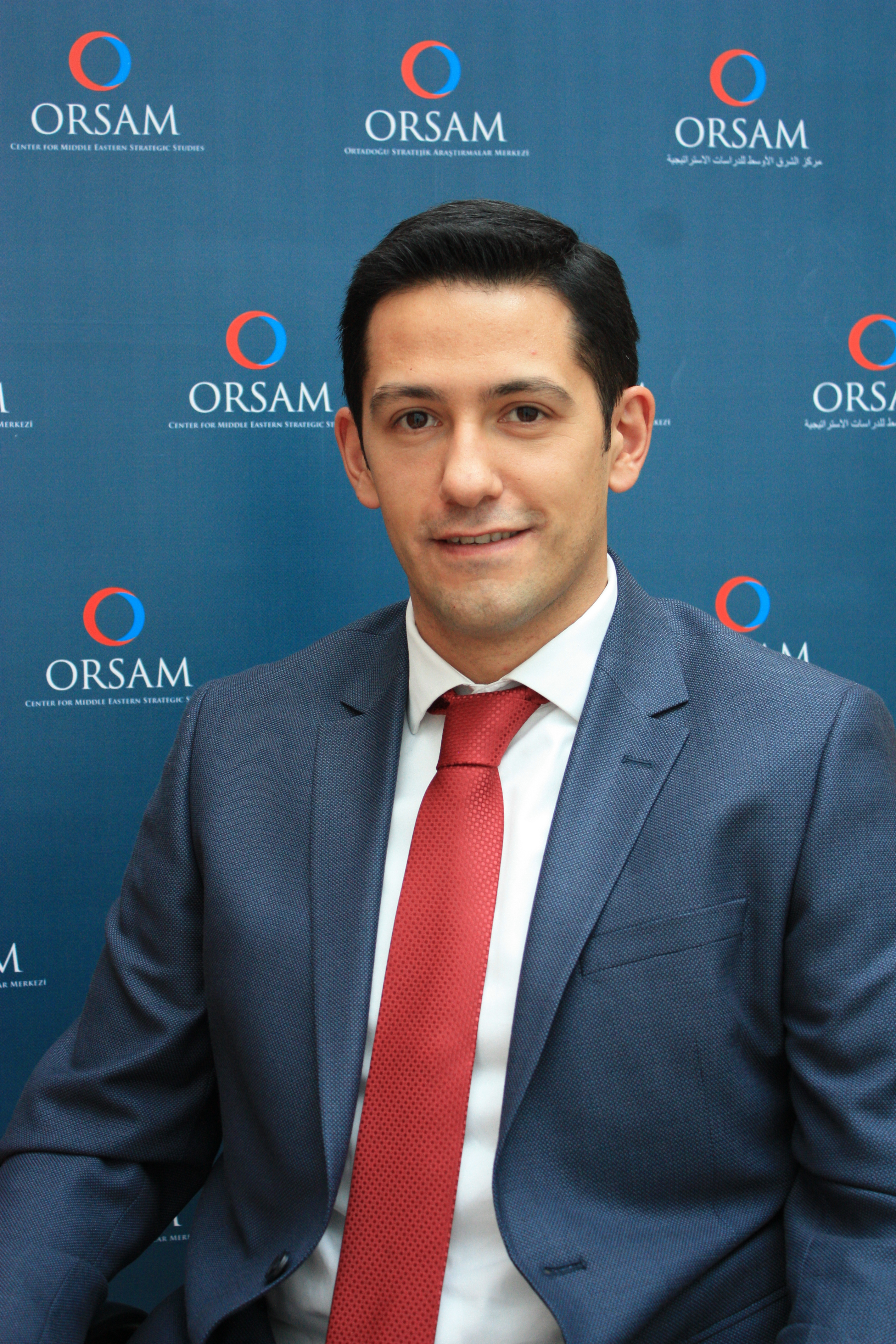
* This interview was made by ORSAM Middle East Specialists Oytun Orhan in İstanbul on 21 December 2012.
.