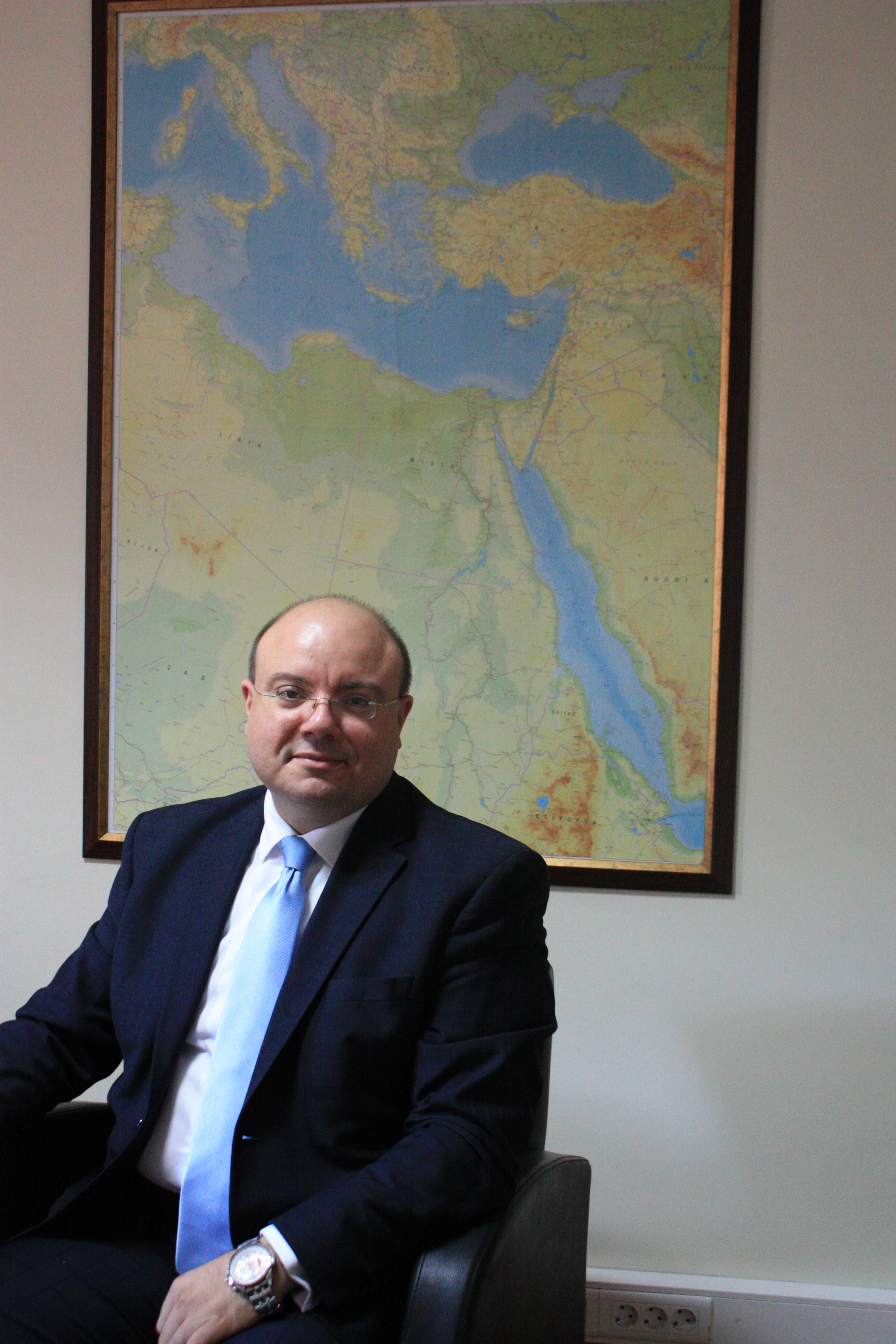
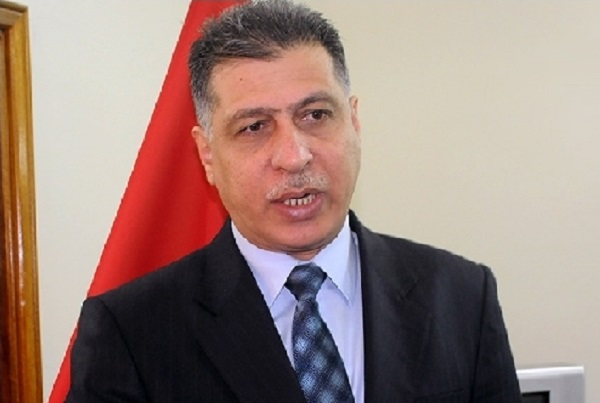
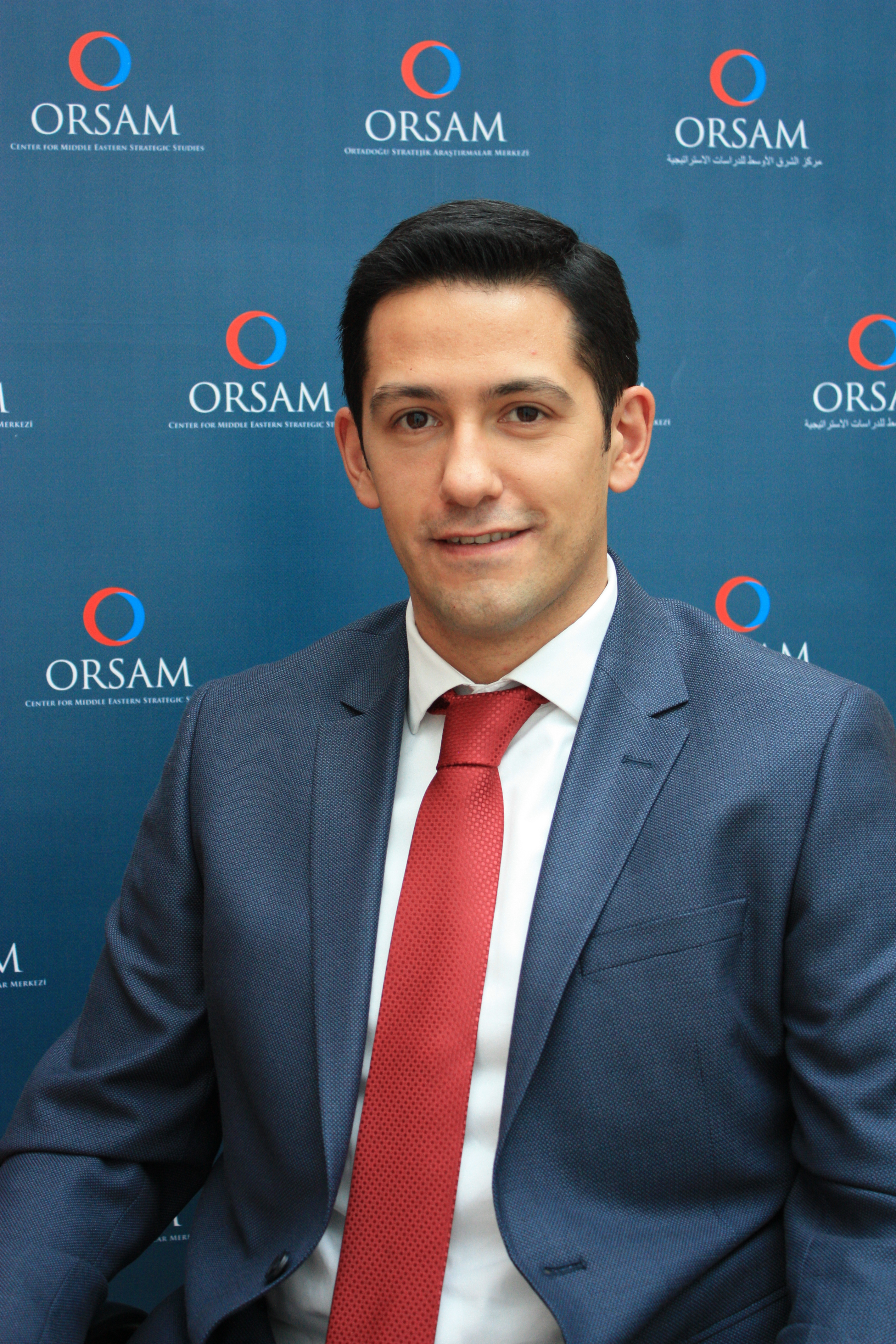
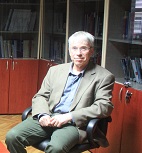
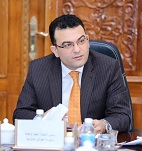
The popular uprising in Syria unveiled the social and political demands that had been suppressed for many years. One of the social groups that came to the forefront during this process has been Syrian Turkmens. Syrian Turkmens, who were not given any chance to be organized and who were exposed to oppression policies under the Baath regime, have been striving to close this gap in a short time in the new period. The Syria Turkmen Bloc comes first among those political movements that started to be formed within this framework. We made an interview with Yusuf Molla, Chairman of the Syria Turkmen Bloc, about the situation of Syrian Turkmens, political activities of the movement in Syria and abroad, and about the expectations of Syrian Turkmens.
“Turkmens Assume an Important Role in Maintaining Unity in Syria”
ORSAM: First of all, could you introduce yourself?
Yusuf MOLLA: I am from Bayır Bucak district of Latakia. I came to Turkey in 1982 after I graduated from high school. I graduated from the Department of Architecture at İstanbul Technical University. Then I did a master's degree in the Department of Landscape Architecture at Yıldız Technical University. I continued my career in private companies. As for my political life, thanks God, I have never supported the Ba'ath Party. Therefore, I never had a political life in Syria. I could not carry out any political activity when I came to Turkey either. Because my family was in Syria even if I was here. I love and search history. I have a command of Ottoman language. I translated many books on the history architecture for the University of Aleppo. I did not participate in active politics until the conflicts in Syria broke out. However, I explicitly stated which sides I took with on the very day of the outbreak of events, and I started to work on it. We were in it from day one. We felt the need of talking on behalf of Turkmens months after the start of our movement. Because the events in Syria started to be based on an ethnic and sectarian affiliation. Everybody began to seek their right s through this means. We also set our hands both to protect Turkmen rights and also to prevent Turkmens from canalizing towards the wrong direction. It was August 2011 when we initiated our activities. It took months for us to begin. Because we wanted to have a solid organization. We declared Syrian Turkmen Mass on 15 February 2012. I have been working as the Chairman of the Organization since its establishment. We were well received by the opposition. Soon afterwards, we created contact offices in Syrian border zones as the first step, as we preferred to carry out our studies in the field. So that we could establish close relations with the field. Taking the means we had into consideration, we reached a considerable success. However, now also Turkmen name is found among Syrian opposition. We supported our insurgents, and helped the injured. Soldiers were provided with food, beverage and fuel. Our people were provided with food and medicine aid. Most of those aids are certified. We have been preparing a detailed report on it. We have accomplished great things thanks to everybody's support.
ORSAM: Two Turkmen Parties (Mass and Movement) decided to join their forces in Syrian Turkmen Platform that was held not long ago. Could you tell us about the process of union between parties?
Yusuf MOLLA: Currently it is not an exact union. Some figures within the Democratic Movement resigned their offices. We will go restructuring with new friends. We already thought of restructuring for a long time but we could not have found an opportunity. The participation of our friends led us to go this restructuring. We are going to hold a congress approximately in a month. We want to include more people from the grassroots. The regime was powerful in Syria in early stages of the uprising, and many people who could participate and be useful couldn't do so for fear of prison and execution. Therefore, a more limited group of people participated. However, things have changed a lot under current circumstances. Regime is very weak right now. There are almost liberated zones. We have been striving to reach all Turkmens wherever they are in Syria. We will establish local organizations, and we will work for delegations' being elected from those areas and for their participation in the congress. We are working very hard right now. There might be changes in current administration. We are willing to leave our offices in case those who deserve these positions come to office. Our friends who have been working so far have neglected their families. All of them have considerable contributions and good rights.
ORSAM: You have mentioned that there might be changes in the new organization. What kind of changes are you planning to do?
Yusuf MOLLA: Free elections will be held. A major part of the executive board might change. We will carry on our activities with a new structuring along with those who recently joined us. Actually I argue for using one of the names of the two Turkmen parties. Those names are popular now. And the name of a new party to be formed would raise the question of “Who is this new movement?” among the people. The Turkmen cause was not already a well-known one. Most people do not even know about the presence of Turkmens in Syria. It doesn't feel right to come up with a new name all over again. However, we will be in accord with the decision to be taken. Most probably, we will be known under a new party name in the forthcoming process.
ORSAM: What kind of organization do you have in Syria? What are you planning to do to expand the current organization?
Yusuf MOLLA: We established 3 offices between Yayladağı and Akçakale to communicate with inside. The office in Yayladağı works for Latakia Turkmens, the office in Gaziantep works for Aleppo Turkmens, and the office which works for Raqqa Turkmens is located in Akçakale. We are far from Homs and Damascus Turkmens for geographical reasons and due to the current circumstances, but we have been working on this. Reaching Damascus and Golan, on the other hand, seems quite difficult for now. However, we will carry on our efforts for organization in other areas. There are people who work with us in the areas that are close to border zone.
We aim at expanding it to the entire grassroots in Syria; organizing the grassroots; designation of delegates and participation of these delegates in our general assembly. Free elections will be held in the general assembly. We have a ballpark figure even if we do not have official figures of the population rate. There are former census results, as well as a research conducted by ORSAM.
ORSAM: What do you think about the solution of the Syria problem as the Mass? Where do you place Syrian Turkmens within the framework of this solution?
Yusuf MOLLA: Turkmens in Syria are not concentrated in a single area. Therefore, there cannot be concrete solutions for Turkmens. For example, district federation is not possible. So, when we began, we wanted Syria to adopt a citizenship-based format. In fact, even before the national assembly was formed, we had prepared a press release. We stated in the release that the national assembly to be formed should not be based on national, ethnic structure, but on citizenship. However, nobody heard us, or even if they did, they did not take us seriously. Because what is being discussed right now is the division of Syria. This division can only be based on ethnic and religious basis. The assembly was formed, but things did not go as we wanted. The only country showing sensitivity while distributing aids was Turkey. Turkey helped without making any discrimination among Arabs, Turks, Kurds. However, the aids coming from Arab states were not like that. They did not help us, because they said ; “You have Turkey standing behind you”. We did not say “We are Turkmen” only for nationalist discourse. We said it to protect the rights of Turkmens. Besides, if you leave a gap, somebody comes and fills that gap. We hesitated from other people's misleading us. Therefore, we immediately set to work. We were active in Syria events from day one. However, we started to work for Turkmens after months. Because in the beginning, “Syria is one!” we said. We still hope so. But as nationalist and ethnic factions appeared, we decided to carry out our activities under the name of Turkmen.
ORSAM: What are your activities in the field?
Yusuf MOLLA: In modern countries military, politics and humanitarian aid are different from one another. But now we are in a state of war. There is a war in Syria. All activities are related to and depend on each other. You have to send humanitarian aids to people. They both really need those aids and also it makes it possible to establish a dialogue with them. In the post-Bashar Assad period, those who have an armed force behind themselves would also have a say. Our young people took shotguns and left to go to hills in the first stage. Most of them had slippers on their feet. No one can let them be in that state. Besides, we will need those forces in the post-Assad period. The aids are not just about those who provided it. It is all our responsibility. Nobody can know what will happen. But you have to do what needs to be done to win.
ORSAM: What about your relations with other opposition groups in Syria? For instance, besides the Council, also a Coalition was formed…
Yusuf MOLLA: I sincerely say that; if there is a common ground in Syria, it is the Turkmen population. The Turkmen are an ethnic group which are loved most in Syria. Because we get along with everyone, we do not have excessive ambitions, we are in favor of unity of the country, and also we are a loyal community. In Syrian History, you cannot see any betrayal of a single Turkmen. Despite Arabs and Kurds who have become an extreme polar, we are the common ground in Syria. We treat equally towards everyone. While Arabs and we are in favor of the integrity of the country, Kurds wants faction. Nevertheless, we are not enemies of Kurds, we are not angry. Many people were killed during the conflict that broke out between Arabs and Kurds in 2004. Turkmens, on the other hand, have not been involved in such a conflict so far. When we first set off, nobody knew our cause. Because we had started from scratch and we used our personal means. Turkmens were ignored when the first Assembly was in the formation process. Their excuse was the fact that we were not in the political arena. So they stated it as an excuse. It was true in a way, but there were by all means other things behind the scene. After all, the share to be given to Turkmens would decrease the share of other groups. Besides, Turkmens oppose to the projects of dividing Syria. We wanted Syrian National Council to be successful. We stood behind it despite the fact that we weren't within the Council. But the Council fell way behind the Syrian revolution, and almost became a burden. The National Council needed to be restructured to achieve a success. The Council was considered as a means to be used to spread the new structure to large masses. However, no result could be achieved. As we estimated, this situation led to the failure of an assembly and to the formation of a new structure. During the formation process of the latter, lessons were learned from the mistakes of the Council. As a matter of fact, it was decided to spread on a larger area, and Turkmens were included in the new Coalition. Currently, there are 16 Turkmen representatives in the Council and 3 Turkmen representatives in the Coalition. These representatives can be listed as; Ziyad Hasan, Huseyin Abdullah and Halid Hoca. We objected to Halit Hoca. Halit Hoca is a strong figure in the Syrian opposition. He could join the Coalition thanks to his popularity. And we could replace him with another Turkmen. So that, there would be 4 Turkmens in the Coalition. In other words, if Halit Hoca had joined independently from the contingent of well-known people, a fourth Turkmen could have sat in that seat. But it did not happen. Our friends in the coalition work actively and efficiently. And we have been working to increase the number of Turkmen representatives.
ORSAM: What do you think the biggest problems of the Syrian Turkmen movements and of the community are?
Yusuf MOLLA: The problems of the Turkmen people are the same with the problems of the Syrian people. Turkmens also have their rights they could not have acquired before. They are being assimilated and dissolving with each passing day. Language is the key element in the existence of communities. If you lose your language, you disappear. Unfortunately Turkmens are slowly losing their language. The biggest problem of Turkmens is the fact that they cannot preserve their language. The regime in Syria pursued a conscious assimilation policy for years. In political life, on the other hand, a dictatorial regime prevailed in Syria. It was not possible for us to become organized as Turkmens. Therefore, our political existence is very weak. Besides, Turkmens have different structures. There is tribalism among Turkmens in Aleppo, Raqqa and Golan. It is lost in Latakia and Homs. Each region has its own characteristics. There is a commitment to tribes. In the other region, on the other hand, citizens are not affiliated to any tribe due to the lack of tribalism. Today, Turkmens in Syria appear like the subjects of Turkey. Therefore, they cannot receive the share they deserve ranging from the foreign logistic aid to humanitarian aids. As Syrians suffered from Kurdish issue, those who do not now Turkmens approach towards us with hesitation. Some people have misdetections in their minds. We need to express our cause in a right way. We need to be strong in the media for the Turkmen issue to be heard by everyone, and to be understood correctly. We expect to be supported by Turkey on this subject.
As political movements, our major problem is the lack of experience. We were banned from politics in Syria. I am an architecture. I just practiced my profession, and I did not lean towards the politics. However, when turned out to be the case, we considered it as our responsibility and we went into politics. Unfortunately, there is no one who is experienced, popular, and someone who would lead other people. We have the deficiency of leader position. Besides, we also had the deficiency of financial opportunities. We still strive to handle it through our own resources. Large amount of money is needed to do it in real terms.
ORSAM: Turkmens live in big cities such as Damascus and Aleppo. Nusayri state scenarios are mentioned and Bayır-Bucak Turks live within those borders. Besides, Turkmens also live all along the Turkey-Syria borderline. So, Syrian Turkmens are settled in strategic areas. Within this framework, what kind of problems are ahead of for Syrian Turkmens in the post-Assad regime period?
Yusuf MOLLA: As you also said, Turkmens live in strategic points. There is a risk of the establishment of a separate state in Western Syria. In Turkish border zone, Turkmens live together with Kurds. Today, a map called “Kurdistan map” encompasses almost the entire Turkmen area in north. The borders of Nusayri State are between Homs and Hatay borderline. In case such a formation takes place, there is a risk of deportation for Turkmens. We have been living with Nusayris for centuries. Yes, problems took place from time to time. But we were always side by side. The regime in Syria played the ethnic war card, and triggered differences. After all this blood shed, it seems that it will be difficult to come together. As Syrian Turkmen Mass, we are against civilian people's (who are not involved in these events) being harmed. If 100 thousand people took part in these events, are they all going to be punished? This is a delicate subject. Is it possible to live together? In current circumstances, we can say that “it is not possible to live together”, but I think it is possible. Most of us have seen and read blood shed, dead children and raped women. When we first see and read those news, people show reaction. But I think we cannot do it, we don't. Our anger passes away and we might think reasonable, but I think the other party does not accept it. Therefore, we might be deported.
ORSAM: If a Nusayri State was established, Turkmens might be forced to migrate…
Yusuf MOLLA: Yes, unfortunately. In Latakia, the regime firstly dropped bombs on Turkmen villages and their neighborhood, and thus, people in the area were scared away and they had to migrate. So, certain Turkmen regions were evacuated.
ORSAM: Do Sunnis continue to migrate for security reasons? In addition to Turkmens, there are also a great number of Sunni Arab population who live in central Latakia…
Yusuf MOLLA: People do not migrate from central Latakia. But people migrated from Bayır-Bucak to a great extent. Many people still live in villages in the area that is out of the shooting range. However, the primary policy is to lay siege to the area.
ORSAM: Do you argue for a decentralized structure where Turkmens have a say in their own area? Or as Turkmens, do you prefer to live under a political structure with cultural and social rights but also with a strong central authority
Yusuf MOLLA: As Turkmens, we are in favor of the unity of Syria. Of course, we do not mean a regime like the Baath Party by an authoritarian centralized state, but instead we mean a civilized, democratic state. We would like local administrations to be powerful in a civilized and democratic state. But we do not want a federal structure or very powerful local administrations. What we care about is the Syrian people's having equal rights with religious and ethnic affiliations of each individual. On the other hand, we want social and cultural rights of minorities and of those who have different religious and sectarian affiliations to be protected.
ORSAM: Have ever had big problems in your relations with Syrian Kurds?
Yusuf MOLLA: We haven't had any problem so far. Some problems took place between Kurds and the Free Syrian Army, but Turkmens were not involved in that. We are still against resorting to arms to solve this problem. Hostilities are not eliminated easily. Establishing a dialogue must be a priority.
ORSAM: Are Turkmens currently strong enough to defend their own areas?
Yusuf MOLLA: I think they are. We are strong both in terms of the structure and also in terms of the population. However, we do not have sufficient equipment if you mean armed struggle. If Turkmen units received more support, they could easily defend their areas.
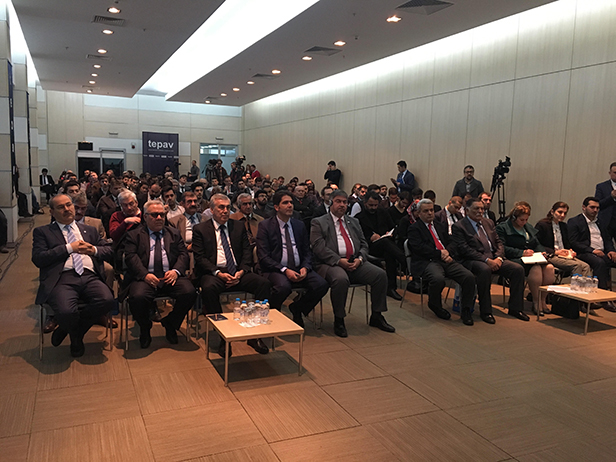
ORSAM: How do you assess Turkey's approach towards Turkmens? Syrian Turkmens Platform was held in İstanbul. The Speaker of the Parliament of Turkey Cemil Çiçek and Turkish Foreign Miniser Ahmet Davutoğlu attended the meeting. Could you tell us about your expectations from Turkey and your assessments about the Platform?
Yusuf MOLLA: We are glad to see that Turkey attaches more importance to the Turkmen issue with each passing day. Beforehand, we thought that Turkmen issue was not given much importance. It is quite important for Turkey to see us raising our voice, taking part in the opposition, and establishing good relations. There is no group in Syria with whom we are in fight. Turkmens have an important position in terms of securing uniformity in Syria in the future. We have a command of both Arabic and Kurdish culture. We understand both sides better, and we know how they approach towards each other.
Thanks everyone who contributed to Syrian Turkmen Platform. Our doors are always open to those who contribute. We complained about the lack of people who devoted their time and worked for this cause. We cannot make negative comment while there are people who work to this end now. What is important is to prevent any activity against the unity of Turkmens. Most of the people in the organization committee of this platform are our friends. In fact, we even sent one of our friends; Mustafa Sheikh Ahmet. Even though we say that we are not experienced politicians, we have been in this field for 2 years, and we have gained experience, even a little. Friends carried out closed activities without sharing them with the outside. This situation caused reaction. We have fought against a non-transparent regime for years. Today, people seek for a more democratic and more transparent formation. This platform is a major step on Turkmen issue. With its pluses and minuses, it was helpful. Thanks for those who contributed. But the forthcoming meetings should have a broader participation.
Turkey now attaches clearer and more explicit importance to Syrian Turkmens. In training of Turkmen political groups and in organization; we would like Turkey to guide and make us feel that they stand behind us. It is necessary to provide financial aid to bring Turkmen name to the forefront in the media, and also for organization. In terms of the humanitarian aid, we do not expect more than it is provided for Kurds and Arabs. We have lived with this community so far, and we will continue to live with them. In fact, most of us are related to each other. We will never be divided. Therefore, we would like to please our friends. I believe that the current misunderstanding will be eliminated in time. We have a partnership with the Syrian people dating back to 1000 years. Therefore, we do not want very apparent aids to be provided by Turkey.
ORSAM: Thank you very much.
* This interview was made by ORSAM Middle East Specialists Oytun Orhan in İstanbul on 21 December 2012.