Presidential elections are to be held in Afghanistan in April 2014. The withdrawal of foreign troops from the country the same year has caused some concerns in terms of providing security and stability in the country, especially in terms of providing security for the elections.
While on the one hand the Taliban, which is carrying out more attacks every day, plans on coming to power again after the 2014 elections, on the other, the former Northern Alliance, an opponent of the central government, aims to reunite and stand more firmly against President Hamid Karzai's team in the upcoming elections.
The fact that certain political maneuvers have accelerated in Afghanistan with the approach of 2014, the year when elections will be held and foreign troops are due to withdraw from the country, attracts attention. While Karzai's government has made visits to Pakistan as part of the renewed negotiation process with the Taliban, which had been suspended some time before, the government is also trying to assign its own supporters to the National Police Department and the Interior Ministry, which play a key role in providing security for the elections. At the same time, certain opposing political parties and groups have gathered together and formed a new political alliance.
Within this framework, a leader of the former Northern Alliance, Muhammad Muhakkik, as well as key figures such as Dr. Abdullah Abdullah, Gen. Abdul Rashid Dostum, Ahmad Ziya Massoud, Yunus Qanuni, Amrullah Saleh, Atta Mohammed Nur and Salahuddin Rabbani have declared that they would run as joint candidates in the elections. Furthermore, Pashtun politicians close to the US such as the US's former Kabul representative Zalmay Khalilzad, President Karzai's brother Qayum Karzai, former Interior Minister Ali Ahmad Jalali, and former Education Minister and Interior Minister Mohammed Hanif Atmer were expected to join the alliance.
It is known that these figures attended a meeting held in Gen. Dostum's house on Aug. 27, 2013, and another in Muhakkik's house on Aug. 28, 2013. However, the fact that these figures did not attend the meeting that was held in Kabul the following day on Aug. 29, 2013, is notable. The new alliance is reportedly completely composed of former Northern Alliance leaders who fought against the Taliban. However, it should not be overlooked that it does not include leaders from the Pashtun ethnic group.
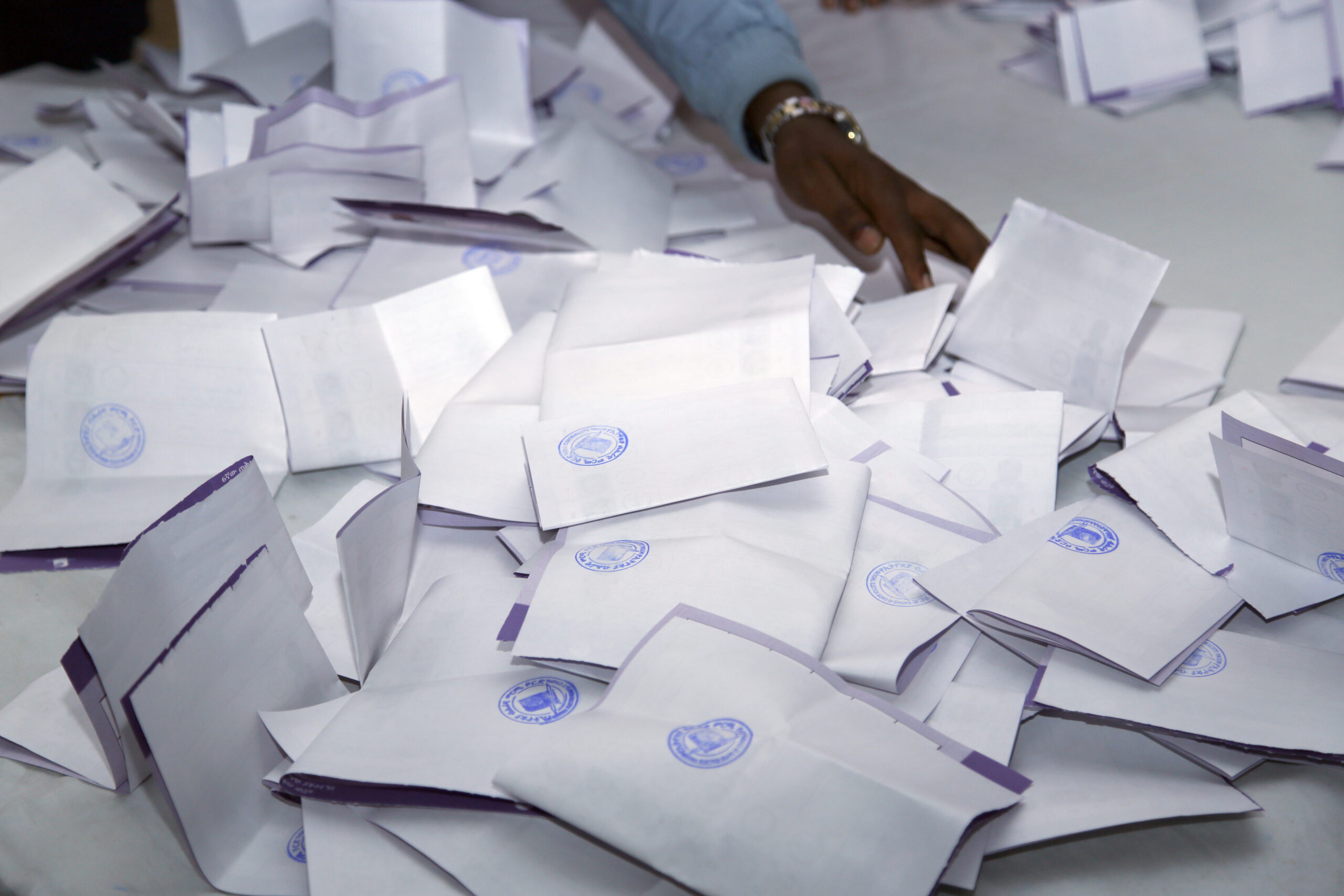
Among those leaders who joined the alliance with a written agreement, Qanuni (Tajik), Muhakkik (Hazara) and Gen. Dostum (Uzbek) ran in the 2004 presidential elections, while Abdullah (Tajik) ran in the 2009 elections. In the 2004 elections, Qanuni received 17 percent of the votes, while Muhakkik received 14 percent and Gen. Dostum took 11 percent. Whilst Gen. Dostum and Muhakkik supported Karzai in the 2009 elections, Qanuni supported Abdullah, who received some 40 percent of the votes. Considering their potential, it seems likely that the new alliance will win the elections. But in Afghanistan, where electoral culture has not yet taken root, it is possible that electoral corruption will take place. Hence, the fact that the head of the “Independent Election Commission” is directly assigned by the president without parliamentary approval raises certain question marks in our minds. On the other hand, it is clear that the security forces also have influence on the elections in countries with security problems, such as Afghanistan. The central government is trying to take some decisions about both the electoral commission and other organizations that could influence the elections, benefiting from its position in power. The fact that people from Karzai's team were recently assigned to the National Police Department and Interior Ministry attracts intense attention.
Considering the latest political maneuvers in Afghanistan, the structure of the newly formed alliance and the recent assignments from the central government, it is clearly seen that an environment where Pashtun and non-Pashtun elements will be in conflict has been created. This situation brings about the possibility that ethnic conflict might occur again in the country. In addition to predictions for the presidential elections to be held in 2014, allegations of corruption also indicate that there will be new problems in the country. Thus, after the 2014 elections, the international community should be extremely careful to prevent the country from sliding into chaos once again.