Türkiye’s multidimensional engagement with Africa, particularly since 2005, initially evolved through increasing diplomatic visibility and economic interaction. However, developments in Libya following 2019 have demonstrated that this engagement has increasingly transformed into a broader effort aimed at contributing to a sustainable and stable regional order. Libya has emerged as a critical military and geopolitical focal point of this transformation, becoming one of the strategic centers generating a multiplier effect within Türkiye’s Africa policy. In this context, Libya should not merely be viewed as a conflict zone but rather as one of the central pillars of a new power architecture through which Türkiye seeks to contribute to regional order and stability across a vast geography stretching from the Eastern Mediterranean to the Sahel.
Why Libya occupies central position in regional power equation
The Maritime Jurisdiction Delimitation Agreement signed between Türkiye and Libya’s Government of National Accord (GNA) in 2019 was not merely a technical maritime law arrangement; it represented a geopolitical turning point that redefined power balances in the Eastern Mediterranean. While providing an international legal foundation for Türkiye’s claims regarding maritime jurisdictions, the agreement also positioned Libya as an indispensable component of Ankara’s Eastern Mediterranean strategy. Its most significant outcome was preventing Türkiye’s exclusion from the region’s emerging energy competition while simultaneously providing Ankara with new strategic depth through Libya. Consequently, Libya has become a key actor not only within Türkiye’s Africa policy but also within the broader geopolitics of Eastern Mediterranean energy competition.
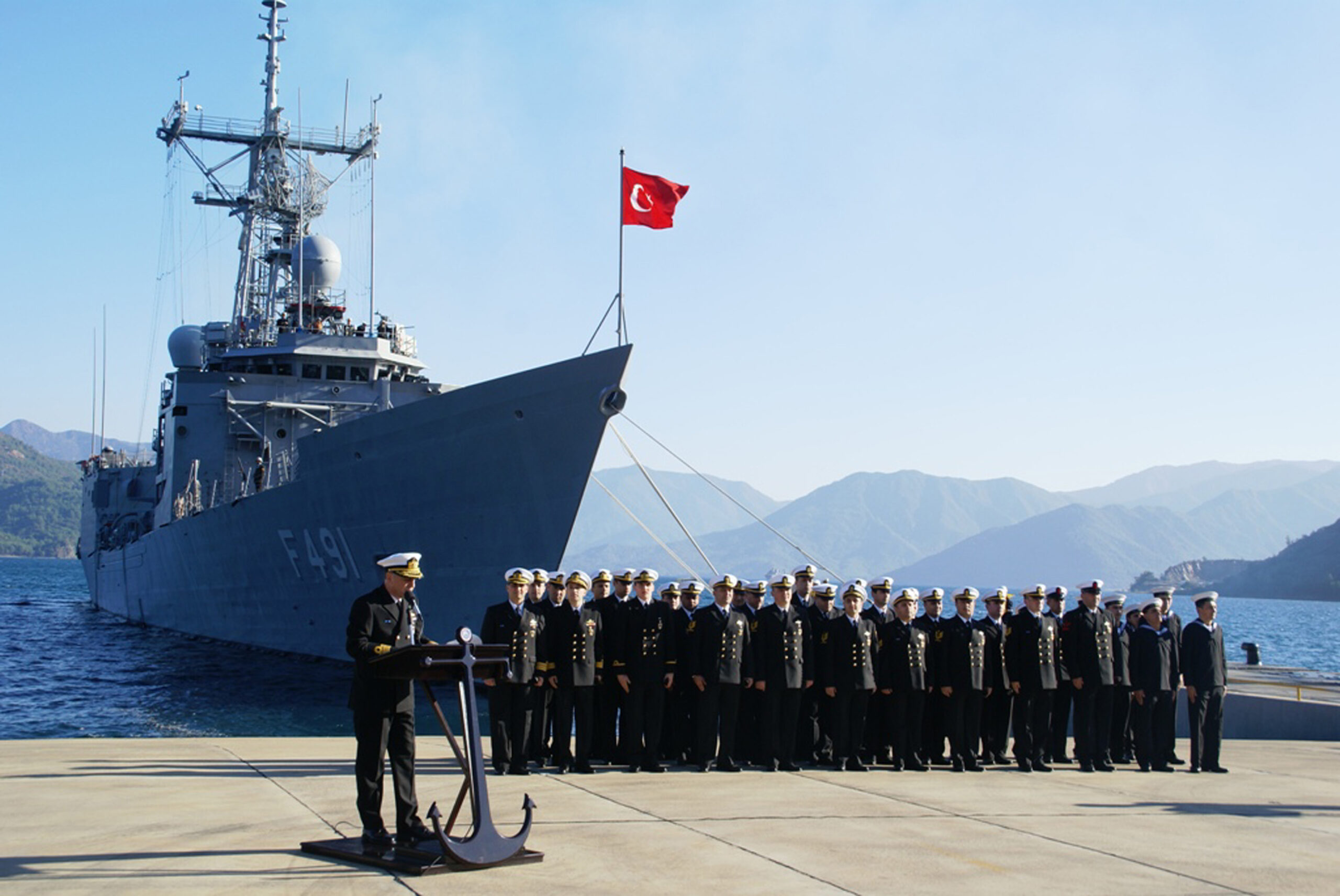
Türkiye’s military presence in Libya should be understood not through the lens of a traditional interventionist approach but rather as part of a comprehensive security cooperation framework designed to support stability and generate deterrence. The decision of the Turkish Grand National Assembly on Jan. 2, 2026 to extend the mandate of Turkish military personnel in Libya for an additional twenty-four months clearly demonstrates the strategic rather than temporary nature of this presence.
Accordingly, Türkiye’s military presence in Libya performs multiple strategic functions. First, it has played a balancing role by strengthening the military capacity of the Tripoli-based authorities and preventing unilateral power consolidation on the ground. This has not only reduced the likelihood of an asymmetrical outcome to the conflict but has also helped preserve the possibility of a political settlement. Second, Türkiye’s military presence generates deterrence by limiting the intervention capacity of external actors and serving as a balancing factor against uncontrolled escalation. Finally, the military infrastructure established in Libya provides Türkiye with operational depth and strategic access extending from the southern shores of the Eastern Mediterranean into the African interior. Taken together, these functions demonstrate that Libya has become not merely a security theater for Türkiye but also a central platform for its broader security, economic, and logistical engagement with Africa.
One of Libya’s key strategic functions for Türkiye is its role as a northern gateway to the African continent. The sphere of influence centered on Tripoli constitutes the starting point of a broader geopolitical corridor extending through Tunisia, Algeria, and Egypt toward the Sahel. This corridor possesses strategic significance across three interconnected dimensions. First, it occupies a central position within trade and logistics networks linking North Africa to the Sahel, thereby deepening Türkiye’s economic footprint across the continent. Second, the diplomatic channels established with actors across Libya provide Ankara with a flexible and effective platform for regional diplomacy, expanding its political influence. Third, the increasingly complex security crises emerging in the Sahel have elevated Libya from a mere transit route to a critical hub shaping regional security dynamics. When considered collectively, these dimensions demonstrate that Libya functions not simply as a transit country within Türkiye’s Africa policy but as a strategic center where economic, political, and security interests intersect.
Institutionalization of military influence in Africa
One of the most distinctive features of Türkiye’s Africa policy is that it does not position military presence as a standalone instrument of power. Rather, military engagement is embedded within a broader ecosystem of legitimacy supported by economic, humanitarian, and diplomatic tools. This approach generates a multidimensional impact that differs significantly from conventional models of power projection.
For example, the fact that Türkiye’s trade volume with Africa has surpassed 37 billion dollars demonstrates that its policy is built upon tangible economic foundations rather than symbolic engagement. Turkish companies operating in infrastructure, energy, construction, and logistics sectors contribute to long-term economic partnerships and development across numerous African countries, including Libya. In the Libyan context specifically, the role played by Turkish contractors in reconstruction efforts has reinforced Türkiye’s identity not only as a security provider but also as an economic partner.
Similarly, Türkiye’s expanding diplomatic representation across Africa constitutes an important pillar supporting the international legitimacy of its presence in Libya. Ankara’s active participation in continental multilateral platforms situates its Libya policy within a broader African framework. Through this multidimensional structure, Türkiye positions its military presence in Libya not as an isolated exercise of power projection but as one component of a broader African vision centered on regional stability, cooperation, and partnership.
Another important pillar of Türkiye’s presence in Africa is humanitarian diplomacy. Institutions such as the Turkish Cooperation and Coordination Agency (TİKA), the Presidency for Turks Abroad and Related Communities (YTB), the Yunus Emre Institute, the Maarif Foundation, and the Turkish Religious Foundation have established extensive networks through educational, healthcare, and development projects. These activities have significantly strengthened positive perceptions of Türkiye across the continent. Humanitarian and development assistance initiatives carried out in Libya and neighboring countries further reinforce the notion that Türkiye’s military presence is embedded within a broader framework focused on regional stability and development.
Beyond 2026: Managing fragilities and pursuing a multi-actor balance
The current stage reached by Türkiye’s Libya and Africa policy presents not only significant opportunities but also structural vulnerabilities that require careful management. The period beyond 2026 is likely to constitute a critical test of whether gains achieved on the ground can be translated into a sustainable regional order. In this regard, the intersection between Libya’s internal political fragmentation and intensifying international competition is compelling Türkiye to adopt an increasingly sophisticated and multidimensional strategic approach.
Although Libya’s east-west political division remains a structural source of risk, Türkiye’s response appears to be based on a strategy of multidirectional diplomatic engagement rather than exclusive alignment with a single actor. While maintaining its institutional and military ties with the authorities in Tripoli, Ankara has simultaneously kept diplomatic channels open with actors in eastern Libya, reflecting a policy guided by the principle of preserving Libya’s unity. This approach not only enables Türkiye to maintain balance on the ground but also enhances its capacity to act as a facilitator in future political reconciliation processes. Consequently, Türkiye’s Libya policy can be understood as a broader strategic framework aimed at preserving national unity and balancing competing centers of power rather than merely supporting one side of the conflict.
At the same time, the multi-actor nature of the Libyan arena both enables and complicates Türkiye’s balancing role. The presence of regional and global actors, including Russia, European states, Gulf countries, and the U.S., creates an environment in which competition and cooperation coexist. While Türkiye’s ability to engage simultaneously with multiple actors provides a significant advantage, it also necessitates a more flexible and multidimensional diplomatic approach. In this context, the sustainability of Ankara’s presence in Libya appears dependent upon the continued coordination of military, diplomatic, and political instruments within a balanced and inclusive strategy.
Although Türkiye’s presence in Libya was initially interpreted as a tactical intervention aimed at crisis management, it has gradually evolved into a central component of a broader effort to contribute to regional order. This transformation reflects a comprehensive strategy based on the simultaneous utilization of military capabilities, economic engagement, and diplomatic networks. Nevertheless, the long-term success of this strategy depends upon institutionalizing gains achieved on the ground and embedding them within a sustainable political framework.
Looking ahead, Türkiye’s ability to transform its tactical advantages in Libya into a durable regional order will depend on strengthening political stability, preserving Libya’s territorial unity across the east-west divide, deepening security and economic connectivity along the Eastern Mediterranean–Sahel axis, and institutionalizing its balancing role within an increasingly competitive multi-actor environment. Success in these areas will not only shape Libya’s future but will also serve as one of the key determinants consolidating Türkiye’s long-term geopolitical position across Africa.
This article was published in the June 2026 issue of SAVTEK Journal.