Iraq’s energy geopolitics has recently become the subject of renewed debate, not only in terms of oil production or export revenues but also over the routes through which its oil reaches global markets. The U.S./Israel-Iran war, along with the resulting vulnerabilities in trade routes, has demonstrated that alternative energy corridors are no longer a theoretical option for Baghdad but a practical necessity. However, it will not be easy for Iraq to achieve results on its own in this area. Making alternative routes operational will require stronger relations with neighboring countries such as Türkiye and Syria, as well as concrete steps under broader connectivity initiatives.
Oil remains at the center of Iraq’s energy geopolitics today. With more than 90 percent of the country’s economy dependent on oil revenues, keeping export routes as insulated as possible from crises and conflicts has become a vital priority for Baghdad. The closure of the Strait of Hormuz highlighted how vulnerable Iraq’s current export system could be. As a result, Baghdad is seeking to diversify its export routes by delivering its oil to global markets through alternative trade networks. However, assessing this effort requires distinguishing between today’s capacity constraints and future potential. For Iraq, the issue is not simply opening new routes but transforming them into an economically, politically and strategically sustainable energy framework.
Alternative oil routes, reality of capacity
At this point, the Kirkuk-Baniyas pipeline stands out among the leading energy connectivity projects and alternative routes. The historic pipeline, which stretches roughly 800 kilometers and has a capacity to transport 300,000 barrels of oil per day, is currently inactive. Wars and security crises, from the Iran-Iraq War to the U.S. invasion of Iraq, prevented the pipeline from remaining operational in a stable manner. Prolonged instability on the Syrian side further complicated the situation. In this respect, the Kirkuk-Baniyas pipeline serves as an important example of how the region’s inability to break free from cycles of war and conflict has made energy connectivity projects vulnerable.
Following the U.S./Israel-Iran war, Kirkuk oil began being transported to the Port of Baniyas by road. Similarly, crude oil shipments are being carried out through tanker transport on the Basra-Baniyas route. However, an important point must be emphasized here: At present, the amount of oil reaching the Mediterranean through the Port of Baniyas from Kirkuk and Basra remains very limited. Even if tanker transportation between Iraq and Syria were carried out at full capacity, it is estimated that a maximum of 150,000 to 200,000 barrels of oil per day could be transported. Moreover, this figure applies only to the most optimistic scenario, in which logistical disruptions, legal obstacles at customs and security issues have been fully resolved. By comparison, given that Iraq exports approximately 3.5 million barrels of oil per day through the Strait of Hormuz, the Baniyas route in its current form offers a highly limited alternative.
The Kirkuk-Baniyas pipeline is currently idle, and restoring it to operation would require a three- to five-year rehabilitation and reconstruction process even under the most optimistic scenario. Although an official statement following Tom Barrack’s visit to Baghdad said U.S. companies would support efforts to reactivate the Kirkuk-Baniyas pipeline, this does not mean the route will become a game-changing energy corridor in the short term. In this regard, the Kirkuk-Baniyas pipeline should be viewed more as one of the areas of economic incentives that the U.S. is offering Iraq through energy and infrastructure projects. The U.S. administration can be seen as using such investments as leverage to encourage Baghdad to take more concrete steps on key issues, particularly efforts to neutralize the influence of Iran-backed armed groups. Therefore, the Kirkuk-Baniyas pipeline is important as an alternative route during periods of crisis and for improving relations between Iraq and Syria. However, given its current capacity and the need for extensive rehabilitation, it has more limited and longer-term potential compared with alternative routes such as the Kirkuk-Ceyhan Oil Pipeline.
Kirkuk-Ceyhan route
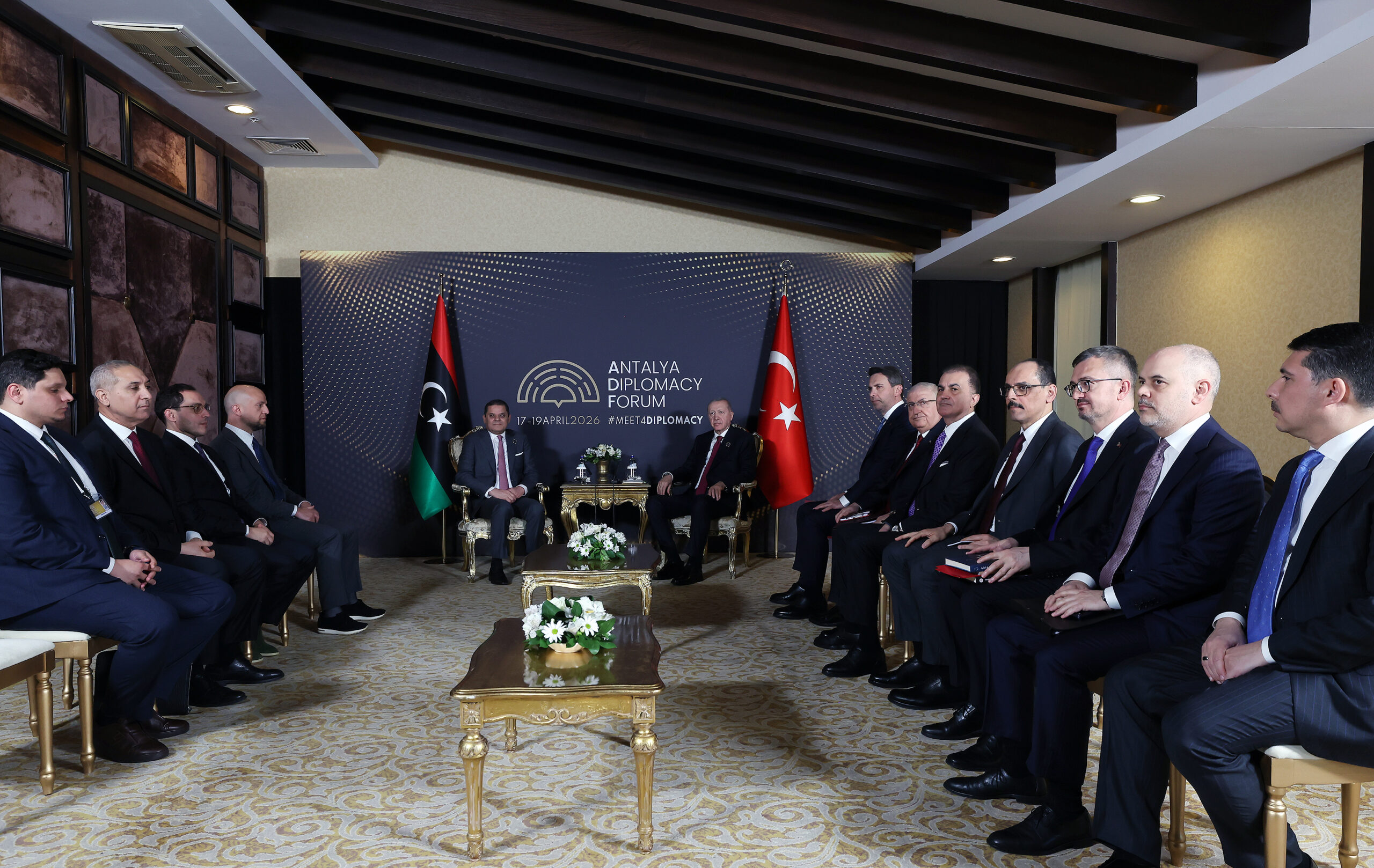
The Kirkuk-Ceyhan Pipeline, which serves as the northern outlet for Iraqi oil, holds a highly strategic position in Iraq’s energy geopolitics, both in terms of maximizing the benefits derived from Kirkuk oil and providing an alternative route during periods of crisis. Most recently, Turkish Energy and Natural Resources Minister Alparslan Bayraktar held a meeting with Iraqi Prime Minister Ali al-Zaidi in Baghdad on July 9, followed by a comprehensive interdelegation meeting with Iraqi Oil Minister Basim Mohammed Khudair. Following the meetings, Bayraktar said, “We can realize 1.5 million barrels [per day] through the Kirkuk-Ceyhan Pipeline without requiring a very large investment.” In previous periods, the pipeline’s actual transport volume averaged between 400,000 and 500,000 barrels per day. Reaching the targeted levels depends not only on technical capacity but also on a broad range of factors, including the course of relations between the two countries, Iraq’s relations with the Iraqi Kurdish Regional Government (KRG), regional security developments and the commitment demonstrated by Iraq’s central government. However, if volumes exceeding 1 million barrels per day are achieved, the pipeline could potentially emerge as a genuine alternative route to the Strait of Hormuz.
Whether it is the Kirkuk-Ceyhan or the Kirkuk-Baniyas pipeline, there is currently no alternative route capable of replacing the oil exported through the Gulf and the Strait of Hormuz in terms of capacity or even coming close to half of that volume. Therefore, it is important to remember that the Strait of Hormuz remains the most strategic point at the center of Iraq’s energy geopolitics. Accordingly, when assessing Iraq’s energy geopolitics, it is necessary to avoid confusing “potential” with “today’s reality.” The need for alternative energy routes and the accelerating steps being taken in this direction stem from the negative circumstances created by current realities.
Energy connectivity, strategic potential of the Development Road
Another important point to emphasize is that the Development Road project has the potential to provide relief not only for Iraq’s energy geopolitics but also for its broader economy, from industry to employment. The potential of the Development Road project, which is designed to connect the Grand Faw Port, planned to become the Middle East’s largest container port, to Türkiye through 1,200 kilometers of highways, railways and energy infrastructure, and from there to Asian and European markets, is far greater than the oil transport opportunities provided by pipelines. The Development Road project is expected to begin in Basra, Iraq’s southernmost city, and extend to the Turkish border, passing through nine cities across the country. From this perspective, the project could become a lifeline for Iraq’s large young population through not only the energy lines planned along the route but also the industrial zones and other employment opportunities that would increase the value of this infrastructure. Therefore, it would be inaccurate to limit the potential that Iraq’s geopolitics can create to pipelines or tanker transportation alone. The Grand Faw Port and the Development Road, which would integrate with it and connect Iraq to Asian and European markets through Türkiye via energy transmission routes, have the potential to genuinely ease the challenges Iraq faces regarding energy transport infrastructure.