Lebanon undoubtedly stands at the forefront of the countries paying the heaviest price for the regional expansion of the war launched by the U.S. and Israel against Iran on Feb. 28. The spillover of the conflict into Lebanese territory as of March 2 provided Israel with an opportunity to extend the concept of its “Zionist colonial war” conducted in Palestine under the pretext of “security” into Lebanon and to transpose the “Gaza genocide model” to the south of the Litani River. Starting from the south of the Litani River and stretching to the Zahrani River, the occupying Israeli army continues to execute a devastating military campaign with the objectives of depopulating a vast geography, displacing civilians, and permanently altering the demographic structure of the region. Throughout this process, over 1.2 million civilians in Lebanon have been displaced, more than 3,151 people have lost their lives, and historical memory is being systematically erased from the map alongside the civilian and healthcare infrastructure in the south. Furthermore, Israel has deepened its “total punishment” strategy by shifting its targets from merely civilian settlements to directly striking the healthcare system, hospitals, and municipal workers in the region.
It is not incorrect to say that this severe humanitarian catastrophe and devastation on the ground is simultaneously being veiled by a diplomatic illusion. Indeed, the direct negotiations for a “ceasefire” initially declared on April 17 and subsequently extended for another 45 days as of May 17 following discussions held in Washington on May 14-15 have failed to halt the attacks. On the contrary, Israel utilizes the diplomatic table as an instrument of imposition to legitimize the permanent buffer zone it has established on the ground, named the “Yellow Line,” and to coerce Lebanon into “negotiating under fire.” Meanwhile, the Beirut government, which has operated with the vision of maintaining a “monopoly on violence” since the onset of the war yet fell into a state of diplomatic helplessness due to its military’s lack of capacity and external dependence, is making a virtually existential choice by seeking sovereignty under international patronage at this direct contact table, established for the first time in decades.
Meanwhile, Hezbollah, which entered a recovery process after suffering heavy losses in Lebanon and Syria in 2024 and transitioned from a “semi-regular army” format to “decentralized” guerrilla warfare tactics, exhibits resilience against Israel’s diplomatic and military impositions through an asymmetric war of attrition. However, this resistance dangerously strains domestic fault lines within the country, pitting the organization against both Israel’s destructive occupying force based on demographic engineering and the Lebanese state authority, which seeks to dismantle and disarm it.
To understand the chaotic conditions surrounding Lebanon, one must analyze the occupation that Israel is deepening step by step in southern Lebanon, the political impasse plaguing the Lebanese state, and the asymmetric resistance tactics deployed by Hezbollah as it increasingly diverges from Beirut within a holistic strategic framework, all under the shadow of diplomatic talks established in Washington despite ongoing attacks and ceasefire processes that remain only on paper. Today, Lebanon is not merely a country subjected to Israeli aggression; it stands at one of the most fragile crossroads in its political history, confronted with the risk of being dragged into civil war, facing permanent territorial loss, and bearing the danger of becoming a victim of regional reckonings.
Ceasefire “only on paper”
With Hezbollah’s involvement on March 2 in the war launched against Iran, Israel began implementing its long-prepared war of occupation against Lebanon. Since that date, Israel has targeted civilian infrastructure in total disregard of the most fundamental principles of international humanitarian law, forcing over 1 million people to flee. Consequently, as of May 17, the death toll reached 3,151. Despite this severe humanitarian crisis, as a result of Iran’s pressure and Lebanon’s diplomatic engagements, U.S. President Donald Trump initially declared a 10-day temporary ceasefire on April 24. The ceasefire process was first extended for three weeks and most recently for another 45 days during Washington talks on May 14-15. However, the situation on the ground shows that these diplomatic efforts remain only “on paper” and that the issue has evolved from a conflict waged against an organization into a political and military occupation with demographic consequences. Following the decision to extend the ceasefire, tens of thousands of Lebanese civilians, who had been displaced for weeks, took to the roads hoping to return to the Dahiyeh district of Beirut and to their villages in the south. Yet even though Israeli Prime Minister Benjamin Netanyahu said on the diplomatic front that the ceasefire had been approved, he also said the Israeli military would not withdraw from occupied areas in southern Lebanon. Netanyahu said they had established a permanent buffer zone, describing it as “a security zone about 10 kilometers wide, starting from the sea and extending to the slopes of Mount Dov (Shebaa Farms) and Mount Hermon (Jabal al-Sheikh) to the Syrian border… We are there, and we are not leaving.” Despite the ceasefire, the Tel Aviv administration, which effectively prohibits returns to more than 50 occupied towns, targets civilians attempting to return and systematically destroys houses with explosives, is replicating the Gaza model in Lebanon and subjecting the population to a new Nakba.
In response to Israel’s use of negotiations as an instrument of imposition under fire and the Lebanese state’s failure in its effort to establish a “monopoly on violence,” Hezbollah continues to operate on the ground with its doctrine of asymmetric resistance. Rejecting direct negotiations as “null and void,” Hezbollah’s leadership has said the resistance will continue unless the ceasefire is bilateral and Israel withdraws from occupied territories. Against Israel’s unilateral impositions and policies of destruction, the group is conducting a war of attrition, targeting Israeli armor and troops with kamikaze unmanned aerial vehicles (UAVs) and rockets. The situation, reflected in anonymous comments from Israeli security and military analysts, suggests that even if southern Lebanon were fully occupied, Hezbollah’s asymmetric and cellular capacity could not be eliminated through military means alone.
Beirut-Tel Aviv contacts under US patronage
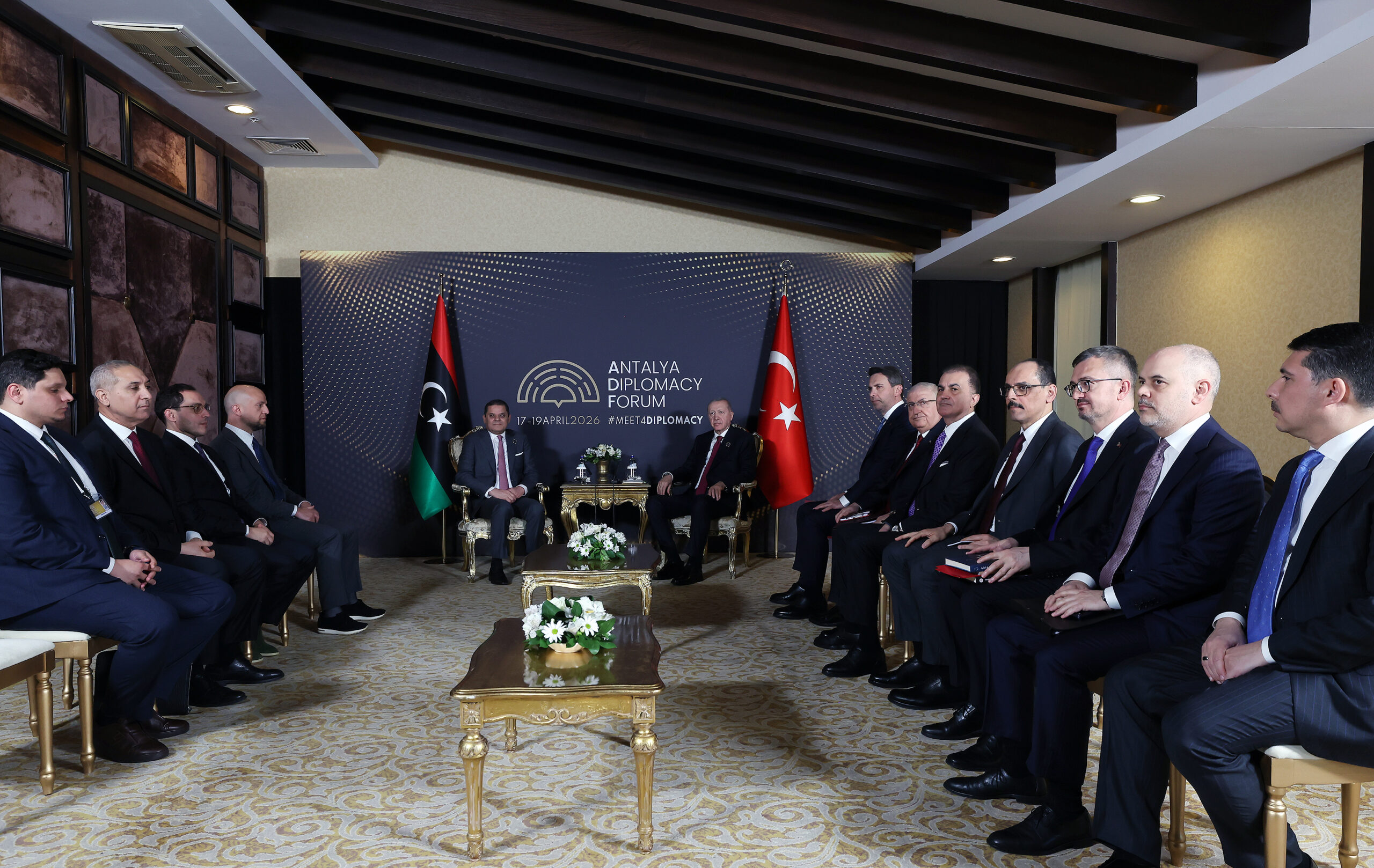
The talks in Washington, which constitute the highest-level and most direct diplomatic contact between Lebanon and Israel since 1993, were conducted under U.S. mediation, breaking a diplomatic silence of over 30 years. However, the most striking and ironic dimension of this process is that this first direct contact in decades coincides with a period in which Israel has pushed its occupation in Lebanon to its deepest and most destructive point. The Israeli government’s simultaneous siege of Bint Jbeil in the south, its threat to expand north of the Litani River, and its efforts to create a permanent buffer zone via the “Yellow Line” to strengthen its position at the negotiating table and pressure Lebanon demonstrate that this process is a form of “negotiation under fire” and an imposition rather than a legitimate search for peace.
In these talks hosted by U.S. Secretary of State Marco Rubio and attended by Lebanese representatives, including Lebanon’s ambassador to the U.S., Nada Hamade Mouawad, the position of the Beirut administration is highly fragile. The Lebanese state has put forward clear demands based on international law, including full sovereignty over its territory, the complete withdrawal of Israel from occupied areas, and the return of displaced civilians to their homes. In response, the U.S.-Israeli axis has instrumentalized the diplomatic process by reducing the talks to the preconditions of the complete disarmament of Hezbollah and the guarantee of Israel’s security objectives. Although President Joseph Aoun and Prime Minister Nawaf Salam view these negotiations as an “inevitable necessity” to halt ongoing destruction, the state’s weakness, leaving it unable to defend its own territory at the negotiating table, condemns Lebanon to a strategic impasse under perceived U.S. patronage. In response, the US-Israeli axis has instrumentalized the diplomatic process by reducing the talks to the preconditions of “the complete disarmament of Hezbollah and guaranteeing Israel’s security objectives.” This diplomatic pressure recently escalated into political blackmail, with the US imposing sanctions on Lebanese parliament members, army personnel, intelligence branch chiefs, and general security officials under the pretext of Hezbollah ties.
The Lebanon-Israel talks held in Washington under U.S. mediation have broken a diplomatic silence spanning more than 30 years. However, the most tragic aspect of this historic contact is its convergence with a period in which Israel has carried its “Zionist colonial war” in Lebanon to its most devastating phase. The Israeli government’s expansion of the occupation line on the ground north of the Litani River and its efforts to establish a permanent buffer zone to strengthen its position at the negotiating table indicate that this process is an open “military imposition” and a “negotiation under fire” rather than a legitimate search for peace. Although President Joseph Aoun and Prime Minister Nawaf Salam view these negotiations as an “inevitable necessity” to halt ongoing destruction, the state’s weakness — leaving it unable to defend its own territory at the negotiating table — condemns Lebanon to a strategic impasse under perceived U.S. patronage.
At the table in Washington, the “diplomatic helplessness” of the Beirut administration is clearly evident. President Aoun presented the decision to sit down with Israel as an independent move toward sovereignty and, referring to Hezbollah, stated: “For the first time in nearly 50 years, we have taken Lebanon’s decision back into our own hands. We negotiate on our own behalf, we decide on our own behalf. We are no longer a card in anyone’s pocket or others’ battlefield, and we never will be.” Yet despite this sovereignty rhetoric, the asymmetry at the table is stark. Netanyahu, meanwhile, framed the negotiations as a form of pressure on Lebanon, stating, “There are two main goals in negotiations with Lebanon: first, the disarmament of Hezbollah; second, a sustainable peace. Peace through strength,” referring to the U.S.-sponsored process.
Hezbollah, which is conducting asymmetric resistance against Israel on the ground, is the actor that has reacted most strongly to this situation. Rejecting direct negotiations as “surrender,” Hezbollah leader Naim Qassem warned the Beirut government, which is relying on diplomatic contacts, stating: “We call on the officials to stop giving free concessions. Together as the state, the army, the people, and the resistance, we will protect our country and restore its sovereignty by expelling the occupiers.” These contacts initiated under U.S. patronage represent a strategic dilemma that carries the risk of legitimizing Israel’s occupation on the ground under a diplomatic cover and of deepening internal fault lines by pitting the Lebanese state against the resistance front. In recent statements, Hezbollah Deputy Secretary-General Naim Qassem also responded sharply to recent U.S. sanctions, saying they would only increase the resistance’s determination and that the group would not step back.
Hezbollah’s tactic of “slowing down” the occupation
Having suffered heavy blows to its operational capability and command structure during Israeli attacks in 2024, Hezbollah used its period of relative silence during the ceasefire process as one of tactical self-criticism and cellular reorganization. Transitioning from a “semi-regular army” model to a fully decentralized guerrilla warfare structure, the group demonstrated its asymmetric capacity in a more pronounced way on the newly reopened war front on March 2.
Equipped particularly with fiber-optic-connected kamikaze UAVs, rockets, and advanced anti-tank systems, Hezbollah fighters have targeted Israeli troops, Merkava tanks, armored personnel carriers, Humvee vehicles, and even an Iron Dome platform. More significantly, Hezbollah has signaled an increase in its asymmetric air defense and strike capability by announcing attacks on an Israeli warplane and a “Hermes 450” UAV using surface-to-air missiles. This has turned Israel’s ground presence in southern Lebanon into a war of attrition, disrupting Tel Aviv’s objective of achieving rapid military results through a “slow-down” strategy.
Despite this asymmetric resilience on the ground, the organization faces major strategic ruptures that target its existential foundation. The first of these ruptures is the shrinking of living space caused by Israel’s “Zionist colonial war” and its policy of depopulation. The Israeli military is establishing a “Yellow Line” that, according to these claims, would pave the way for permanent occupation by applying the Gaza model across a wide area extending toward the Litani and Zahrani rivers in southern Lebanon. The systematic destruction of houses in border towns, strikes on bridges severing logistical links with the north, and the damage to agricultural land are described as part of a depopulation policy aimed at preventing the return of displaced populations exceeding 1 million people. This strategy of large-scale destruction and collective punishment significantly narrows Hezbollah’s operational space, weakening not only its military infrastructure but also its social base.
The other inherently asymmetric and destructive threat to the organization comes from the radical shift in the axis of the Lebanese state itself and its policy of internal containment. The government of Prime Minister Salam is coordinating with the Washington-Tel Aviv line to halt Israeli attacks and pursue the goal of the state becoming the “monopoly on violence.” The restriction of Hezbollah’s military activities on March 2, when the war began, and the withdrawal of the Lebanese army without resistance on the day Israel started its ground occupation are presented as evidence of the Beirut administration’s intent to politically and diplomatically marginalize the organization. Prime Minister Salam has criticized the situation into which the organization has dragged the country, stating: “Enough of meaningless adventures conducted for the sake of foreign projects and interests. This last one was a war we did not choose, but rather one imposed on us.” Salam harshly criticized the situation into which Hezbollah has dragged the country, stating: “Enough of meaningless adventures carried out for the sake of foreign projects and interests. This last war was not one we chose, but one imposed on us.” Escalating his criticism of Hezbollah’s resistance narrative, Salam added: “After all the death, destruction, displacement, and suffering it brought, there are still those who come forward and call this a ‘victory,’ as if mocking our intellect.” These remarks clearly reflect the Beirut administration’s intention to dismantle Hezbollah’s political and diplomatic influence.
Despite Hezbollah’s asymmetric resistance efforts, which inflict casualties on Israeli armored units and slow the pace of the occupation, the Israeli presence on the ground continues to deepen amid the diplomatic limitations of the Beirut administration and the implicit stance of state authorities. The Lebanese government’s perception of the organization as a “burden” to the country’s security and an “internal threat” that risks inviting foreign intervention in the name of state sovereignty opens up political space that, according to this view, indirectly facilitates Israel’s advances. This situation leaves Hezbollah facing not only sustained external military pressure but also the possibility of being contained internally through state policies shaped under external influence.
Occupation deepens under the ambiguity of the ceasefire
Despite the diplomatic contacts conducted between Lebanon and Israel in Washington and Hezbollah’s asymmetric resistance on the ground, the country’s fate is largely shaped under the shadow of the war and the fragile search for peace between the U.S. and Iran. The deadlock in the Hormuz-centered regional negotiations and the deep uncertainty created by this great-power rivalry manifest as ongoing destruction and sustained military pressure on the Lebanese front. Turning this environment of diplomatic ambiguity and international inaction into a strategic opportunity, the Israeli government appears closer than ever to its goal of establishing a permanent occupation zone through the systematic depopulation of southern Lebanon.
This permanent buffer zone project, built by Israel under the name of the “Yellow Line” in southern Lebanon, is not an isolated military move limited solely to Lebanese territory. The Israeli government reinforces this expansionist strategy with the logistical and geopolitical advantages it derives from its simultaneous operations in southern Syria, particularly in the Jabal al-Sheikh (Mount Hermon) region. Indeed, Netanyahu’s instruction to expand the occupation line in Lebanon eastward toward the mountain slopes on the Syrian border reflects an effort to create an uninterrupted corridor of control stretching from the Mediterranean to the Golan Heights. This vacuum, resulting from the U.S.-Iran power struggle and regional diplomatic paralysis, provides Israel with the opportunity to progressively deepen its presence in southern Lebanon and Syria, redraw borders, and entrench what is presented as an irreversible demographic reality.
When looking at the entirety of the military and diplomatic picture on the ground, it is clearly seen that the process Israel is conducting in Lebanon is not a classical conflict resolution, but a strategy of total domination and depopulation. The clearest confession of this strategic dilemma manifests itself in the words of Ambassador Yehiel Leiter, who represents Israel in the direct negotiations in Washington: “To aim for peace as if Hezbollah does not exist, and to fight Hezbollah as if peace does not exist.” This striking expression shows that the concepts of “peace” and “war” have completely lost their universal and diplomatic meanings for Israel in the region. Accordingly, it proves that the Zionist colonial mind turns the rhetoric of peace into a mere instrument to veil a policy of uninterrupted occupation, destruction, and annihilation.
The Lebanese state, experiencing one of the heaviest destructions in its history, is in a state of profound helplessness in the face of Israel’s military attacks and occupation, as well as the vice of diplomatic pressure. In the hope of halting the increasing civilian massacres and infrastructural destruction, the Beirut administration is becoming increasingly engaged in the scenario of “getting rid of Hezbollah” and “ensuring a monopoly on weapons” imposed by external actors. On the other hand, the Lebanese authority’s attempt to liquidate Hezbollah within an environment of occupation while trying to restore state authority carries the concern of increasingly forcing the door to an internal conflict. Consequently, within the chaos of occupation and pressure, Lebanon is drifting toward an uncertainty where not only the danger of Israeli occupation but also the possibility of a civil war with Hezbollah is steadily rising, with these two prospects reinforcing one another.