Mediated by the State of Qatar, for years, Fatah and Hamas continue their efforts to compromise in order to ensure civil peace in Palestine. Not a big progress has been achieved, since the negotiations started in 2007. With the initiative of the State of Qatar, Hamas and Fatah came together in March and agreed only on the ‘necessity of a compromise’ as they did in several previous meetings. Therefore, it is just a big dream to ensure civil peace in Palestine and there is no positive expectation that this dream will come true any time soon.
There have been serious disputes between the two parties in terms of the terms of compromise since the negotiations started. It is said that both parties should make sacrifices to soften their harsh attitudes and find a common ground. However, they continue to put resistance, and expect their conditions be accepted by the other party. We can enumerate the specific issues that the parties cannot agree on and the issues where a compromise is difficult to reach, as follows:
National Unity Government and Distribution of Ministries
One of the most important issues in the discussions between the Palestinian parties is the formation of a national unity government. There are serious disputes about which group will be assigned to which ministry in this govenment. Hamas demands that several key ministries, notably the Ministry of Home Affairs, should be given to them in order to have influence in the National Unity government. However, it does not seem quite possible that Fatah will accept this, since Fatah movement thinks that this will significantly increase Hamas’ influence. Israel, which is discontent with the negotiations and totaly argues against them, puts pressure on Fatah and President of the State of Palestine Mahmoud Abbas on that issue. Fatah also thinks that the possibility of peace with Israel will be stonewalled, if Hamas, which is seen as a terror organization by Israel, gains influence in the country.
Hamas requests that the parliament take a vote of confidence for Mahmoud Abbas who will lead the National Unity Government envisaged to be established. It is also a matter of deep discussion what kind of relations this government will have with Israel. Hamas administration indicated that the National Unity Government should not maintain the relations within the same framework as the current Abbas government did and warned that it would otherwise mean that Israel was recognized and the invasion was accepted as legitimate. Hamas and Fatah continously blame each other on the recognition of Israel. Hamas claims that especially the security policies Fatah follows in the West Bank are in the interest of Israel. It also blames Mahmoud Abbas regime for allowing Israel to gain more legitimacy.
Convening of the Parliament
With 76 seats in the parliament (132 seats in total), Hamas won the Palestinian parliamentary elections by landslide on 26 January 2006. It is seriously questioned how a dysfunctional parliament will convene and work, provided that Hamas and Fatah make a compromise. It does not seem convincing that Hamas will close its eyes to Israel’s entry into the West Bank in order to convene the parliament. Israeli government still keeps some of MPs from Hamas in prison.
Security Forces and Ezzedeen Al-Qassam Brigades
Another issue which constitutes a big obstacle before a successful compromise between the parties in Palestine, on which there is big discussion, is the restructuring of the Palestinian security forces. Especially Fatah demands the monopolization of the security forces and the establishment of a single authority that all security forces both in the West Bank and in Gaza are subject to.
Concerning the regularization of the security forces, Mahmoud Abbas wants Hamas to abolish Ezzedeen Al-Qassam Brigades. However, none of them prefers to talk much about this issue before the public opinion. Everyone knows that Hamas does not even consider abolishing Ezzedeen Al-Qassam Brigades. In response to Fatah’s request, Hamas argues that Ezzedeen Al-Qassam Brigades take a position as an independent structure instead of being abolished. Furthermore, Hamas administration suggested that the police forces responsible for ensuring security in the West Bank should be affiliated with Fatah and those in Gaza should be affiliated with Hamas in order to find a common ground. Nevertheless, Fatah rejected both suggestions.
As it argues that all security forces in the country shoud be monopolized and positioned within a specific legal framework if both parties reach a compromise, Fatah calculates that the position of Ezzedeen Al-Qassam Brigades is likely to create problems with Israel within the context of the future negotiations. Abbas government is concerned that if a compromise is made with Hamas, Israel in the future may pressure the regime in the international arena, on the pretext of Ezzedeen Al-Qassam Brigades.
Hamas argues that the security policies except the Ezzedeen Al-Qassam Brigades should be completely changed and the security agreements and cooperation with Israel should be completely terminated. Defending the view that this cooperation aims to break the resistance of Palestinian people in accordance with Israel’s demands, Hamas indicates that this helps Israel gain legitimacy. However, Mahmoud Abbas has so far maintained its cooperation with Israel in terms of security. Therefore, serious reactions are shown especially to the arrests in the West Bank.
Elections
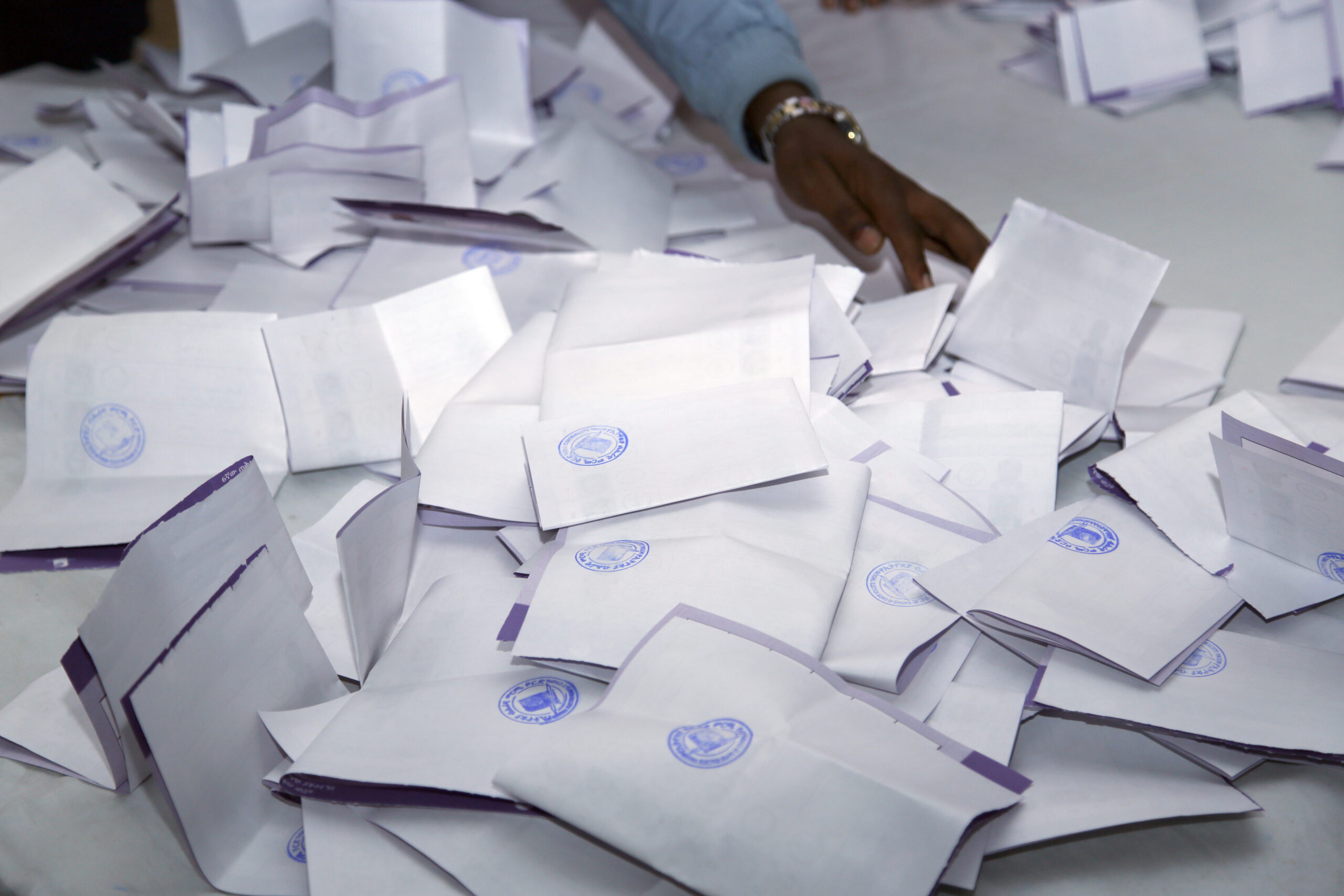
Both parties make positive statements about the elections, which constitutes one of the most important issues concerning the compromise. Both parties indicate that new presidential and parliamentary elections should be held in the event of compromise. If a compromise is made to form a National Unity Government, it has been determined as one of the priorities of this government to hold presidential and parliamentary elections. President of the State of Palestine, Mahmoud Abbas, previously said that he did not consider running for the following elections in his statements about the previous elections. However, Hamas and other Palestinian groups had serious concerns about Abbas’ statements about the candidacy.
Restructuting of Palestine Liberation Organization (PLO)
Many Palestinian groups, chiefly Hamas and the Islamic Jihad movement, which holds a leading place among the Palestinian groups, continuously call for the PLO to be restructured, which in fact serves as an umbrella organization. However, a road map has not yet been determined how to restructure this umbrella organization. Hamas demands that especially Fatah’s hegemony should be broken in forming the membership to the assembly of the PLO.
The last assembly of the PLO convened in 1996 with around 700 members. Even though another meeting was held in 2009 after this date, this meeting was not recognized widely by the Palestinian parties.
Is a Compromise Possible?
It is hard to say that Hamas and Fatah have travelled a distance that can be seen as a glimmer of hope in the short run as regards their efforts to compromise. Both parties have so far maintained harsh attitudes on the issues that are subject of talks for a compromise. They are concerned that the public may give less or no support if they soften their attitudes or abandon certain principles. This explains largely why they continue their attitudes.
Deep ideological disagreements between Hamas and Fatah makes it hard to compromise. As an Islamic movement, Hamas is based on Islamist fight against Israel. Fatah believes Hamas follows an extremely hard-line ideological approach towards Israel. Hamas defends that all the policies that help the legitimization of Israel should be abandoned and there should not be a slight cooperation with Israel. On the other hand, Fatah thinks that a cooperation should be made with Israel especially in terms of security. Fatah is of the opinion that Hamas’s harsh attitude makes it completely difficult to solve the Palestinian problem. It does not seem realistic to expect a compromise within the framework of the disagreements at this point.
This article was published in Ortadoğu Analiz journal with the title of “Efforts to Compromise between Hamas and Fatah ”