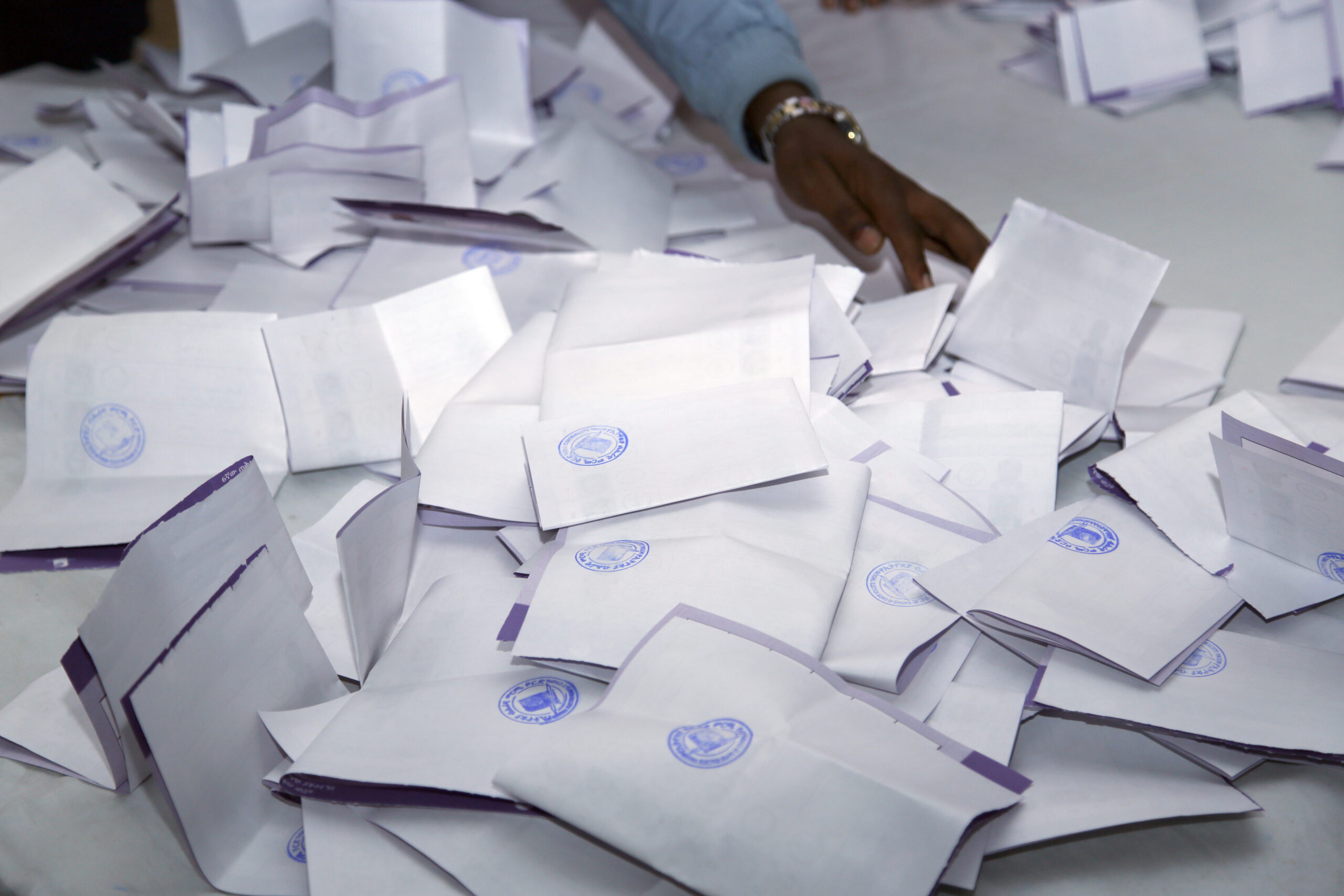
Following Iraq’s parliamentary elections held on Nov. 11, 2025, all three key stages of the government formation process have now been completed. First, Haibat al-Halbousi was elected speaker of parliament on Dec. 29, 2025. Then, on April 11, 2026, Nizar Amedi assumed the presidency. In the final stage, Ali al-Zaidi, who was tasked by the president with forming the government, won a vote of confidence in parliament on May 14, 2026, becoming Iraq’s new prime minister. The new government was thus officially formed after months of political negotiations.
Quota system
Zaidi presented 19 nominees to parliament for the 23-member cabinet. Of those, 14 secured parliamentary approval, while five were rejected. Four ministries were postponed to future parliamentary sessions. However, assessing Iraqi governments solely through the names included in the cabinet is insufficient. As with all governments formed after 2003, ministries and bureaucratic positions in the current administration were distributed among political factions. This arrangement, known in Iraqi politics as the “quota system,” also forms the basis of negotiations during the government formation process. Therefore, to understand the political significance of the new government, it is first necessary to examine which actors secured control of which ministries.
Power loss within Shiite Coordination Framework
Among the actors in the current political landscape, former Prime Minister Nouri al-Maliki appears to have suffered the most notable loss of influence. Qasim Ata, the nominee for interior minister, and Amir Huzai, the nominee for higher education minister, both of whom failed to secure parliamentary approval, were figures directly backed by Maliki. The rejection of these two nominees was not merely a technical setback in the cabinet negotiations; it also stood out as a significant indication that Maliki’s influence over the government has been curtailed. Moreover, interpreting this development solely as Maliki’s personal loss of power would be incomplete. The process also suggests that divisions within the Shiite Coordination Framework, particularly against Maliki and the political line represented by his Dawa Party, have become increasingly visible. Since the Nov. 11 elections, figures such as Maliki, Humam Hamoudi and Abu Alaa al-Walai have appeared to position themselves on a trajectory increasingly distinct from other Shiite actors within the Shiite Coordination Framework. How this divergence evolves into political competition following the formation of the government is likely to become one of the defining issues in Iraqi politics in the coming period.
One of the most controversial figures in the cabinet was Mustafa Sanad, who won parliamentary approval as communications minister. Known as a figure close to the Hashd al-Shaabi, also known as the Popular Mobilization Forces (PMF), Sanad is widely seen as one of the candidates backed by Asaib Ahl al-Haq leader Qais al-Khazali. Among the ministers who secured confidence votes, he stands out for his ties to Iran-backed militia groups and his hardline anti-U.S. rhetoric. At the same time, Khazali’s position during the government formation process warrants separate consideration. Although he is known as one of the most hardline actors representing militia groups in Baghdad politics and within the Shiite Coordination Framework, he maintained a notably low profile both during the U.S./Israel-Iran war and throughout the government formation process. In an unexpected move, he was among those who did not support Maliki’s return to the premiership. At the same time, he pursued a more flexible political approach, maintaining communication with various political circles, most notably with Mohammed al-Halbousi. In this sense, Sanad’s presence in the cabinet can also be interpreted as a reflection of Khazali’s evolving political position.
Mohammed Shia al-Sudani, who had been considered one of the leading contenders to remain prime minister following the Nov. 11 elections, appears not to have achieved one of his main objectives in the current political arrangement. Although he ultimately fell short of securing the outcome he sought politically, the greatest obstacle to his serving a second term as prime minister was widely seen as the resistance mounted by Maliki. Despite this setback, Sudani succeeded in ensuring that figures he supported were appointed to key ministries, including the Oil Ministry and the Electricity Ministry. Still, the overall picture is not entirely favorable for him. The departure of figures such as Falih al-Fayyadh and Ahmed al-Asadi from his political bloc, the Reconstruction and Development Coalition, raises the possibility that his political influence in Baghdad could gradually weaken after losing the premiership. At the same time, however, Sudani appears to have managed effectively the alliances he forged after the elections with influential actors in Baghdad politics, including Mohammed al-Halbousi and Ammar al-Hakim. While failing to secure another term as prime minister remains a significant political reality, his ability to balance factions within the Shiite Coordination Framework that opposed him through these alliances can also be viewed as an important political achievement.
Sunni actors and the security ministries equation
Under the current government arrangement, Sunni political groups secured four ministries. The Taqaddum Party, led by Mohammed al-Halbousi, obtained the Industry and Education ministries, while the Azm Coalition, led by Muthanna Samarrai, secured the Planning Ministry. Khamis al-Khanjar’s Iraqi Sovereignty Coalition, meanwhile, took control of the Trade Ministry. Given the election results and the current parliamentary arithmetic, this outcome is not particularly surprising. If the Labor Ministry nominee, who failed to win parliamentary approval, and the still-unannounced defense minister are confirmed in future sessions, Sunni political groups are expected to hold a total of six ministries. The more significant issue here, however, is not merely the number of ministries secured. Following the elections, Sunni political groups were able to act more cohesively under the umbrella of the National Political Council, enabling them to build stronger political relationships with various actors in Baghdad politics, particularly those within the Shiite Coordination Framework. This, in turn, allowed them to play a more effective role during the processes surrounding the elections for parliament speaker and president. In particular, the intense political engagement conducted by Mohammed al-Halbousi with Shiite political figures such as Sudani, Hakim and Khazali made him one of the standout figures in the government formation process.
The Defense Ministry and the Interior Ministry, which form the backbone of Iraq’s security bureaucracy, remain vacant in the newly formed government. Until new nominees receive parliamentary approval, the two ministries will be overseen on an interim basis by Prime Minister Zaidi. Given that the integration of militia groups into the state apparatus and the control of weapons held by those groups are expected to become among Iraq’s most significant issues in the coming period, the importance of these two ministries is likely to increase further. As a result, the defense and interior ministries will stand out not only as key institutions in Iraqi domestic politics, but also as one of the principal arenas of U.S.-Iran competition in Iraq. For this reason, one of the first major political pressures facing Zaidi is expected to center on the question of which figures will ultimately be appointed to these two critical ministries.
In conclusion, Iraq’s newly formed government reflects more than the traditional “quota system” in which ministries are distributed among political factions. It also points to a new political phase in which divisions within the Shiite Coordination Framework have become more visible, Maliki’s influence has been constrained, and more flexible alliances centered around figures such as Mohammed al-Halbousi and other political actors have gained prominence.
At the same time, the continued vacancy of the Defense and Interior ministries indicates that critical issues, including the future of militia groups and the restructuring of the security bureaucracy, will remain central topics in Iraqi politics in the period ahead. The Zaidi government, therefore, should be viewed not merely as the emergence of a new cabinet, but also as a product of shifting political balances in Iraq, evolving alliance-building efforts and the latest manifestations of U.S.-Iran competition in Baghdad.