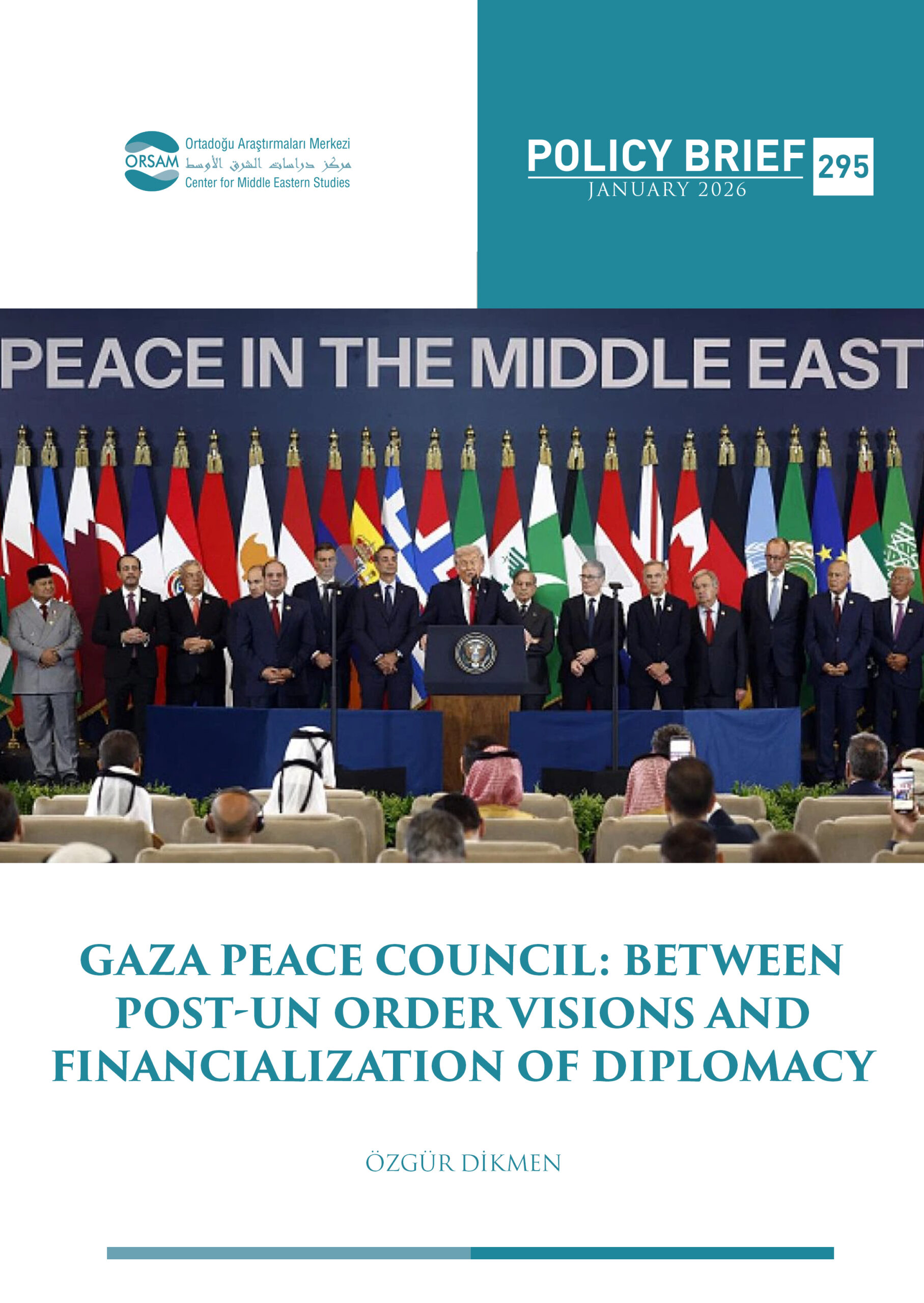
The second phase of the Gaza ceasefire marks a turning point in Middle East geopolitics, as traditional alliance structures are shaken and the concept of “transactional diplomacy” associated with U.S. President Donald Trump’s diplomatic approach takes concrete form in the region. The Gaza Peace Council established under Trump stands out as a radical model that seeks to bypass the United Nations structure and transform the region’s future through a “shareholder-based” system of governance. A formal invitation letter sent by Trump on Jan. 16, 2026, to Turkish President Recep Tayyip Erdoğan confirms that Türkiye has been called to the table as a “founding stakeholder” in this new experiment in global governance. For Ankara, the invitation can be interpreted as the highest-level recognition by the international system of the regional guarantor vision it has advocated for years, although the council’s conversion of Gaza’s reconstruction into a global investment process is among its most heavily criticized aspects.
Politically, one of the US’ most striking moves has been to invite Türkiye and Qatar to the council while excluding Israeli Prime Minister Benjamin Netanyahu from the process altogether by not even informing him of its formation. Statements by U.S. officials to the Israeli press that “the United States is dealing with Gaza and Netanyahu should focus on other matters” stirred debate in Israel, while the current situation amounts to a declaration that Israel’s traditional veto power over U.S. foreign policy has come to an end under the Trump doctrine. Through this move by Washington, Türkiye has gained room to negotiate Gaza’s future not through Israel’s security-driven dictates, but directly with the U.S. via leader-level diplomacy.
At present, Türkiye is shaping the council’s emerging architecture by advancing reservations and objections, some of which have already been accepted, and is emerging as one of the actors capable of preventing Gaza from turning into a neo-colonial zone of trusteeship. Türkiye’s guarantor-based approach to Gaza ensures that the council does not limit itself to purely finance-driven decisions, instead safeguarding an evolution toward Palestinian sovereignty. Set to be launched globally at the 2026 Davos Summit, this new framework offers Türkiye significant room for maneuver both on the ground in Gaza and at the negotiating table, particularly in matters related to the management of GREAT Trust (Gaza Reconstruction, Economic Revitalization, and Transformation Fund) funds. In this context, Türkiye’s place within the current alliance architecture—framed by a narrative that foregrounds the rights of Gazans and what it describes as Israel’s nearly two-year-long genocide—can be seen as an important opportunity for Gaza’s reconstruction and for the protection of Gazans’ rights throughout the process.