Nearly 18 months after the collapse of the Assad regime, Syria’s transitional authorities appear ready to move forward with the parliamentary process. The delay did not reflect political paralysis; rather, it stemmed from the government’s focus on more immediate priorities, namely securing legitimacy, restoring stability, and preserving national unity. Having made notable progress on all three fronts, Damascus is now expected to convene parliament as early as June, potentially ending decades in which the assembly functioned little more than as a rubber stamp and opening the door to more meaningful legislative politics.
Syria moves beyond survival mode
In terms of legitimacy, nearly all major regional and international actors have established relations with the new Syrian government — Iran and Israel, somewhat ironically, being the exceptions. On the security front, violence in Syria has declined to levels comparable to the pre-civil war period. As for political unity, it is almost fully achieved, with the SDF-held northeast returning to the government fold, only the Druze-majority province of Suwayda remaining outside government’s reach.
Overall, these developments suggest that Syrian President Ahmad al-Sharaa has largely addressed the most pressing challenges of the state-building process. This now allows him to turn his attention to issues that had previously been pushed to the back burner, most notably the long-delayed convening of the Syrian parliament.
Initiating the parliamentary process has been on Sharaa’s agenda for quite some time. Before convening the assembly, however, he sought to reestablish government authority in the SDF-held provinces of Raqqa and Hasakah, as well as the Druze-controlled province of Suwayda — the three provinces where legislative elections had been postponed due to “security reasons.” More broadly, the goal was to ensure a greater degree of political unity before moving forward with the legislative process. In this context, progress on the SDF file became a key driver behind the current push to convene parliament.
Elections in the northeast clear the way
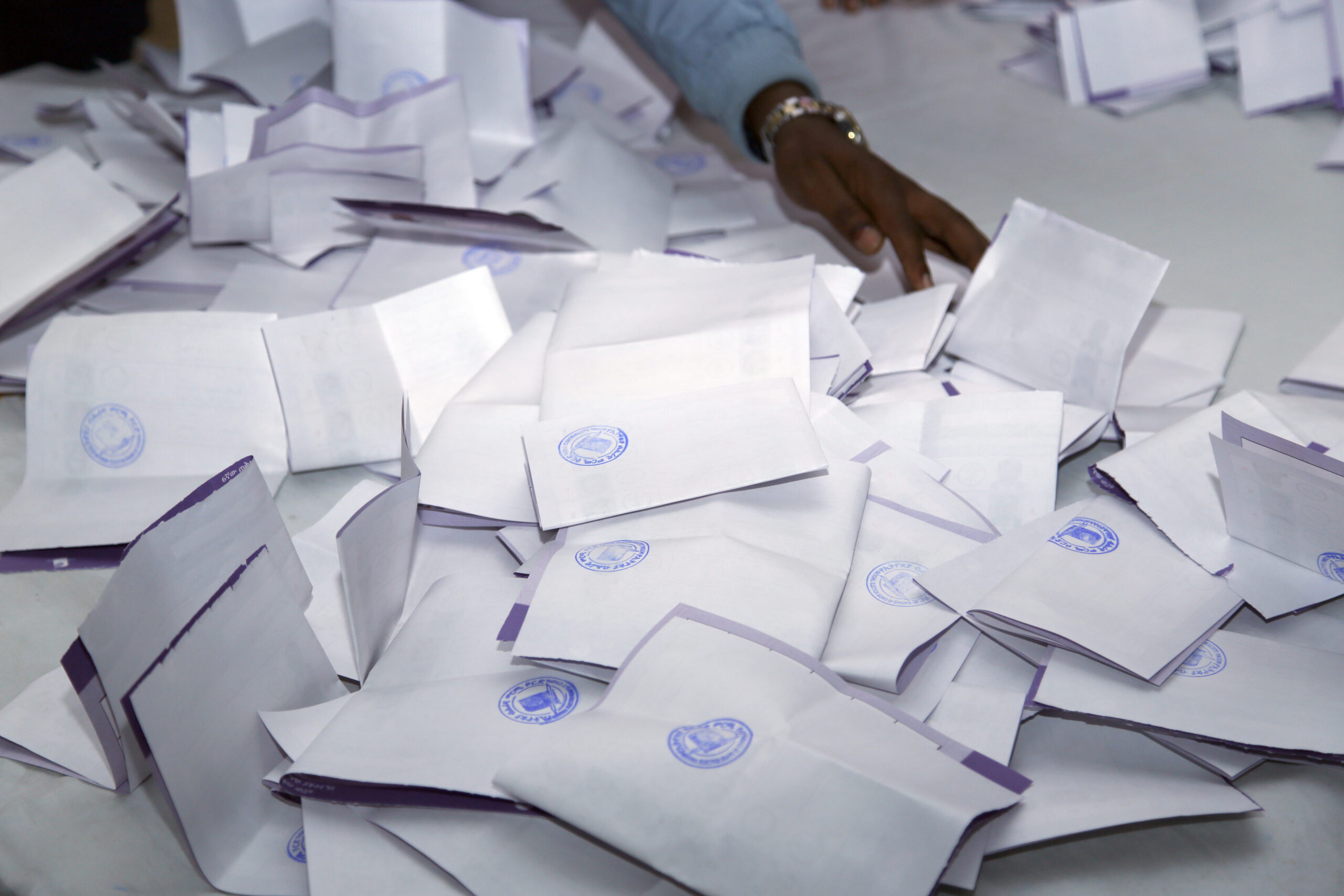
Hopes for the political integration of northeastern Syria emerged on January 29, when Damascus and the SDF signed an integration agreement. The deal came after government forces defeated the militia group, following lengthy negotiations that had failed to produce a breakthrough. This paved the way for the delayed legislative elections to be held in Raqqa in March and in Hasakah last weekend.
According to the new electoral system, the parliament is set to consist of 210 members, 140 of whom are elected through indirect nationwide voting while the remaining 70 are directly appointed by the president. Of the 140 elected seats, 121 were filled during the elections held in October 2025. With voting now completed in Raqqa and Hasakah for six and ten seats respectively, the election process for 137 of the parliament’s 140 elected members has now been finalized.
The remaining three seats are to be elected from Suwayda province. Yet it became increasingly clear that the Suwayda issue would not be resolved anytime soon. Israel’s interference and the uncompromising stance of Suwayda’s de facto leaders made a settlement unlikely in the near term. As a result, Sharaa appears to have abandoned his “all or nothing” approach by deciding to convene parliament following last weekend’s elections without necessarily resolving the Suwayda issue first. The rationale behind this shift is straightforward: without a functioning parliament, the Syrian transition risked becoming politically, institutionally, and economically stalled.
Why parliament matters now
Syria can no longer afford to function without a legislative assembly. To begin with, according to the constitutional declaration, presidential decrees require parliamentary ratification in order to enter into force. The absence of legislative approval creates a legal vacuum, calls into question the validity of these decrees, and leads to a sense of legal uncertainty.
For a country that urgently needs foreign investment to achieve economic stability and reconstruction, uncertainty in any form must be avoided. The Syrian government has managed to reduce uncertainty across several fronts, including security, stability, legitimacy, and sanctions-relief. It is therefore no coincidence that investment deals worth billions of dollars have recently begun to materialize, with foreign companies breaking ground in Syria.
Yet for this investment momentum to grow even further, constitutional and legal uncertainty needs to be addressed as soon as possible. Convening the legislative assembly would be the clearest step in that direction, as parliament will ratify presidential decrees, introduce new laws and regulations governing various aspects of economic activity, and help fill existing legal vacuums. Having largely achieved security and stability, economic development has now become Sharaa’s new priority, and progress on this front is likely to accelerate once parliament begins its work.
Convening the assembly will also serve important political and social purposes. After years of political repression under the Assad regime, Syrians will finally have a platform through which they can channel their grievances and demands to the governing authorities. At the same time, deputies from Syria’s diverse ethnic, religious, and sectarian backgrounds will represent their communities and help strengthen a shared sense of belonging to the Syrian nation.
However, the overall picture is not without flaws. Justified criticisms surround the composition of the electoral colleges, the question of representation within the assembly, and parliament’s relative weakness vis-à-vis the executive branch. Some of these shortcomings stem from the difficulties inherent to any transitional period; others reflect a deliberate approach that prioritizes security and stability above all else. Yet, if unaddressed, these issues could undermine the assembly’s credibility from the outset.
For better or worse, Syrians are set to have their assembly next month, and parliamentary politics in Syria will return after decades of functioning largely as a rubber stamp. Convening the parliament will mark another major milestone in Syria’s transition and lay the groundwork for the constitution-writing process in the near future.