The Gulf Crisis started with an abrupt boycott of Qatar by a so-called anti-terror quartet led by Saudi Arabia is turning into a textbook example of regional rivalries. The boycott failed to force Qatar to accept the demands of the quartet. Major powers, neighbours and other countries have found it extremely difficult to exercise two parallel Gulf policies, one for Qatar and second for the quartet. A “post-Gulf security architecture, though talked now is still far from being a viable idea. The post-Gulf security architecture necessarily requires the reconstitution of the Gulf Cooperation Council (GCC) on the basis of weak threat perceptions between the two sides of the conflict. A year of boycott has given a lesson that the Gulf region still remains a single security region whose threat perception cannot come from within its key constituents. In this article, four major questions have been answered as to why the crisis is unsustainable, who is the main player of the crisis, and that the GCC’s regional security system has no better substitute.
What the context?
The main excuse behind staging such a high-handed boycott was Qatar’s alleged support to terrorism, Muslim Brotherhood, Palestine’s anti-occupation armed group Hamas, operating Al-Jazeera, and hosting many individuals whom the boycotting quartet consider a threat to their national security and stability. Many of these concerns are not new and have prompted the similar diplomatic crises in the past but this time, the context, the players and the expectations were indeed different. The context is different because the Saudi royal family is in a transition mode where the crown prince Mohammad bin Salman is a de facto king and King Salman seems to have given his son full freedom to exercise his authority. The struggle for power within the royal family has not yet settled and the Crown Prince is in the quest to find a new formula to not only retain the Saudi primacy in the region but also wants an unchallenged throne. Just by announcing the boycott in the holy month Ramadan, that too after two weeks of the US-Arab-Islamic Summit in Riyadh where the Qatari Emir was well received, the quartet failed to convince the public opinion as well as international diplomatic circles about the real reasons of the boycott. Ten days later, they hurriedly brought a list of thirteen demands. The boycott included a complete land, air, naval embargo on Qatar, affecting Qatar’s air traffic and its import of basic commodities for which Qatar was dependent in Saudi Arabia and Egypt. A fear of a pre-emptive action overwhelmed Qatar for few days, sending the country completely in the panic to search all possible safeguards against an extreme threat.
Who is behind the boycott?
As the issues of dispute between the sides are not very new, the renewed exigency to resolve these issues were indeed very strange and new. The four countries who joined the boycott one after another within early morning of 5th June, do not necessarily share a common security, trade and strategic objectives, nor can they complement each other for any serious security concern. Saudi Arabia perhaps is the only Gulf state where a functional state has evolved and operated with help of well trained royal elites. Islam and Islamic groups from all over the world have been an important component of Saudi Arabia’s religious diplomacy in order to remain in an unchallenged religious leadership of the Islamic world. Their relations with Islamic groups including the Muslim Brotherhood had helped the Kingdom to contain Gamal Abdul Nasser’s rising nationalist stardom. Yemen’s Houthis were also supported by the Saudis against Gamal Abdel Nasser’s socialist expansionism. The Iranian revolution and subsequent Iran’s avowed policy of exporting revolution to all Islamic countries created a rift not just between Iran and Saudi Arabia but also with the Muslim Brotherhood whose support to the Iranian revolution angered Saudi Arabia. The Saudis since they started building their own Salafi network all over the world. The Soviet invasion of Afghanistan had brought Islamists of all hues and shades together, including that of the Muslim Brotherhood, under Saudi supported Jihad in 1989.
The Egyptian uprising and the rise of the Muslim Brotherhood, subsequently, to power in 2012 was not without assurance from Saudi Arabia whose Egyptian Salafi group Al Nour also became the part of the ruling alliance. Then came the game-changing military coup which not only toppled down the first elected president of Egypt but also facilitated a smooth pre-uprising regional order. No major powers including that of European Union, Russia, China, the United States opposed the coup. With this coup, the Arab uprisings and peaceful democratic transition to democracy either reversed or entered a violent crisis. But the coup failed to bring any relief to Egypt’s economic woes and anti-military sentiments once again required a political opposition which officially does not exist in Egypt. The Muslim Brotherhood as a religious and social group still enjoys grass root support and sympathy among a large section of Egypt’s conservative and rural society, the military regime sees the Brotherhood with great suspicion and levels it as a terrorist group. King Abdullah bin Abdul Azizi’s death in 2015 had briefly disturbed the Egyptian calculus, but the internal royal politics in Saudi Arabia needed more external support, which Egypt’s military ruler Abdel Fattah Al Sisi readily offered.
The main quest for a status quo change can be rather seen in the United Arab Emirates which tries to expand its trade and strategic reach beyond the Saudi umbrella. The UAE’s ambitions are very similar to the colonial Portugal when it had captured all major port cities from Africa to India in order to control the maritime trade. The UAE’s pursuit of a regional role, larger than its own natural sphere of influence, needs at least one regional ally and one international support, in its case Egypt and the US. The UAE’s Dubai Port and its subsidiary have expanded its business towards creating a strategic Red Sea Corridor with already operational ports in Somalia (Somaliland), Djibouti, Eritrea, Saudi Arabia and Egypt. Also its operation of ports in Congo (Banana), Mozambique, Madagascar and attempts to control Yemen’s port cities should be seen in agreement with UAE’s strategic roadmap towards achieving a role of regional hegemon. There are reports, one by the Economist Intelligence Unit in November 2015, that the UAE is using foreign mercenaries from Columbia and Africa in Yemen and other countries. The convergence of Egyptian and Emirati interests in the Red Sea Corridor has brought Saudi Arabia on board who has taken the control of two islands, Tiran and Sanafir, from Egypt in 2017. Unexpectedly, the security sensitive Israel has found no objection in the emerging security environment in the Red Sea, suggesting that the new security order has most likely secured Israel’s approval.
What are Qatar’s options?
The state of Qatar has evolved typically in different political discourse from that of Saudi’s or the Emirates’. Its Islamic traditions are close to Saudis but its political context is not the same. Qatar provided asylum to the many Egyptians fleeing repression of Nasser’s Egypt, including the Egyptian preacher Sheikh Yusuf al Qaradawi who came to Qatar in 1961 much before Qatar’s independence. The Egyptian uprisings was a contested space where Saudis, Emirates and Qataris have found different and often conflicting opportunities and challenges. Thanks to the Gulf politics, the peaceful transition in Egypt, Yemen, Libya and in Syria also turned into a sectarian, ethnic or ideological war where. The chaos weakened the Islamists and pro-democracy protesters and strengthened the Salafis who revived the Saudi-Emirati role in these transitions. In Egypt, the Salafis dramatically revolted against their Islamic alliance and supported the coup, apparently in close coordination with Saudi Arabia and the UAE. As the pre-uprising security architecture returns, Qatar found itself more isolated by the new military regime of Egypt who accused Qatar of supporting terrorist groups, mainly the Muslim Brotherhood. To contain the Iranian expansion might have been a rhetoric, but the boycotting countries failed to take any concrete action against Iran. Even the trade relations between Iran and the Uae continued as usual.
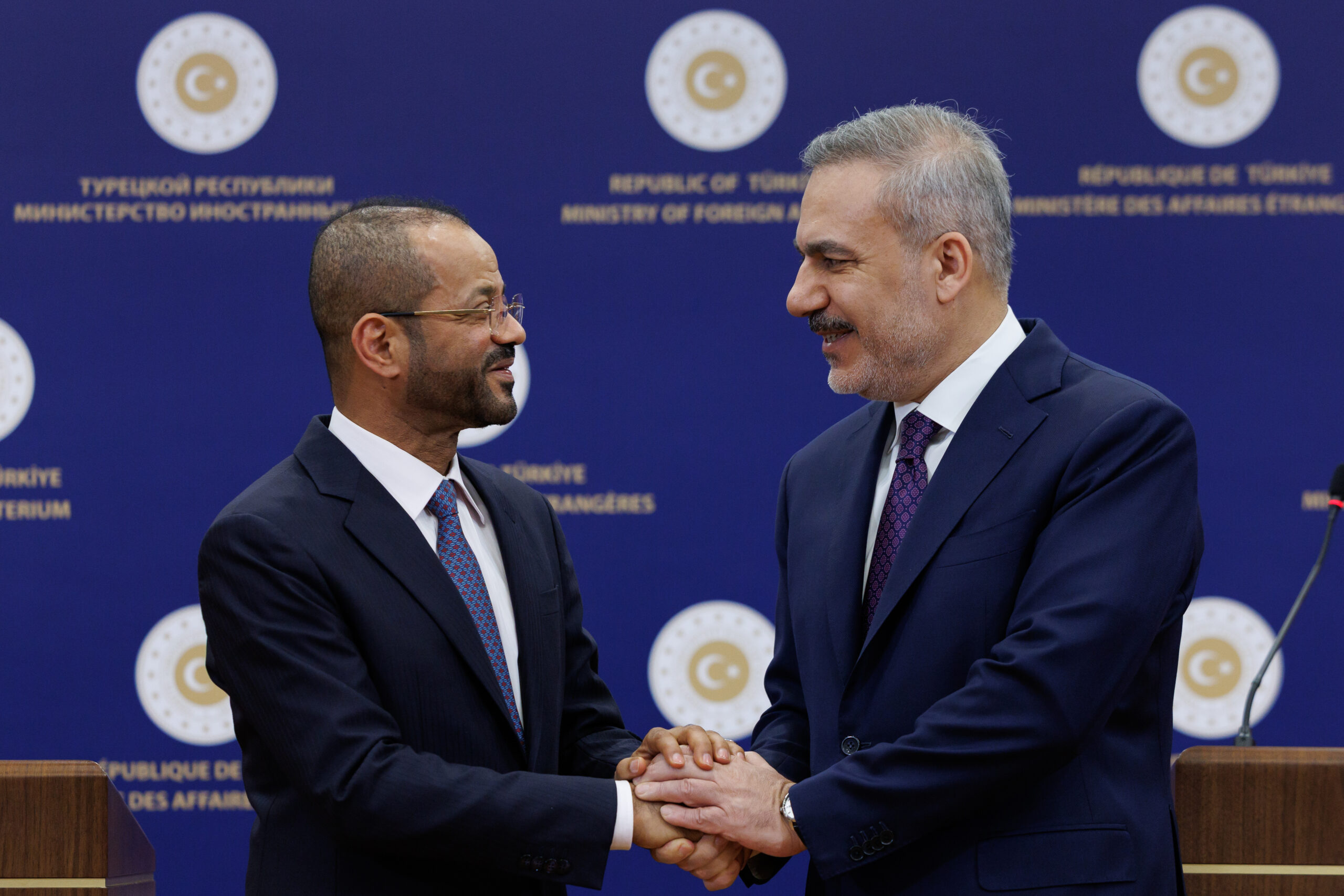
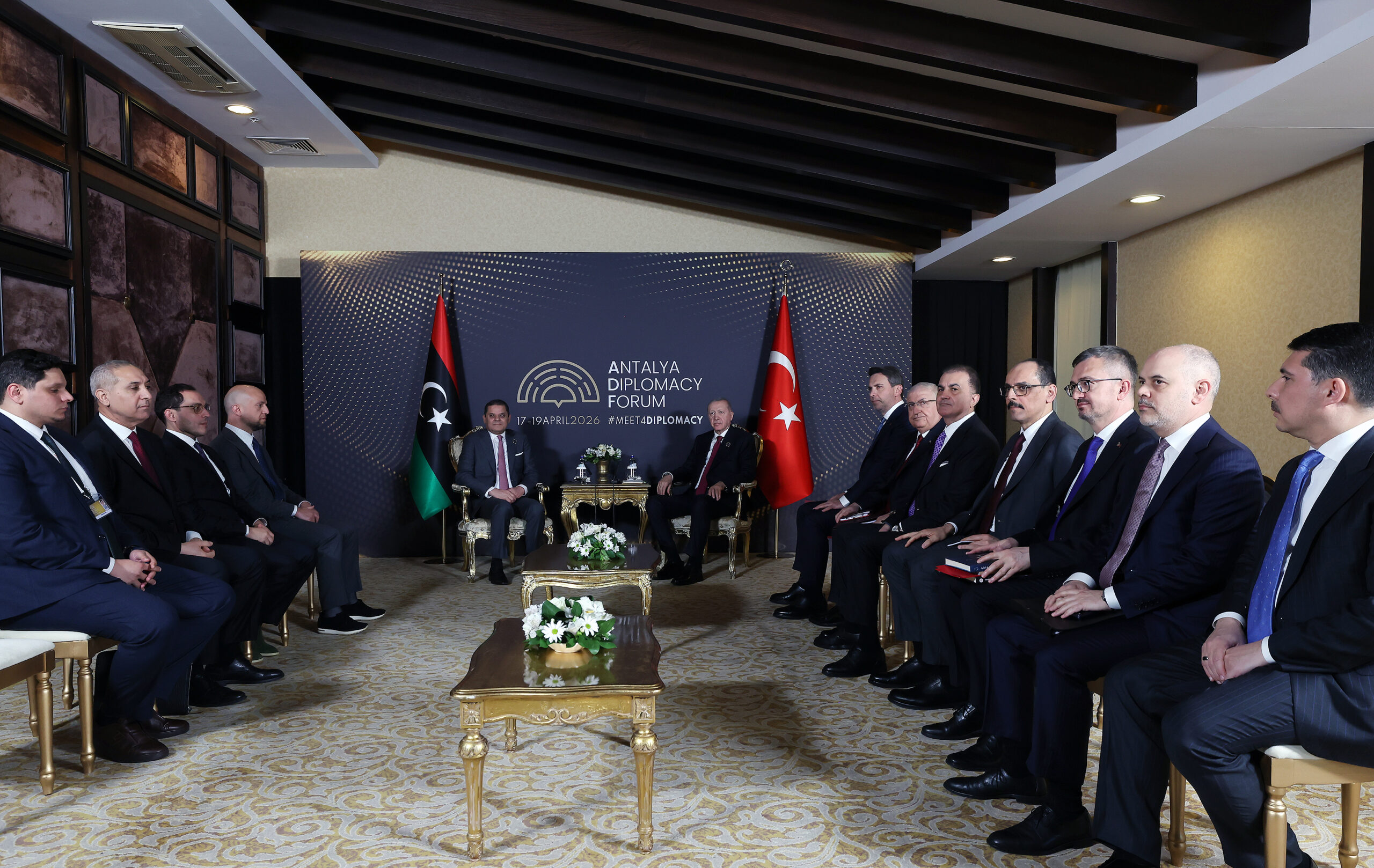
The boycott prompted Qatar to find fresh security guarantees against an immediate threat of regime change, to end its economic blockade and to find a new foreign policy beyond the Gulf unity. Qatar reached out other small Gulf countries such as Kuwait and Oman who found the boycott too harsh. The US administration remained divided over how to deal with Qatar. Russia, Iran and Turkey had immediately coordinated to support Qatar. Turkey expedited all previous MoUs and agreements with Qatar, especially by sending Turkish soldiers to Qatar as per the 2014 agreement. Diplomats of powerful nations and major energy-importing countries, including India and China, abstained from taking a clear side and supported an intra-GCC settlement of the crisis. Saudi Arabia might have threatened to invade Qatar if it installs the Russian missile system S300, but the threat has rather sent wrong signals to the Russians with whom the Kingdom is trying to improve its relations. If Qatar gets its own missile defence system, that will be another setback for the boycotting countries.
Is the blockade sustainable?
The geographic compulsions of the region, international energy security, the ongoing conflicts in the region, need a sustainable security architecture. In today's’ scenario, the collective security mechanism of the Gulf has weakened and a new architecture is being reconfigured, with UAE and Egypt as a central player and Saudi Arabia as a supporter. The new order, however, is deeply dependent on internal dynamics of both Egypt and Saudi Arabia where power struggle has not yet settled. The Gulf Cooperation Council has been among the few successful regional cooperation groupings whose success is premised on a common threat perception, for example, Iran, or a common security vision; that is to restrict the number of external players in the region. The blockade has questioned the very premise of the sustainability of the Gulf Cooperation Council. As of now, no side wants to be the first to exit the council. Without GCC, Saudi Arabia and the UAE will be dependent more on US and Israel support and the US administration is still fractured and uncertain on how to address the crisis. Any Iran containment program which involves the use of force or more sanctions on Iran is going to be fiercely opposed by the European countries, Turkey and other Asian countries. The military action against Iranian targets will not be without repercussions for UAE’s city-state economy. In this context, when the viability of an emerging UAE led security order is still in question, the weakening of existing GCC institutions have created an uncertainty in the regional security environment. The blockade may continue for years, as the Saudis and Emirates have expressed their views many times, but Qatar and other countries may not wait for years in an uncertain security environment. The third alternative security order in which Qatar may fit is not yet in consideration. Countries such as Jordan, Sudan, Somalia may align with Qatar, Turkey and Iran, however, there being an external party to the Persian Gulf family restricts their policy independence. The continuation of an uncertain security environment, as it is now, is not sustainable and will have to find some certainty, which means adopting one of the options that Qatar and its friends have at their disposal.
Conclusion
Many analysts have already questioned as to what objectives the blockade is going to achieve, except hurting themselves. With blockade, there came the mysterious and unreported power struggle within the royal family of Saudi Arabia. King Salman promoted his son Mohammad bin Salman removing Mohammad bin Nayef and then came stories of many suspensions, new appointments, detention of many princes has dominated the Kingdom’s political discourse. The hurriedly introduced and top-down economic and social reforms, dubbed as Vision 2030, have yet to prove its impacts. If Qatar is just a victim of Saudi Arabia’s royal family politics and its deteriorated role in the regional politics. Mohammad Bin Salman is going to be the king of the longest term in the history of Saudi Arabia, a scenario that frightens many of his rivals within the royal family. The global powers, the US and Russia more particularly, need assurance of continuity from the future Saudi King Mohammad Bin Salman, which means a gradual normalisation of relations with State of Qatar and better functioning of the Gulf council is more likely to happen, sooner or later.
The UAE’s tightening grip over the region’s strategic locations, and more recently the UAE’s military activities in Yemen that bypassed Saudi Arabia, have alarmed the smaller countries who see the Saudi role being undermined or overtaken by the United Arab Emirates. Among those who are joining the discontent against the UAE are not just Qatar but also Oman and Kuwait. The more vocal reaction has come from Yemen’s exiled leadership and Somalia’s central government who occasionally have accused the UAE of “occupation” of their countries’ territories.
In one year, Qatar has not only managed to survive from an immediate threat, it has also secured support from a fractured Trump administration, Russia and other energy importing countries. By now, Qatar has managed to expand its relations independently of the Gulf security architecture. The import of basic commodities has become more diverse and in some cases, domestic sectors have been developed for better supplies. The most important success of the Qatari diplomacy is perhaps its ability to keep Kuwait and Oman in confidence. Without these two countries’ staying neutral, any external support would not have borne many fruits.
The next step that both sides may take, is to think for a post-GCC reordering of the region. There are three scenarios that Qatar is now faced with; first, to think of a completely non-GCC future, that will bring it closer to NATO and Turkey with tactical cooperation with Iran; second to forge a new GCC type regional group comprising of Qatar, Oman, Kuwait, and Iraq which will remain open to the return of Saudi-UAE at any point of time; third, Qatar finds some powerful bilateral mechanism from powerful countries and support to break the quartet. In all scenarios, the longer the blockade continues, the farther Qatar is coming out of the GCC collective security.