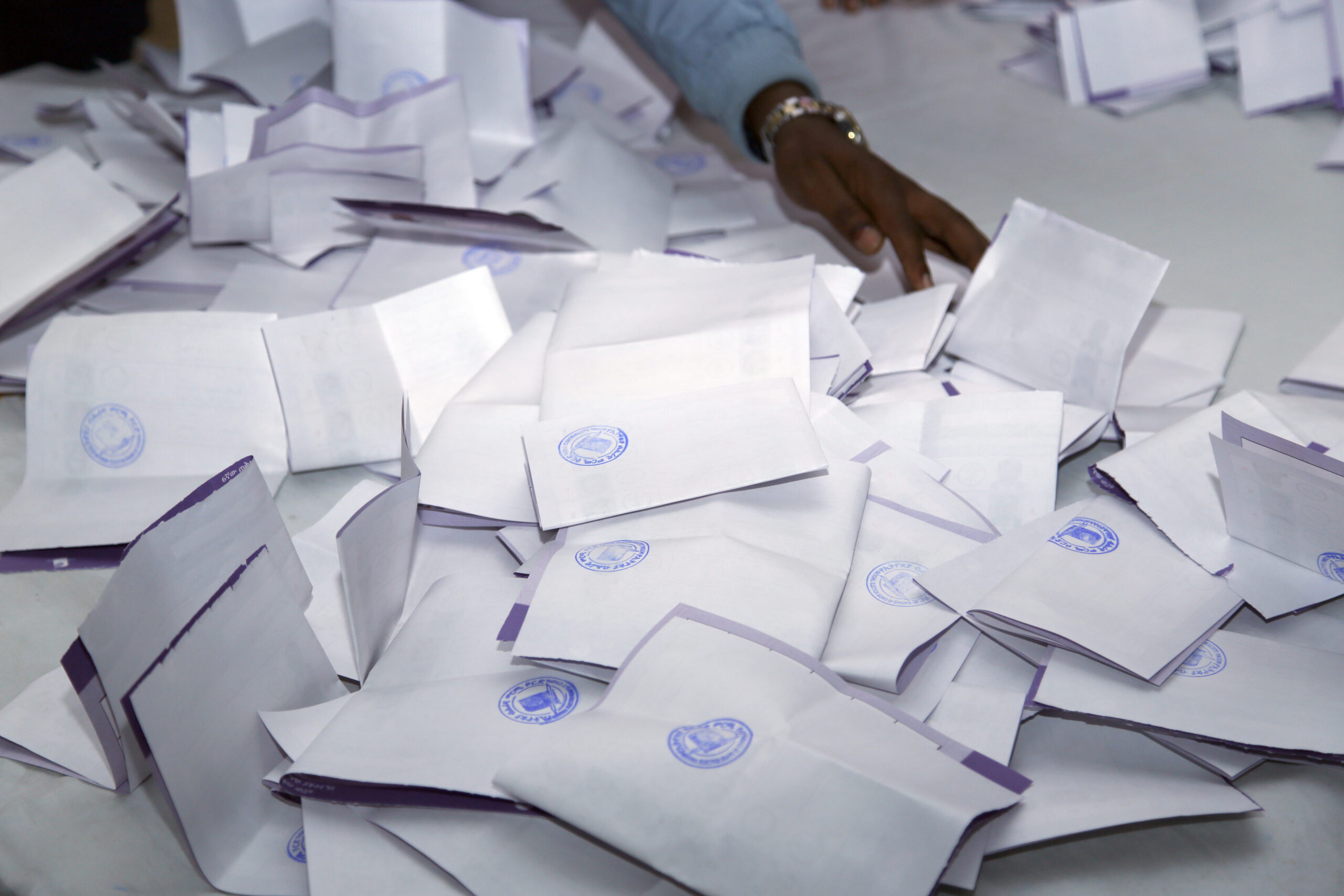
As discussions over a possible U.S. military intervention in Iran intensify, Iraq’s government formation process has once again entered a painful and protracted phase. Although elections were held on Nov. 11, 2025, and nearly three months have passed, a government has yet to be formed. Moreover, escalating tensions between the U.S. and Iran, and the possibility that they could evolve into open conflict, have pushed Iraqi politics into a multilayered competitive deadlock. The prolonged negotiations among political actors have once again made clear that political progress in Iraq depends on the distribution of specific quotas and on compromise among actors divided along ethnic and sectarian lines who are competing for those shares. At the same time, the involvement of external actors such as the U.S. and Iran in this bargaining process has reaffirmed that government formation dynamics cannot be analyzed independently of foreign intervention. Indeed, the military confrontation between the U.S. and Iran immediately after the 2025 elections has shifted the negotiating ground for the prospective government onto a more complex and fragile line.
The Maliki knot
The Shiite Coordination Framework’s announcement of Nouri al-Maliki as its candidate for prime minister made the U.S.-Iran rivalry in the government formation process more visible. Maliki’s desire to run and the preparations he had been making in that direction had been widely discussed in public for some time. However, strong expectations that the U.S. administration would not accept a figure known for his close ties to Iran as Iraq’s next prime minister placed the Maliki option on a lower-probability track from the outset. Indeed, in an environment where even figures such as Ammar al-Hakim and Qais al-Khazali within the Shiite Coordination Framework were distancing themselves from Maliki’s candidacy, his formal declaration — particularly as one of the most controversial figures in Iraq’s recent history — pushed the government formation process into a markedly tense atmosphere. U.S. President Donald Trump’s explicit statement that Maliki’s candidacy would not be accepted by Washington and that he should not become prime minister further hardened that climate.
Despite these difficult conditions, the question arises as to why Maliki has adopted such a persistent stance on his candidacy. Maliki may view himself as one of the most capable figures to manage the balance between Washington and Tehran, given that he remains one of the most powerful actors in Iraqi politics and bureaucracy. In addition, it can be argued that Maliki positions himself as the “strong actor” capable of delivering on one of the core expectations of U.S. policy toward Iraq: the disarmament of Shiite militia groups. This approach is essentially linked to the power capacity Maliki continues to possess within Iraq’s state system.
During his two terms as prime minister from 2006 to 2010 and from 2010 to 2014, Maliki can be said to have built an extensive network of influence over many institutions, most notably the security bureaucracy in Iraq. As his power and position within the Dawa Party were reinforced by the resources of the prime minister’s office, Maliki emerged as one of the dominant actors in post-2003 Iraqi politics. Indeed, a look at the leading figures in Iraqi politics today, including current Prime Minister Mohammed Shia al-Sudani, shows that a significant number gained political experience within governments led by Maliki. As a natural consequence of this accumulation of power, Maliki stands as one of the few figures in Iraq capable of maintaining simultaneous channels of communication with the U.S. and Iran, the two most influential external actors in the country.
Although Maliki has a track record of keeping communication channels open between the U.S. and Iran, it is necessary to recognize that current conditions differ markedly from the 2006-2014 period. Reading this divergence accurately offers a significant analytical advantage, both for understanding the parameters of today’s regional rivalry and for assessing Iraq’s domestic politics. First, there is no longer a Barack Obama or Joe Biden administration in Washington that sought to preserve balance in Iraq by avoiding a hard confrontation with Iran and, in doing so, maintain a U.S. presence on the ground. Instead, a Trump administration is in place that positions Iran as a direct adversary and prioritizes military steps accordingly, aiming to curtail Iran’s influence in the region as much as possible. As a natural result, the primary U.S. foreign policy priority in Iraq has become neutralizing Iran’s power, both in the political sphere and through the military capabilities it has established on the ground via militia groups. Therefore, Maliki’s candidacy, as a figure rooted in the Dawa Party and known for his close ties to Iran, faces an explicit U.S. veto under these new conditions. Maliki’s decision to press ahead with his candidacy despite this veto brings two possibilities to the fore: Either he will unexpectedly emerge strengthened from this rivalry and once again assume the prime minister’s post, or the veto will generate political costs significant enough to call his influence in Iraq into question in the new period.
Alternative scenarios, current conditions
The conditions produced by U.S. policy toward Iraq and the escalating rivalry with Iran are not unique to Maliki; rather, they provide a framework that shapes the entire government formation process. For this reason, if Maliki withdraws from the race or fails to secure the simple majority needed to form a government, any new figures who emerge will confront the same structural pressures. In post-Maliki scenarios, Sudani, who also delivered a strong performance in the elections, can be expected to be the leading candidate. Within the Shiite Coordination Framework, Sudani had been widely viewed as unable to seek the premiership again, primarily due to Maliki’s opposition. At this stage, however, he may find a more favorable room for maneuver. In such a context, Sudani is likely to play his hand more openly and push the limits in an environment where Maliki has stepped aside. By contrast, in a scenario where Maliki maintains his role as a behind-the-scenes power broker, the path could open for alternative figures instead of Sudani. Indeed, the name of Hamid al-Shatri, the current head of the Iraqi National Intelligence Service, has emerged as one of the options under discussion within the Shiite Coordination Framework.
Rather than producing predictions about who the post-Maliki candidates might be, a more accurate perspective may be to focus on the conditions shaping the government formation process. The situation in Iraq is unfolding at the very center of the U.S.-Iran rivalry, creating space for a figure who can operate within the limits, and with the approval, of that competition. In a political climate where the Maliki option, which most sharply contradicts this framework and whose rejection has been explicitly confirmed by Trump, does not materialize, Sudani’s continuation in the premiership for another term appears more likely under current conditions. In an equation where Iran has struggled in recent years to preserve its power capacity in the Middle East, while the U.S. has sought to capitalize on this weakening to pursue its objective of neutralizing Iran in Iraq, Sudani, Shatri or another alternative figure is expected to emerge with a profile that does not fall outside the bounds of this rivalry. Accordingly, the government formation process has turned into a chess game, advancing through bargaining and countermoves shaped by the relative power capacities of the actors involved. On one side stands Iran, seeking to maintain its influence in Iraq despite mounting pressure and aiming, as part of that effort, to elevate the most suitable figure to the premiership in line with its interests. On the other is a U.S. administration that wants to take more direct part in determining Iraq’s prime minister by exploiting Iran’s constrained position. In a landscape where one side is determined to “preserve its interests” and the other to assert “dominance,” with neither willing to step back, it is hardly surprising that the government formation process is proceeding on a tense, fragile and highly unpredictable footing.