A field study conducted by the Center for Middle Eastern Studies (ORSAM) in Iraq’s Kirkuk from Aug. 1-8, 2025, provided a significant opportunity to observe the pre-election climate. As part of the study, meetings were held with politicians, academics, researchers, journalists, and opinion leaders in Kirkuk. The primary focus of the research was the election preparations of various identity groups in the province and their expectations for the post-election period.
In Kirkuk, the pre-election landscape is shaped not only by political competition but also by chronic public service shortages that directly affect daily life. In some neighborhoods, water is supplied only every other day, making it especially difficult for residents to meet basic needs during the summer months. Power outages can last up to eight hours a day, disrupting both household life and small-scale commercial activities. The increased use of generators during these outages also contributes to air pollution. The persistence of infrastructure problems has eroded public trust in local governance and cast doubt on the credibility of service-related promises made during election periods. Under these conditions, public expectations have shifted toward tangible services, pushing politicians to prioritize basic municipal needs alongside security and investment issues.
The political atmosphere in Kirkuk ahead of the election reflects not only the city’s social and ethnic fragmentation but also growing public dissatisfaction caused by a lack of services. The already fragile balance between Arab, Turkmen and Kurdish communities could become even more sensitive as the election race intensifies. Candidates who fail to present clear and practical solutions to infrastructure problems are losing credibility, especially among undecided voters. In this climate, those who offer direct, local solutions and take visible steps to improve services on the ground may stand out. In some cases, candidates have even been seen taking on municipal roles, such as distributing water, to demonstrate their commitment.
Markets and shopkeepers in Kirkuk are being directly affected by the uncertainty regarding the post-election period. Many residents are choosing to cut back on spending until the political landscape becomes clearer, leading to a decline in sales — especially for small businesses. Commercial activity in the city has also slowed due to the Arbaeen. These conditions are reducing the daily foot traffic in local markets. In addition, high temperatures are keeping shoppers away during the early hours of the day. The challenges faced by shopkeepers mirror those experienced by other segments of society, all of which are shaping public perceptions of the upcoming elections.
Public perception of the elections
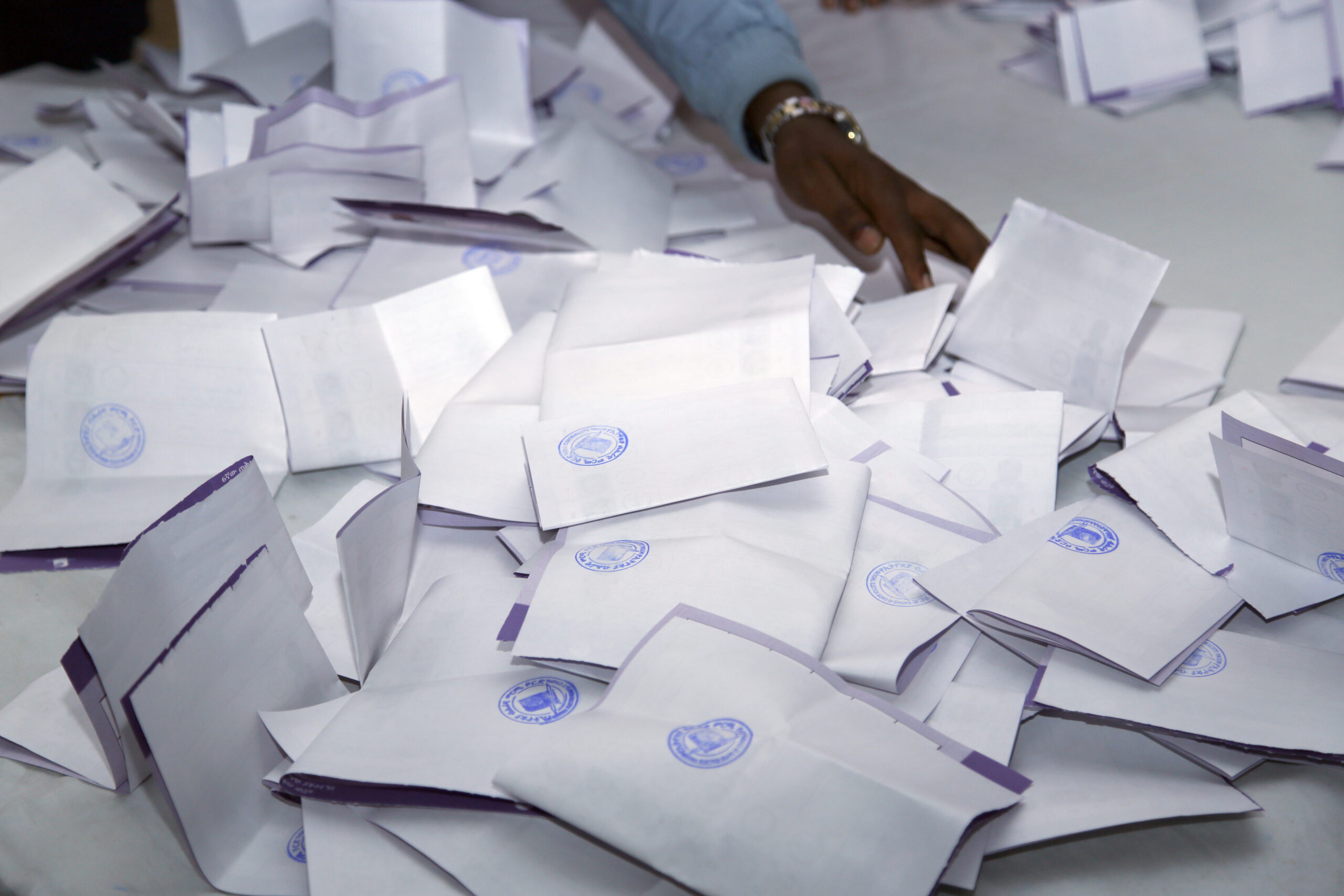
In Kirkuk, public interest in the political process has noticeably declined in recent years. One of the main reasons behind the drop in voter turnout is the widespread belief that electoral fraud is taking place. Voters say problems with the electronic voting system and manual counting have discouraged people from going to the polls. Complaints, particularly from villages with polling stations, about group voting have further reinforced the perception that elections are neither fair nor transparent. This has contributed to growing political disengagement, especially among young voters. The 18–30 age group is frequently cited as having the lowest turnout rate.
Public trust in candidates is weakening, much like confidence in the election process itself. A common complaint is that candidates frequently fail to deliver on the promises they make during their campaigns, seriously damaging the trust between them and the electorate. The failure to fulfill service-related pledges, in particular, has created the impression that candidates only appear before the public during election season. This has reinforced a widespread belief that many candidates sever ties with the community and neglect their responsibilities once elected.
The failure to deliver on campaign promises has led not only to a loss of faith in individual candidates but also in the electoral system as a whole. Participants emphasized that repeated promises followed by repeated disappointments have caused elections to be seen less as a means of solving problems and more as a mere formality. This growing distrust is deepening the perception that the political representation mechanism is ineffective. As a result, elections are increasingly losing their appeal as a process that offers hope for change.
Public views’ on disarray of the electoral lists
In the lead-up to the elections in Kirkuk, all identity groups appear internally fragmented. As in previous elections, the Arab, Kurdish and Turkmen communities of the province are unable to present a unified stance. Instead, they are preparing for the vote through divided candidate lists. In a multiethnic province like Kirkuk, where the political balance is already delicate, this fragmentation complicates the electoral process. Internal divisions within each group are making the election outcome increasingly unpredictable. This disunity is also undermining public confidence in the political system. As a result, the prospect of a unified political direction or strong representation in Kirkuk is steadily weakening.
From the perspective of Kirkuk’s Arab community, the possibility of entering the elections with a unified, large list has not materialized. Arab voters are divided among various lists aligned with different groups and political leanings. This fragmented picture is diminishing the political weight of Arabs in Kirkuk and preventing them from emerging as a strong bloc in the potential distribution of parliamentary seats. The lack of unity is limiting their potential to play a more influential role in local governance and narrowing their political maneuvering space. The election of a Kurdish governor following Arab politician Rakan Saeed al-Jubouri is widely seen as the main reason behind the failure to form a united Arab list. Many view the loss of the governorship as evidence that politicians in Kirkuk are acting in pursuit of personal interests rather than communal representation.
For the Kurdish community, the situation is largely shaped by political disenchantment. The prolonged failure to form a government in the Iraqi Kurdish Regional Government (IKRG) has directly affected Kurdish voter behavior in Kirkuk. This has eroded Kurdish confidence in the political process. The political developments in the IKRG have significantly reduced Kurdish motivation to vote, manifesting as political apathy or reluctance. Despite this, there is a widespread expectation across Kirkuk that Kurdish voter turnout will be higher than that of Arabs and Turkmens.
From the Turkmen perspective, a notable development is the entry of two separate lists in the parliamentary elections for the first time. Historically, Turkmens in Kirkuk have tended to present a unified political front. However, the emergence of two competing lists this election is seen as a factor that could weaken their representation and reduce their political influence. This division makes it more difficult for Turkmens to exert unified weight in Kirkuk’s politics and highlights internal differences within the community.
The pre-election landscape in Kirkuk reveals that all identity groups are preparing for the vote in a fragmented and divided manner. The Arabs are split across multiple lists, Kurdish voter interest has waned, and the Turkmens are participating with two separate lists. This weakens the likelihood of a strong political unity across the city. The fragmented outlook further complicates the delicate balance within Kirkuk’s multiethnic structure.
Conclusions on the pre-election situation
The unfolding pre-election scenario in Kirkuk is creating an atmosphere of social and political fragility. Declining interest in the elections, combined with distrust in candidates and the system, is weakening voters’ perception of politics as a tool for solutions. Widespread concerns about election fraud, group voting and transparency issues with electronic systems are reducing voter turnout — especially among young people. This trend not only lowers participation rates but also calls the legitimacy of the political process into question. Additionally, candidates’ failure to fulfill campaign promises is weakening the bond between politics and the community, gradually eroding trust in the political system.
This overall atmosphere is further deepened by internal fragmentation within Kirkuk’s identity groups. The failure of Arabs to unite around a large list has eliminated their chances of forming a stronger bloc in provincial politics. The prolonged inability to form a government in the IKRG has brought morale problems among Kurds to Kirkuk, reducing their motivation to vote. For Turkmens, entering the election with two separate lists for the first time signals a weakening of their historically unified stance. All this fragmentation not only weakens representation in Kirkuk but also destabilizes the delicate balance among the city’s identity groups.
As the elections approach in Kirkuk, the outlook reflects a significant decline in local residents’ expectations of the political process. The elections are seen as a period marked by unfulfilled promises and a lack of delivered services. This perception leads to lowered expectations for the post-election period and a stronger demand for tangible services that address daily needs. Thus, Kirkuk’s political atmosphere is shaped not only by identity-based divisions but also by a cycle of distrust deepened by practical governance issues.