Following the temporary ceasefire between the United States and Iran, Iraq — one of the countries most affected by the war — once again finds itself at a critical juncture. The extent to which the relative calm will be reflected on the ground remains one of the key questions going forward. In particular, whether militia groups will continue their actions targeting the U.S. presence in Iraq and the Iraqi Kurdish Regional Government (KRG), and whether the U.S. will continue air operations against militia structures, remains important from a security standpoint.
However, the issue is not limited to security alone. With the ceasefire, the political process, which had largely stalled due to the war, appears to be picking up again. The government formation process has gained momentum, negotiations in Baghdad have begun to produce concrete results, and the election of the president has emerged as an initial sign of this shift. More importantly, the way political actors are repositioning themselves suggests that a deeper transformation in post-war Iraqi politics may be on the horizon.
Security landscape following the ceasefire
During the war, Iraq’s security environment was largely shaped by the fact that the U.S. and militia groups within the Popular Mobilization Forces (PMF), also known as the Hashd al-Shaabi, effectively turned the country into a battlefield. Following the ceasefire, this picture appears to have partially eased. It can be said that U.S. air operations targeting militia groups have significantly decreased. Indeed, relative calm has been observed in provinces such as Anbar, Mosul, and Babil, which were heavily targeted in recent periods.
However, the same picture is harder to apply to the KRG. The Erbil and Sulaymaniyah corridor has continued to be targeted by militia drone attacks even after the ceasefire. Although it has been stated that a significant number of these attacks have been intercepted in the air, the fact that the KRG continues to be directly targeted has not changed.
However, there are serious questions about how lasting this calm will be. There is no indication of a change in the Donald Trump administration’s policy in Iraq aimed at neutralizing militia groups. Washington’s core approach is that Iran maintains its military presence in Iraq through militia structures, and that these groups must be neutralized to roll back Iran’s gains. However, the absence of a government capable of implementing this policy creates a dynamic that pushes Washington toward direct military options.
From this perspective, the ceasefire represents less a lasting security transformation for Iraq and more a temporary window of opportunity for the political process to move forward. Once a government is formed, it would not be surprising if the U.S. increases its operations against militia groups again, depending on the nature of the emerging political landscape. At this stage, however, it appears that Washington, in the atmosphere created by the ceasefire, has partially shifted its focus away from the military arena and toward the premiership process and the formation of the new government. In other words, there is a temporary shift in emphasis from security to politics.
Revived political process
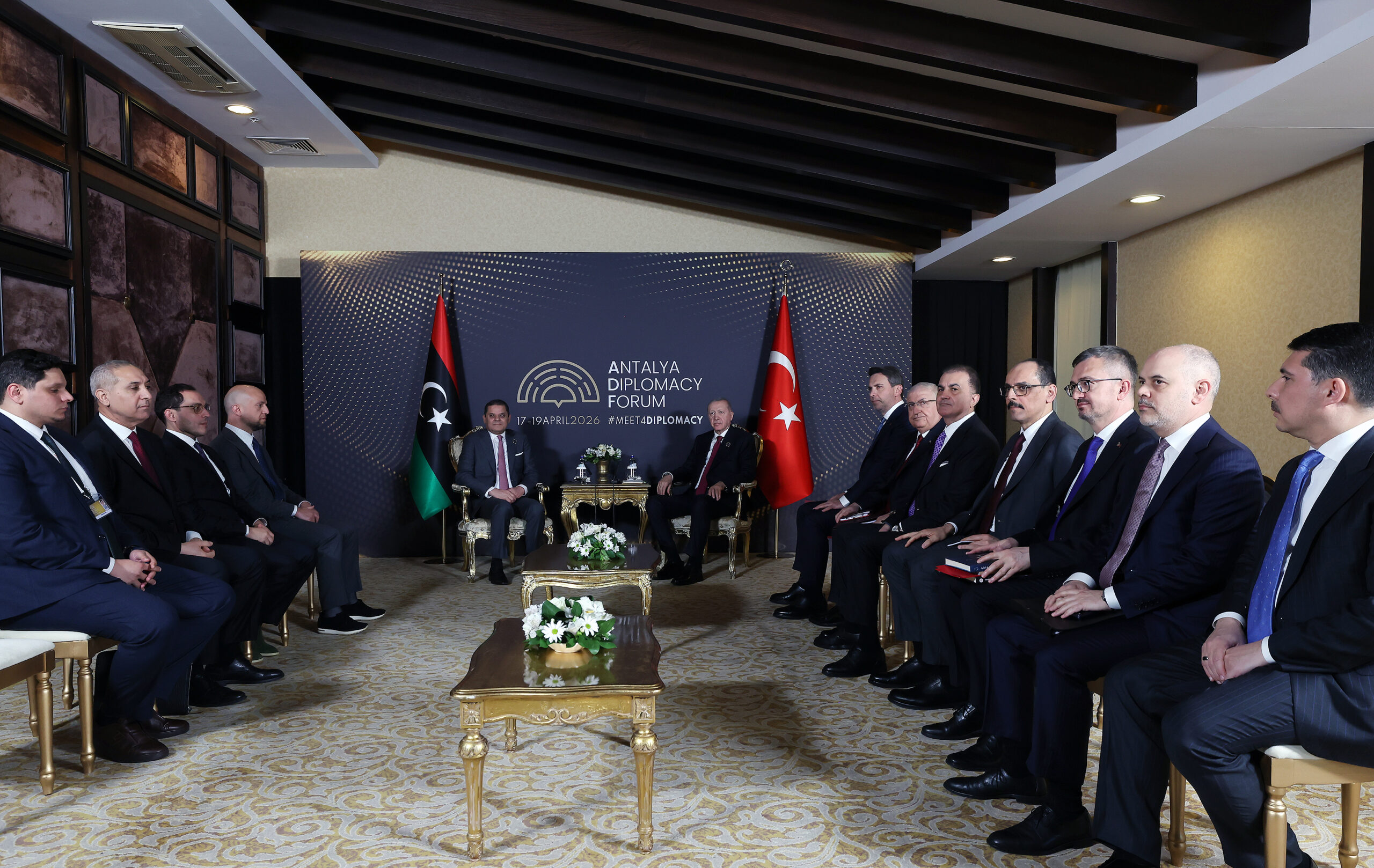
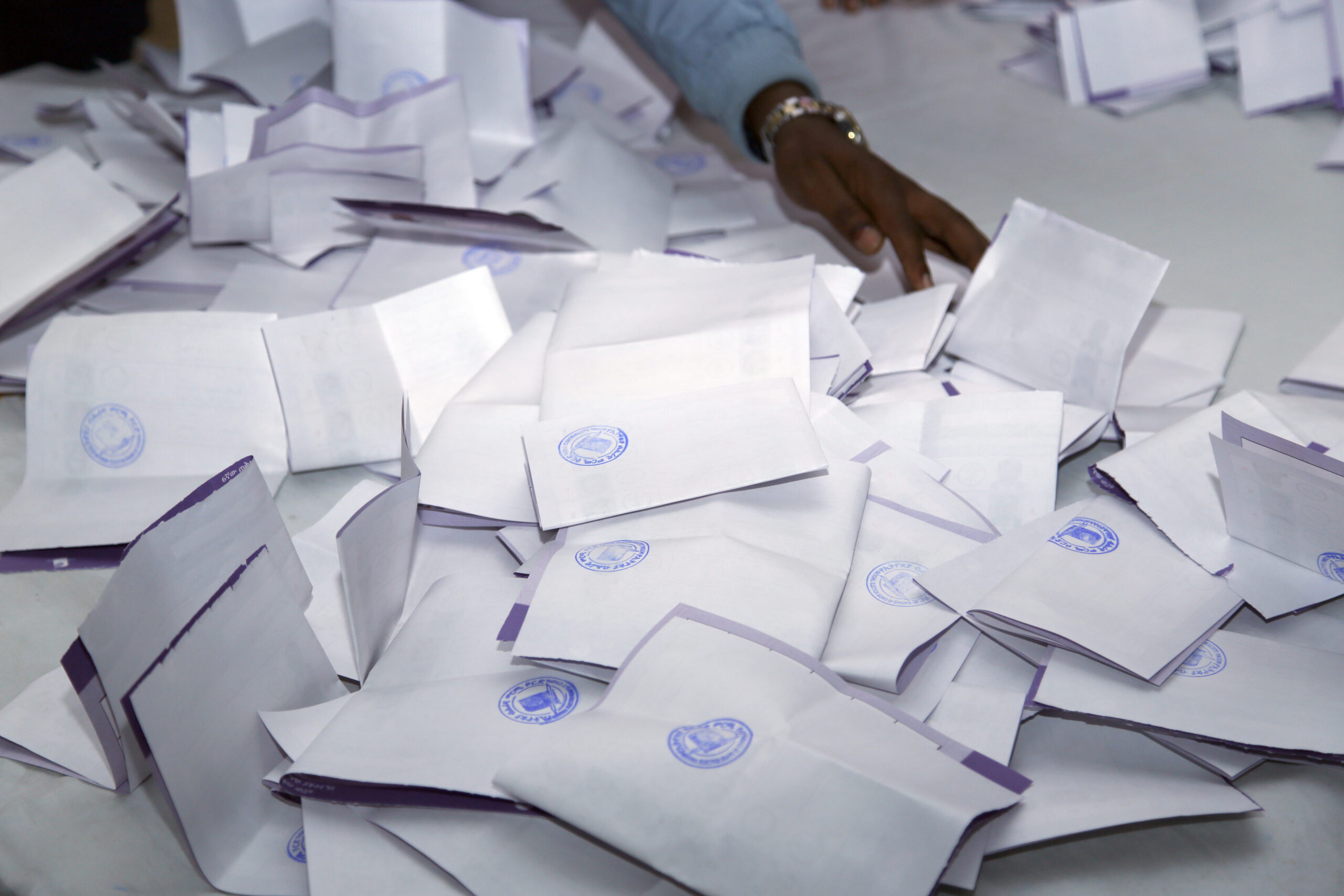
With the ceasefire, Iraq’s government formation process has regained momentum, and its first concrete outcome has been the election of Nizar Amedi, the candidate of the Patriotic Union of Kurdistan (PUK), to the presidency. However, what stands out here is not the individual elected, but rather the political dynamics that produced this result.
At this point, actors positioned against Nouri al-Maliki’s potential premiership have quickly aligned themselves, seeking to produce outcomes in Baghdad politics despite him. In response, Maliki has continued his effort to steer the process through a figure he can control in a scenario where his own chances of becoming prime minister are weakening. These reciprocal moves indicate that the core of the competition lies along the axis between Maliki and Mohammed Shia al-Sudani. Indeed, while Sudani is working to remain in office, Maliki’s continued influence within the Shiite Coordination Framework and his efforts to limit Sudani’s candidacy constitute the main line of tension shaping the political negotiations.
In the political process that flared up again after the ceasefire, one of the notable actors has been Mohammed al-Halbousi. His ability to rapidly and effectively establish back-channel diplomacy in Baghdad and bring the process to a conclusion is critical for understanding the current picture. In particular, the fact that a president could be elected from a session boycotted by both Masoud Barzani and Maliki is not a common occurrence in Iraqi politics. For this reason, the ability of Halbousi and Parliament Speaker Haibat Halbousi to manage the process despite the Kurdistan Democratic Party (KDP) and Maliki, and to secure Amedi’s election, stands out as an important strategic gain for the Taqaddum movement and the political bloc aligned with it.
However, this picture should not be read solely as a success for Sunni politics. Behind the process, it is also clear that Prime Minister Sudani and some actors within the Shiite Coordination Framework who are distant from Maliki played a role. This points to a division that has long been known but often remained implicit, now becoming more visible. In particular, the chain of developments that began with Haibat Halbousi’s speakership process and continued with Amedi’s election suggests that a new political line is taking shape in Baghdad. This line brings together, on the one hand, actors within the Coordination Framework who are partially diverging from the Dawa Party’s traditional line, and on the other, a more pragmatic alliance forming around Sudani and Halbousi.
The most critical reflection of this new political line is emerging in the debate over the premiership. In the current landscape, there appears to be support for Sudani to remain in office, but an alternative formula is also on the table in which Sudani would step back while still retaining influence over the selection process for his successor.
In contrast, figures such as Basim al-Badri, known for his proximity to Maliki and his roots in the Dawa Party, have occasionally been floated as potential candidates. However, such names are viewed as relatively hardline and difficult to compromise on from the perspective of the Sudani-Halbousi camp, and are therefore likely to face significant resistance. It is understood that Maliki, rather than stepping directly onto the stage himself, is attempting to maintain balance through such proxy candidates.
At this point, it is more meaningful to focus on the emerging alliance structure rather than individual names. This line forming against Maliki in fact signals a deepening fracture within the Shiite Coordination Framework. The convergence of actors such as Sudani, Halbousi, the KRG, and Ammar al-Hakim on the same political track—along with the possibility that additional figures breaking away from within the Coordination Framework could join this alignment—points to an emerging search for a new balance in Iraqi politics. In this context, the potential positioning of figures such as Faleh al-Fayyad and Haider al-Abadi also warrants close attention.
These developments also raise the possibility of the emergence of a new political line that partially diverges from the traditional Shiite politics shaped after 2003 along a pro-Iran axis, particularly the Dawa Party and the Islamic Supreme Council of Iraq schools. This prospect stands out as a development that needs to be closely monitored not only in terms of Iraq’s domestic politics, but also with regard to regional balances and the preferences of global actors influencing Iraq.
On the other hand, Kurdish politics also plays an important role in this new equation. The KRG appears to be attempting to take a more active position in the current landscape, while the KDP remains relatively in the background. Its role in the presidential process, along with recent messages from Bafel Talabani, reflects an effort by the KRG to move beyond being a Sulaymaniyah-centered actor and to become more decisive in Baghdad politics. However, reading Iraq’s balance of power solely through the current picture could be misleading. Given the KDP’s established strength in parliament and its network of relationships with political actors in Baghdad, its current marginalization should not be expected to be permanent. For this reason, it can be assessed that the KDP may once again become more actively involved in Baghdad’s political equation in the near future.
Overall, the picture in Iraq suggests that the ceasefire has not produced a durable signal of stability, but rather a temporary opening from security dynamics toward politics. On the ground, conflict drivers have not been fully eliminated; they have instead been postponed and transformed. In parallel, the accelerating political process in Baghdad points to a new phase of a deeper power struggle. The rivalry crystallizing along the Maliki-Sudani axis is not merely a contest between individual leaders; it reflects a broader debate over the direction of Shiite politics in Iraq, the nature of alliances, and the way the state itself will be reconfigured. In this sense, what will matter in the near term is not so much how long the ceasefire holds, but rather whether the political balances shaped in this brief window will solidify into a more lasting order.