The State of Kuwait, located in the northeastern corner of the Arabian Peninsula and bound by Iraq to the north and Saudi Arabia to the south, has been governed by the Al-Sabah family since the mid-eighteenth century. Kuwait, which gained its independence in 1961, is a constitutional monarchy in which the emir is the head of state and has the final say in state affairs. The current Emir Sheikh Sabah al-Ahmed al-Jaber al-Sabah, who also served as foreign minister over a 40-year period, has ruled the country since January 2006. The positions of crown prince and prime minister have been separatein the country since 2003 after a landmark decree issued by the Emir as part of the political reforms. The total population of the country is more than 4 million, with non-Kuwaitis accounting for 70% of the population.Although a small country in terms of territory, the oil reserves in Kuwait make up about7% of proven crude oil reserves of the world. The Kuwaiti dinar is the highest-valued currency in the world according to World Bank.Its strategic location as a neighbor to three important regional countries, namely Iran, Iraq and Saudi Arabia, and its rich oil reserves,makes Kuwait a crucial country in the eyes of both the global and regional powers.Particularly with the Iraqi invasion of Kuwait in 1990 which led to the Gulf War, Kuwait became a more visible actor in the international sphere. In recent years, Kuwait played a significant role as a mediator in regional disputes, maintaining dialogue with all the players in the Middle East. With its political structure and society, Kuwait stands as a remarkable exception when compared to other countries in the Gulf region.
Political structure in Kuwait
It wouldn’t be wrong to describe Kuwait’s political system as democratic when compared to other Gulf Cooperation Council (GCC) countries. It has one of the most interesting political systems in the region. It is not a full democracy according to western standards; however, it is the closest country to a democracy in the Gulf region. Thanks to its constitution, Kuwait’s political system enjoys a balance of participatory democracy and monarchical rule. In this system there is anelected parliament and appointed cabinet. The 15-seat cabinet is formed by the prime minister, who in turn is appointed by the emir. The National Assembly (elected parliament) is consisted of fifty members who are elected by the people in elections held every four years from Kuwait's five electoral districts, 10 from each district. The ministers in the cabinet do not necessarily need to be appointed from the 50 elected members of the parliament, but according to the constitution, at least one minister has to be chosen from the parliament. The key posts of prime minister as well as the foreign, interior and defense ministers are traditionally occupied by the members of the Emir’s Al-Sabah family. The emir has the right to pass laws by decree when parliament is not in session, veto legislation, dismiss ministers and dissolve parliament under a set of conditions based on constitution.The Kuwaiti constitution not only gives the power to dissolve the parliament to the emir but also to the Constitutional Court.
In Kuwait’s political life, rather thanofficially recognized political parties, there are some well-organized political groups that act as de facto parties.
The most important thing that differentiates Kuwait from the Arab monarchies of the Gulfis that unlike the others, it has a parliament that has power to hold ministers, including those from the Al-Sabah family, accountable. According to country’s constitution, which remains the most liberal among Gulf countries, elected members can hold no-confidence votes for ministers and the prime minister, and force them to resign.This has happened. In 2011, after three days of protests byyouth activist groups – supported by opposition figures – for the resignation of the prime minister, the Emir withdrewthe premier from his post. This is something that one would not see in other Gulf countries. Members of parliament can challenge the government or even boycott elections, as they did in the most recent elections.
Countries follow different paths to democracy and Kuwait’s experience was shaped with a key moment in its history: the 1990 Iraqi invasion. During the invasion, a milestone in Kuwait’s political life, opposition figures played a significant role in pressuring the ruling family to make clear commitments to the restoration of the parliament and politics in the aftermath of occupation. Those calls bore fruits. As Michael Herb states in his study, The Origins of Kuwait’s National Assembly, “The Kuwaiti ruling family responded to the Iraqi threat by writing a liberal constitution.” Thanks to that constitution, Kuwait now has an influential parliamentary institution and an open political system where there is a greater political participation compared to its neighbors. Since the 1990s, Kuwait has taken remarkable steps toward political reforms.
The Importance of the November 2016 elections
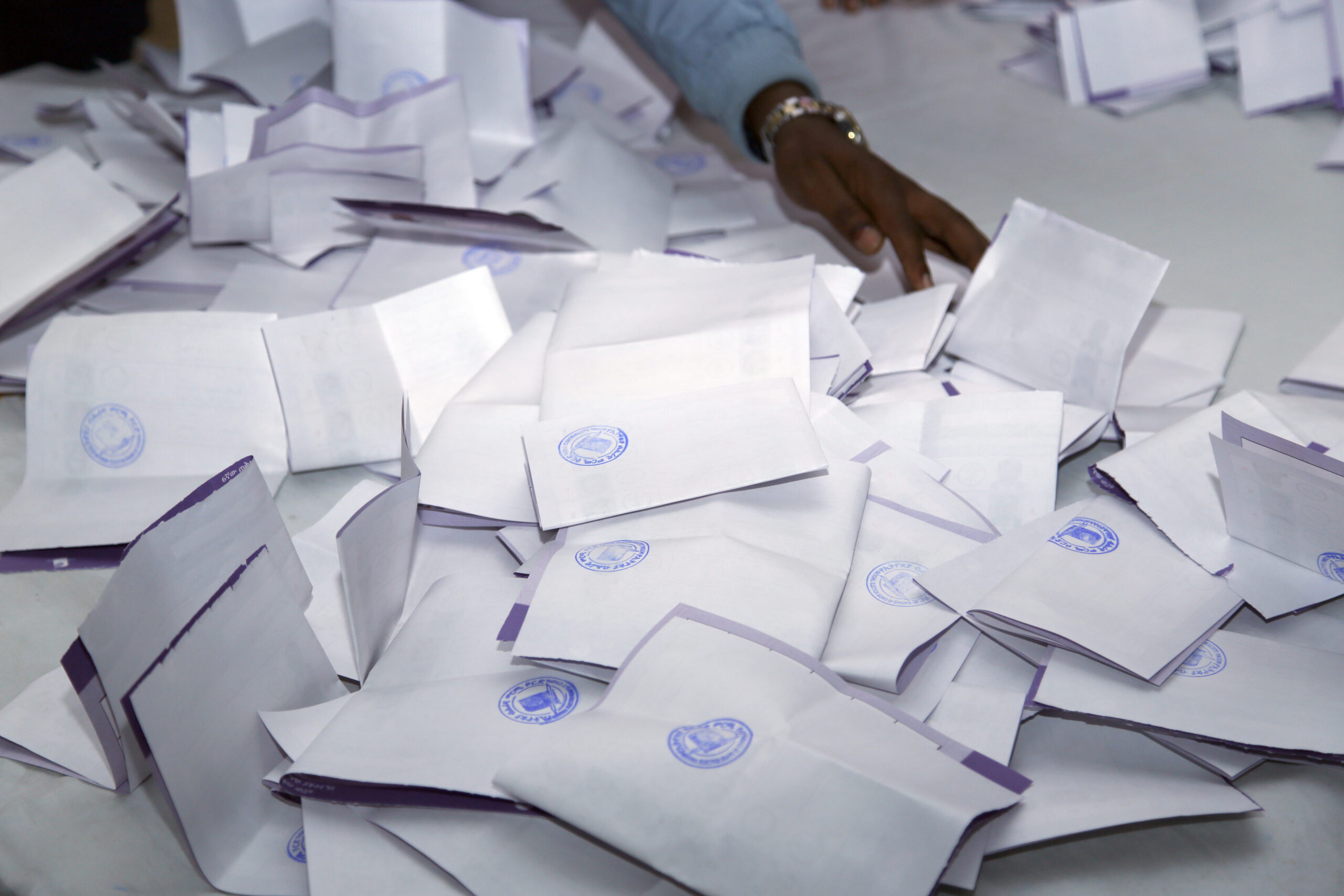
On 26 November 2016, early elections were held in Kuwait following the dissolution of the parliament by the Emir in October 2016. Under the constitution, parliamentary electionsmust be held every four years. The next elections were originally scheduled to be held in June 2017, but the Emir suspended them nine months before, citing “regional developments” and “security challenges” as reasons.
This election came after a period of political stalemate between the parliament and the government, mostly due to economic and regional crises. The most important aspect of the elections is that theopposition made a strong comeback after an absence of more than three years, winning almost half of the seats of the 50-member parliament. In 2013, the opposition boycotted the elections due to government’s move to change the electoral system to “one person, one vote.” That election,about half of the electorate did not turn out to vote. However, in November, around 483,000, or about 70 percent of Kuwaitis, went to polls.
The parliament that was formed after the 2013 elections was regarded by the opposition as ineffective for solving the country’s problems. So the opposition returned, motivated by the promise that they could do so. Some MPs are openly challenging the government’s policies. For instance, the Liberals believe that the years of conservative rule have held back Kuwait’s progress. They say they want to address the situation and make the country shine at all levels again.
The issues that would be on the new parliament’s agenda would range from the budget deficit to rising prices, from youth unemployment to austerity measures, from oil prices to public sector jobs. Kuwait’s parliament takes a unified stance when it comes to the country’s foreign policy;therefore, much parliamentary dispute is related to domestic political and economic issues.
The latest elections strengthen the position of the opposition, which now dominates the new parliament. However, here we are not speaking of a unified opposition. Kuwait’s new parliament is an amalgam of several figures with diverse demands and motivations. The Kuwaiti opposition includes liberals, tribal representatives, independents, and pro-Muslim Brotherhood MPs with different politics. So the opposition’s ability to unify and be effective will be tested. Their collaboration on the country’s issues is a question which could become clearer in time.
Another significant side of this election is that it was a defeat for some old faces. Currently, one third of all members of the new parliament are relatively young and new to the political scene. This parliament has the youngest MPs in the history of Kuwait. These new MPs hope to have a positive impact on Kuwait’s political life.
However, it is disappointing that among the fifteen women running for the seats in the parliament, only one won: Safa Al-Hashem, who was reelected. Her election as the only female MP shows the struggle women still face in seeking office. With the re-appointed of the only female minister, Hind Subaih Barrak Al-Subaih as the Minister of Social Affairs and Labor, the presence of women in Kuwaiti politics increased to two. This year’s elections saw the lowest level of representation since women were given the right to vote and run in national elections in 2005. When compared the other Gulf countries, Kuwait has a higher rate of participation of women in the workforce. In some professions, they even outnumber men.
According to Arab media, the elections had made a “62 percent change” in the parliament. Al-Qabas newspaper’s headline called it a “Surprise.” There is a high expectation by the people of Kuwait from the new parliament. What concrete steps would the new parliament take regarding the issues in Kuwait will be a question and the following days will show how successful the parliament would be.