INTRODUCTION: The Collapse of the Balance of Power in Darfur and Kordofan: From Air War to Territorial Control
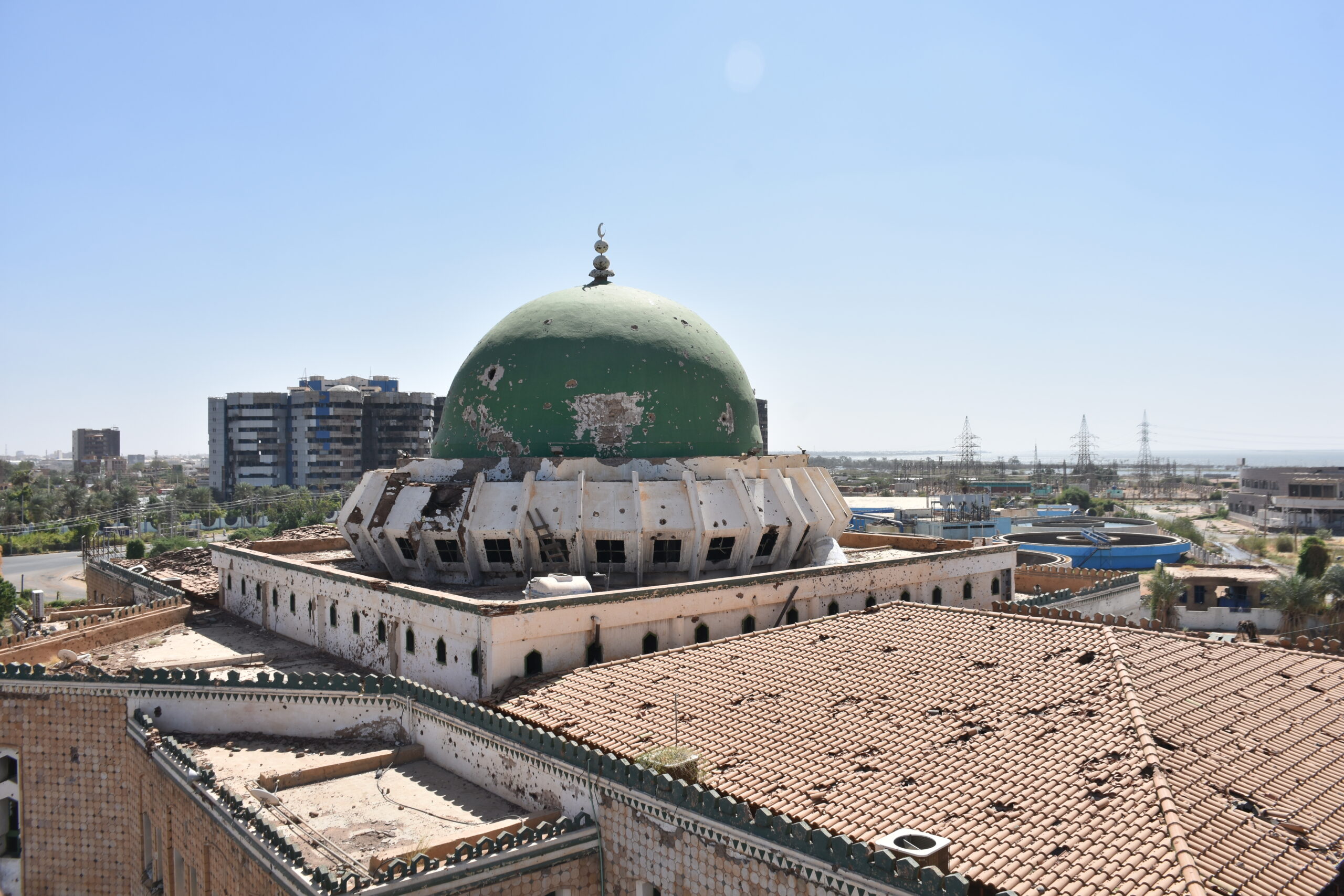
October 2025 marked a turning point in Sudan’s civil war, as the conflict shifted from a struggle for air superiority to a fight for control on the ground and the Sudanese Armed Forces (SAF) began losing territory to the Rapid Support Forces (RSF). Throughout the month, dozens of attacks took place across the Darfur, Kordofan and Khartoum regions, with the RSF seizing the cities of Al-Fasher and Bara and establishing strategic dominance. In response, the SAF tried to wear down RSF positions through drone and air operations. The war is now being fought not only along front lines but also in city centers and around critical infrastructure. By October, RSF actions in Al-Fasher that produced scenes described as shameful for humanity drew international condemnation, while the army’s loss of control in Bara signaled a potential shift that could fundamentally alter the course of the war in Darfur as well as stability along the Kordofan axis.
The Extent of Geographical Expansion and the Intensity of the Attacks
Throughout October 2025, the center of gravity in Sudan’s conflict settled along the Darfur, Kordofan and Khartoum axis, with each of the three regions standing out for its own distinct dynamics. In Darfur, the war played out through the encirclement of urban areas and battles for territorial control; in Kordofan, through assassinations targeting tribal leaders and a vacuum of political authority; and in Khartoum, through an intense drone war focused on airspace and critical infrastructure.
Darfur
The Darfur region witnessed the heaviest fighting throughout the month. On Oct. 1, an RSF artillery strike on a refugee camp in Al-Fasher killed six civilians and wounded 24, underscoring the group’s continued strategy of pressuring civilians. That same day, the Sudanese army said it neutralized RSF elements in Al-Fasher, including Colombian and Ukrainian mercenaries, pointing to the increasingly internationalized nature of the war. On Oct. 2, Sudan’s Air Force carried out strikes on RSF positions in El Maliha and on a camp and the airport in Nyala, indicating that the SAF had regained initiative in Darfur’s airspace. However, the mortar strike on a hospital in Al-Fasher on Oct. 8 showed that health infrastructure had become a direct target.
The burning of dozens of homes during the RSF attack on the town of Abu Gamra on Oct. 16–17, followed by the Darfur Joint Force retaking the town, demonstrated how quickly control in the region can shift. On Oct. 24, the RSF claimed it had captured the Al-Fasher governorship building, and the presence of foreign fighters identified in the clashes reinforced indications of regional involvement. Finally, on Oct. 26–27, the RSF seized the army headquarters in Al-Fasher and established full control of the city — a threshold that fundamentally altered the balance of power in Darfur. The fall of Al-Fasher was not only a military gain but also a strategic turning point in northern Darfur in favor of the RSF.
Kordofan
The Kordofan front stood out in October for an increase in drone attacks and assassinations targeting tribal figures. On Oct. 5, the RSF struck civilian and military facilities in the cities of El Obeid and Kosti with dawn drone attacks, damaging hospitals in the process. On Oct. 11, RSF and its ally, SPLM-North, launched artillery fire on the town of Dilling, showing that the conflict in Kordofan had deepened not only militarily but also politically and ethnically. A drone strike in South Kordofan on Oct. 14 that killed two Sudanese majors revealed that the RSF was targeting senior officers within the army. On Oct. 20, the killing of tribal leader Suleiman Jaber Juma Sahl and ten members of the Arab Mashanen tribe in North Kordofan signaled that the war had entered an ethnically driven assassination phase. Finally, the RSF’s capture of the city of Bara on Oct. 26–27 created a strategic rupture along the Kordofan line. The fall of Bara threatened the security of the northern corridor leading to Khartoum and weakened the SAF’s logistical route from the west to the capital.
Khartoum and the Nile
Khartoum and Nile State turned into a battleground dominated by drones throughout October. Between Oct. 11–15, the RSF carried out multiple suicide drone attacks on Khartoum and East Nile, killing two civilians from the same family. On Oct. 14, an RSF drone fleet targeting the outskirts of Khartoum was successfully repelled by the SAF. On Oct. 23–24, the RSF struck Khartoum International Airport for three consecutive days, while the army announced it had neutralized all attacks through four days of counter–air operations. On Oct. 26, an RSF drone attack on the Kenana Military Base was intercepted, and the downing of an RSF cargo aircraft at the Nyala Airport the same day gave the army a brief morale boost.
Overall, the geographic character of the war during October became defined across three distinct dimensions:
- A struggle for ground control in Darfur,
- A tribal and local authority war in Kordofan,
- And an air- and technology-centered conflict in Khartoum.
This picture shows that the war in Sudan has evolved beyond a confrontation between two armed forces and has instead turned into a multilayered process of internal fragmentation, with new centers of power emerging that will shape the country’s future.
Actors in the War: Tactics, Alliances, and Foreign Support
Sudanese Armed Forces (SAF):
- Intensified air strikes in Al-Fasher and Nyala to hit RSF logistics lines.
• Conducted simultaneous operations using drones.
• Strengthened air defense networks around Khartoum and Kenana, shooting down numerous suicide drones.
Rapid Support Forces (RSF):
- Established ground dominance by taking control of Al-Fasher and Bara.
• Targeted power plants and military facilities in Khartoum to pursue a psychological pressure strategy.
• Expanded its drone and suicide drone capabilities, deepening asymmetric urban warfare and fear tactics.
Other Actors:
- The flow of mercenaries continues from the Chad and Central African Republic borders. Smuggling networks along the Eritrea and Ethiopia borders are profiting economically from the conflict.
Air War and New Dynamics
October 2025 marked a phase in which air warfare took center stage while ground control was being redefined. The SAF intensified air strikes over Khartoum and Nyala, while the RSF struck city centers with drones and artillery, signaling preparations for urban combat. This development demonstrates that Sudan’s war has entered a stage of “from sky to ground” confrontation.
Civilian Casualties and Humanitarian Situation
October was a period in which civilian casualties reached record levels.
- At least 20 civilians were killed in attacks on the Al-Fasher camp and hospitals.
• Tribal-targeted attacks in Kordofan increased displacement, while infrastructure and power outages in Khartoum undermined civilian safety.
• According to the U.N., the number of displaced people has exceeded 9 million, and the food and health crisis has become a “struggle for survival.”
Assessment and Outlook
- The fall of Al-Fasher solidified RSF’s strategic advantage in Darfur and shifted the balance of the war.
• The loss of Bara made the Kordofan corridor toward Khartoum a threat for the SAF.
• Although the SAF’s air superiority provides a temporary advantage, it cannot compensate for the loss of ground control.
• The RSF’s network of mercenaries and local militias increases the risk of regionalizing the conflict.
• The collapse of humanitarian aid lines is likely to trigger waves of hunger and mass displacement in Darfur and Kordofan in the coming months.
Short-term outlook: The SAF is expected to intensify efforts to open a ground corridor from Kordofan to Darfur. Meanwhile, the RSF will likely try to maintain psychological dominance through drone attacks around Khartoum and Kenana. Should the SAF abandon its advance, it would effectively mean accepting the division of the country into at least two parts.
Long-term outlook: The risk of Sudan effectively splitting into two administrative centers is increasing. The RSF’s control in the western belt and the SAF’s presence along the coastal region strengthen the “dual authority” scenario.
CONCLUSION
As of October 2025, Sudan’s war has moved beyond air strikes into a phase of ground combat, with cities changing hands. The fall of Al-Fasher and Bara has produced a political and military “erosion of power” within the country. Peace in Sudan will now depend not only on a cease-fire but also on the reconstruction of cities and the opening of humanitarian corridors. ORSAM will continue to monitor this process monthly, examining its actors, regional dynamics, and humanitarian dimensions.