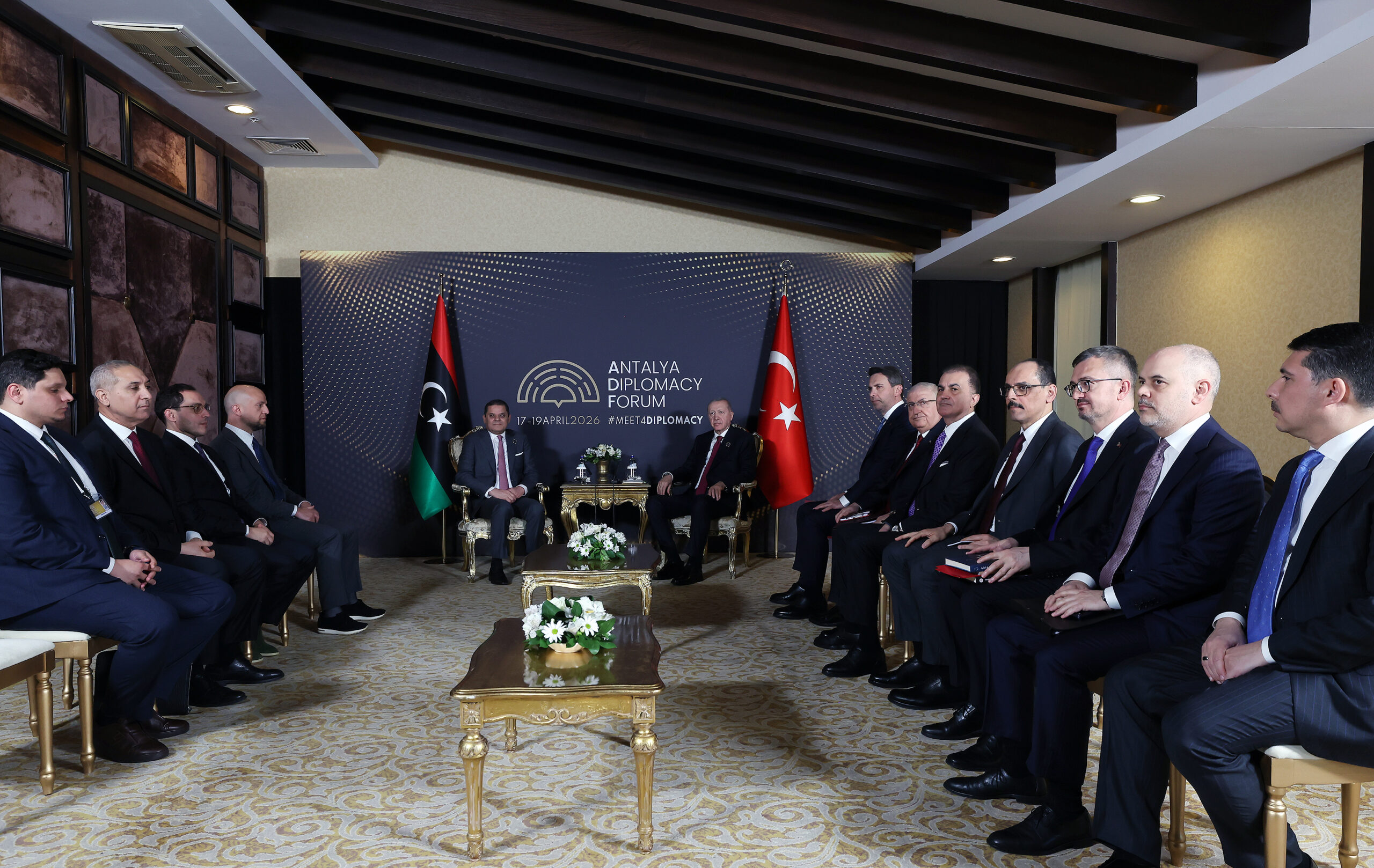
Since the overthrow of the Gadhafi regime in 2011, Libya has been marked by a complex crisis involving civil war, political fragmentation, and foreign intervention. The country remains divided between the Tobruk-based House of Representatives (HoR) and the Tripoli-based Government of National Unity (GNU), while also grappling with disputes over energy revenue sharing, fragmentation within the security sector and growing geopolitical competition in the Eastern Mediterranean. Amid such circumstances, Türkiye has emerged as a prominent actor on the ground, especially after signing security and maritime delimitation agreements with the Tripoli government in 2019. More recently, Turkish intelligence chief İbrahim Kalın’s visit to Libya — which included a meeting with Khalifa Haftar — signals a new phase in Ankara’s Libya policy. The visit demonstrated both the increasingly multidimensional nature of Türkiye’s involvement in Libya and its growing coordination with European actors such as Italy.
Türkiye’s potential contribution to political consensus
The main obstacle to holding elections in Libya is the ongoing division between the GNU and the HoR. Türkiye has developed strong political, military and economic ties with Tripoli. However, in recent months, it has also opened diplomatic channels with the Benghazi–Tobruk axis, positioning itself as a potential facilitator between the rival sides. Ankara’s advantage in this process lies in its military presence on the ground and its continued political legitimacy through its relations with the Tripoli government. Still, the Libyan crisis involves not only local factions but also global actors. For Türkiye to succeed as an effective facilitator, it must act in coordination with stakeholders such as the UN, the U.S., Italy and Egypt, rather than relying solely on unilateral initiatives. Notably, the dialogue established with the Haftar camp reflects Ankara’s flexibility and pragmatism. Türkiye’s recent political engagement with Haftar — with whom it maintained commercial ties in the past — has positioned Ankara as a lasting and indispensable actor in the eyes of both Tripoli and Tobruk.
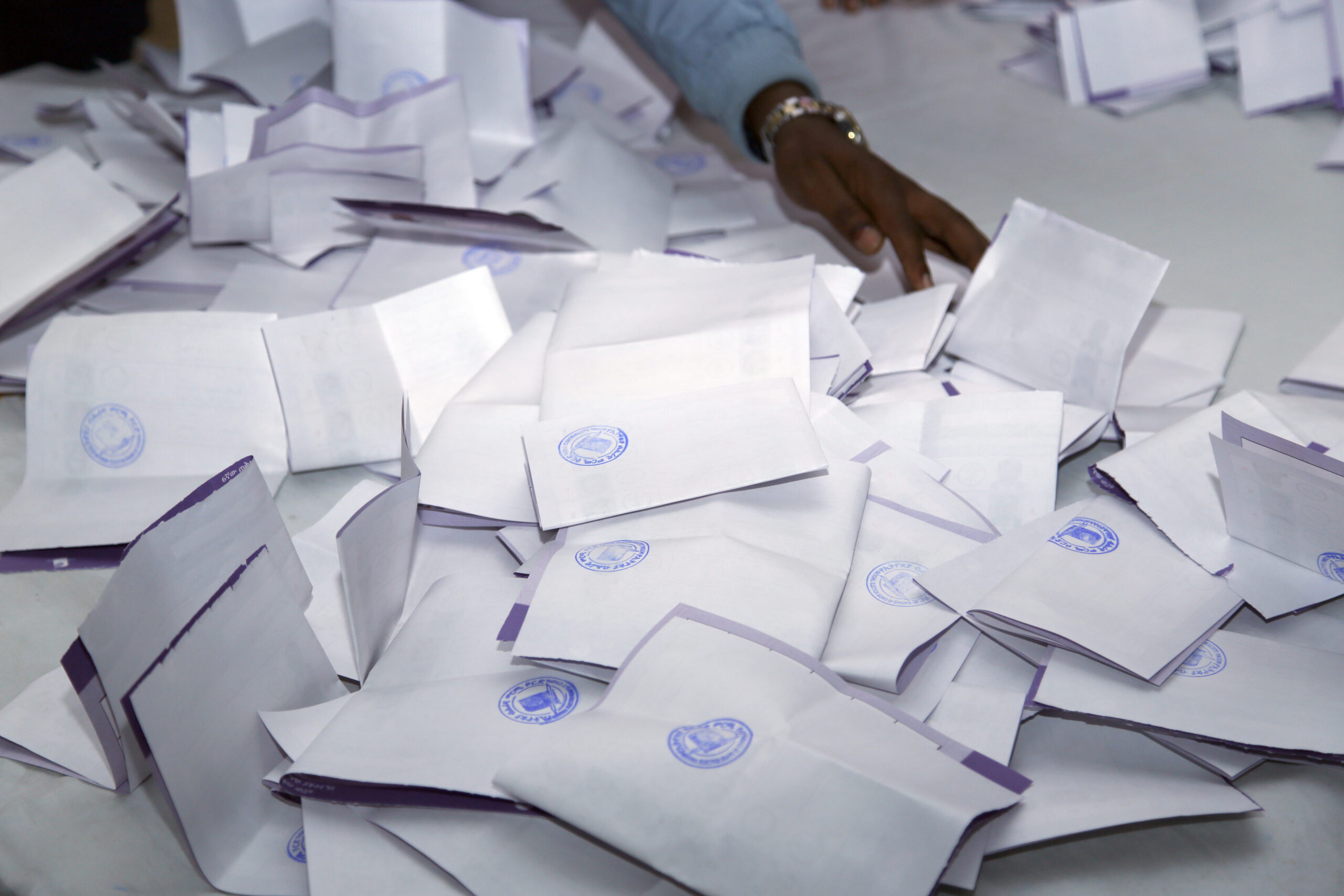
Meanwhile, a new roadmap presented to the U.N. Security Council on Aug. 21, 2025, by U.N. Special Representative for Libya Hanna Tetteh has emerged as one of the most comprehensive initiatives aimed at resolving the country’s political stalemate. The plan rests on three main pillars: establishing a framework for elections, unifying divided institutions, and launching structured dialogue mechanisms. As part of this effort, the roadmap envisions drafting a technically sound and feasible electoral law, restructuring the Supreme National Elections Commission, and completing legal reforms in a short timeframe. It also calls for bringing together the rival governments in the east and west under a unified administration and strengthening dialogue platforms to ensure broader societal participation. While the roadmap is promising, the presence of armed groups and parallel security structures on the ground poses significant risks to the safety and credibility of the electoral process. However, the 71% voter turnout in the municipal elections held on Aug. 16 signaled strong public support for elections and reinforced the plan’s domestic legitimacy. Türkiye, in this process, stands out not only for its military and economic presence on the ground but also for its diplomatic flexibility. Alongside its close ties with the Tripoli-based government, Ankara’s diplomatic outreach to the Benghazi–Tobruk axis gives it a unique advantage in supporting the drafting of electoral laws, advancing institutional reforms, and contributing to political consensus. As such, Türkiye is positioned as a complementary actor in mobilizing international support for the U.N. roadmap and as a critical facilitator of dialogue between Libyan factions. Ankara’s balanced approach is increasingly seen as a confidence-building factor — not only for domestic stakeholders but also for the broader international community — in ensuring the success of Libya’s electoral process.
Energy geopolitics, maritime jurisdiction disputes in the Eastern Mediterranean
Libya sits at the heart of the maritime jurisdiction disputes in the Eastern Mediterranean. Greece has attempted to claim an expansive exclusive economic zone (EEZ) based on Crete and the small island of Gavdos, a move seen as an effort to encroach on Libya’s maritime rights. However, numerous precedents in international maritime law suggest that small islands have limited influence when compared to large mainland coastlines. Against this backdrop, the EEZ agreement signed between Tripoli and Türkiye in 2019 — and the subsequent steps by the Tobruk-based authorities to approve the deal — has not only expanded Ankara’s strategic room to maneuver in the Eastern Mediterranean but also served to defend Libya’s rights against Greece’s maximalist claims. Through this agreement, Türkiye has secured a legitimate position that both protects Libya’s sovereignty and establishes Ankara as an indispensable partner in regional geopolitics. Libya also holds a critical position in global energy markets, as one of Africa’s largest holders of proven oil reserves. As of summer 2025, Libya’s National Oil Corporation (NOC) has raised daily output to 1.38 million barrels and set an ambitious goal of reaching 2 million barrels per day by 2028. Modernization efforts, supported by partnerships with Honeywell and other international firms, have marked significant progress in boosting production capacity. In this evolving landscape, Türkiye’s role stands out in two key areas. First, the investments by the Turkish Petroleum Corporation (TPAO) on the ground, along with the 2019 maritime delimitation agreement, have placed Ankara at the center of the Eastern Mediterranean energy equation. Second, the active involvement of Turkish companies in infrastructure, transportation, and digitalization projects is directly contributing to Libya’s economic diversification and reconstruction efforts. As a result, Türkiye is emerging not only as a security partner but also as a strategic ally in Libya’s energy development, economic modernization, and long-term growth.
Building on this, two potential scenarios appear to be emerging for Türkiye in the Eastern Mediterranean. The first involves the establishment of an institutionalized trilateral mechanism between Türkiye, Italy, and Libya, focused on energy security, maritime jurisdiction, and reconstruction projects. Such a framework could not only strengthen Ankara’s close ties with Tripoli, but also align Italy’s longstanding presence in the energy sector through ENI with Türkiye’s growing investments via TPAO on a cooperative platform.
The second scenario centers on the normalization process between Türkiye and Egypt and its potential impact on the Eastern Mediterranean. Although Cairo’s 2020 EEZ agreement with Greece was limited in scope, the recent thaw in Ankara–Cairo relations could pave the way for more pragmatic cooperation. In the short term, the Italy–Libya–Türkiye axis may appear more feasible. However, in the medium to long term, a deepening of ties between Ankara and Cairo holds the potential to reshape the regional balance in the Eastern Mediterranean. Both scenarios ultimately expand Türkiye’s diplomatic room to maneuver and position Libya not only as a focal point in its internal political crises but also as a hub for broader regional cooperation initiatives.
Significance of Kalın-Haftar meeting
The National Intelligence Organization (MİT) Chief Kalın’s meeting with Haftar can be seen as a turning point in Türkiye’s Libya policy. Since 2023, Ankara had already begun adopting a softer diplomatic tone toward the Haftar-led administration. However, Kalın’s visit appears to have moved this approach beyond a temporary tactical shift, institutionalizing it as a more permanent strategy. This engagement signals a broader diplomatic posture for Türkiye — one that is no longer limited to Tripoli-based actors but also includes direct outreach to stakeholders in eastern Libya, positioning Ankara as a multidimensional player in the country’s political landscape.
There are three key factors behind Haftar’s decision to soften his long-standing rhetoric toward Türkiye. First, it is now broadly acknowledged by all sides that a decisive military victory in Libya’s civil war is unattainable, and that continued conflict will not yield a sustainable solution. Second, Türkiye has established itself as a lasting actor both on the ground and in the international diplomatic arena — not only through its military presence but also via political, economic, and energy-related initiatives that are actively shaping the balance of power. Third, the growing emphasis on pragmatism in Libya’s stabilization and reconstruction efforts has pushed the Haftar-led administration to become more open to dialogue with Ankara.
These developments have further strengthened Türkiye’s influence in Libya. In addition to its close ties with the Tripoli-based government, Ankara has now become a legitimate and indispensable counterpart in the eyes of the Haftar-led bloc as well. As a result, Türkiye has positioned itself as one of the few actors capable of engaging in dialogue with all sides, bridging the political divide between eastern and western Libya. This shift is not only reshaping the political dynamics within Libya but also altering how regional actors view Ankara — increasingly recognizing it as a central player in both the reconciliation process and the country’s reconstruction efforts.
Indeed, the visit to Libya by MİT Chief Kalın has confirmed both the continuity and multidimensional character of Türkiye’s influence in the region. While Ankara continues to maintain its military and political ties with Tripoli, it has also become an indispensable actor between the opposing sides thanks to the dialogue it has established with the Haftar camp. Indeed, the cooperation taking shape along the Türkiye–Italy axis is opening up significant room for maneuver for Ankara — both in the reconstruction of Libya and in the broader search for balance in the Eastern Mediterranean. The UN roadmap, meanwhile, has the potential to place this process within an international framework and pave the way for elections. Therefore, Türkiye’s Libya policy has evolved beyond mere crisis management and has transformed into a multifaceted strategy that contributes to regional stability. Through its initiatives in energy, security, diplomacy, and reconstruction, Ankara’s role in Libya directly impacts both the country’s internal peace and the geopolitical future of the Mediterranean.
This op-ed was published on Aug. 28, 2025, on the Fokus+ website under the title “İbrahim Kalın’ın Libya Ziyareti ve Yeni Dönemin Stratejik Yansımaları.”