The U.N. Security Council’s Resolution 2803 placed the cease-fire in Gaza, achieved under U.S. President Donald Trump’s 20-Point Plan, on an institutional footing. The resolution outlines the framework for the processes that define Gaza’s security, governance, and reconstruction. But it is fair to say that this foundation, as set out in Resolution 2803, has in some ways heightened concerns about the 20-Point Plan rather than easing them. The ambiguities in the resolution and the proposed transitional governance model for Gaza have created deep unease among Palestinians, sharpening the debate at the very start of the process.
A step back from gains?
The most striking elements of the resolution are the references to the Palestinian people’s “right to self-determination” and a “credible pathway to statehood,” should the requested reforms be carried out. But there are strong claims that these do not represent new gains for the Palestinian cause; rather, they are seen as an artful stretching of the situation in Gaza and a blow to Palestinians’ earlier achievements. Although Resolution 2803 superficially notes the Security Council’s previous decisions on the Palestinian question, it neither explicitly references resolutions 242 and 338 nor mentions the nonmember observer state status granted to Palestine under the General Assembly’s 2012 Resolution 67/19. As a result, the resolution shifts Palestine’s existing international status away from reinforcement and toward a new and conditional template tied to reforms and “performance benchmarks.” Even this, by the resolution’s own wording, opens not a path to a Palestinian state but a path to “Palestinian self-determination and statehood.” In the coming period, we are likely to see numerous debates, disputes, and additional demands over whether these conditions are being met. Indeed, open sources are already circulating rumors of a detailed, granular list of demands, extending even to the content of Palestinian school textbooks.
The role of the Peace Council
Another contentious element of the resolution is the Peace Council, positioned as the highest authority guiding the “peace process.” Hamas has strongly objected to the creation and positioning of this body, which would be chaired by Trump and include “leaders of influential countries and intellectual figures.” The council was essentially described as an entity that would oversee and direct Gaza’s reconstruction, the flow of funds and the work of a committee responsible for public services in the territory, composed of “technocratic and apolitical Palestinians.” The council would also oversee and shape the transition process, with both the International Stabilization Force (ISF) and the Palestinian Police Force reporting to it. Two issues are important here. The first is the absence of Palestinian national elements on the Peace Council and the fact that the powers of this body can be extended in two-year terms. This strengthens the concern that the process could evolve into an open-ended trusteeship model. The second area of concern comes forward in Article 7 as the duties assigned to the ISF. According to the resolution, the ISF’s duty is to ensure security in the Gaza Strip, to protect border areas, in coordination with Egypt and Israel, together with a “vetted and reliable” Palestinian police force, and to protect civilians, especially during humanitarian operations, and up to this point there is no issue. However, Hamas developed strong opposition by arguing that the duties assigned to this structure — such as “ensuring” the demilitarization of the Gaza Strip, destroying military infrastructure, and permanently disabling weapons belonging to nonstate armed groups — would undermine the neutrality of the mechanism. Moreover, this article represents a significant deviation from the 20-Point Plan, which assigned the ISF a more “preventive” role regarding weapons.
In the end, although Hamas accepted during the negotiations that it would not take part in governing Gaza, it continues to insist that governance be transferred to “Palestinian national elements.” However, whether a technocratic structure designated by the Peace Council and the ISF can generate local legitimacy remains a major question. At its core, the problem is that the resolution sets out the obligations of Hamas and the Palestinian Authority, ties their gains to the fulfillment of the expectations described so far, and presents these as conditions for Israel’s withdrawal.
In this framework, the deployment of the ISF will become possible with the start of the plan’s second phase. Therefore, the force will likely enter the field gradually in the coming months, depending on conditions maturing. However, given the reality on the ground, Israel remaining east of the Yellow Line, Hamas rejecting the resolution, and the transitional administration not yet being clarified, the process for deploying the ISF appears likely to become more difficult.
Israel’s response: Approval, strategic leeway
Although it opposed presenting the path to a Palestinian state as contingent on reforms, the Israeli government welcomed the resolution. According to Prime Minister Benjamin Netanyahu, the plan secures Israel’s safety. However, dynamics on the ground show that Israel’s potential to stretch the resolution to its own advantage is quite high.
Israel is already focused on creating “Hamas-free zones” in Gaza. The Israeli military continues efforts to establish a buffer zone surrounding Gaza by arming certain criminal networks and small local actors beyond the Yellow Line. This is one of the main factors delaying the disarmament of Hamas and other groups. Meanwhile, Article 17 of the 20-Point Plan is being used to segregate and strengthen opposition structures in Gaza beyond the Yellow Line (the Green Zone). According to this, “if Hamas delays or rejects disarmament, humanitarian aid and reconstruction activities can continue only in these areas.” This provides a framework for the de facto division of Gaza. The conditions and ambiguities in the plan also give Tel Aviv broad room to maneuver.
Therefore, Israel’s likelihood of not implementing the plan’s second phase, that is, a more comprehensive withdrawal, is far from negligible. Arguments such as the Palestinian Authority “not implementing sufficient reforms” or Hamas “not fully disarming” could give Tel Aviv the ability to delay the process as it wishes. At the Security Council meeting, the U.S. also stated that rejecting the resolution or failing to comply with the agreement would result in a return to war. Under these conditions, it is difficult to say that groups in Gaza have a rational basis for choosing whether to comply with the agreement.
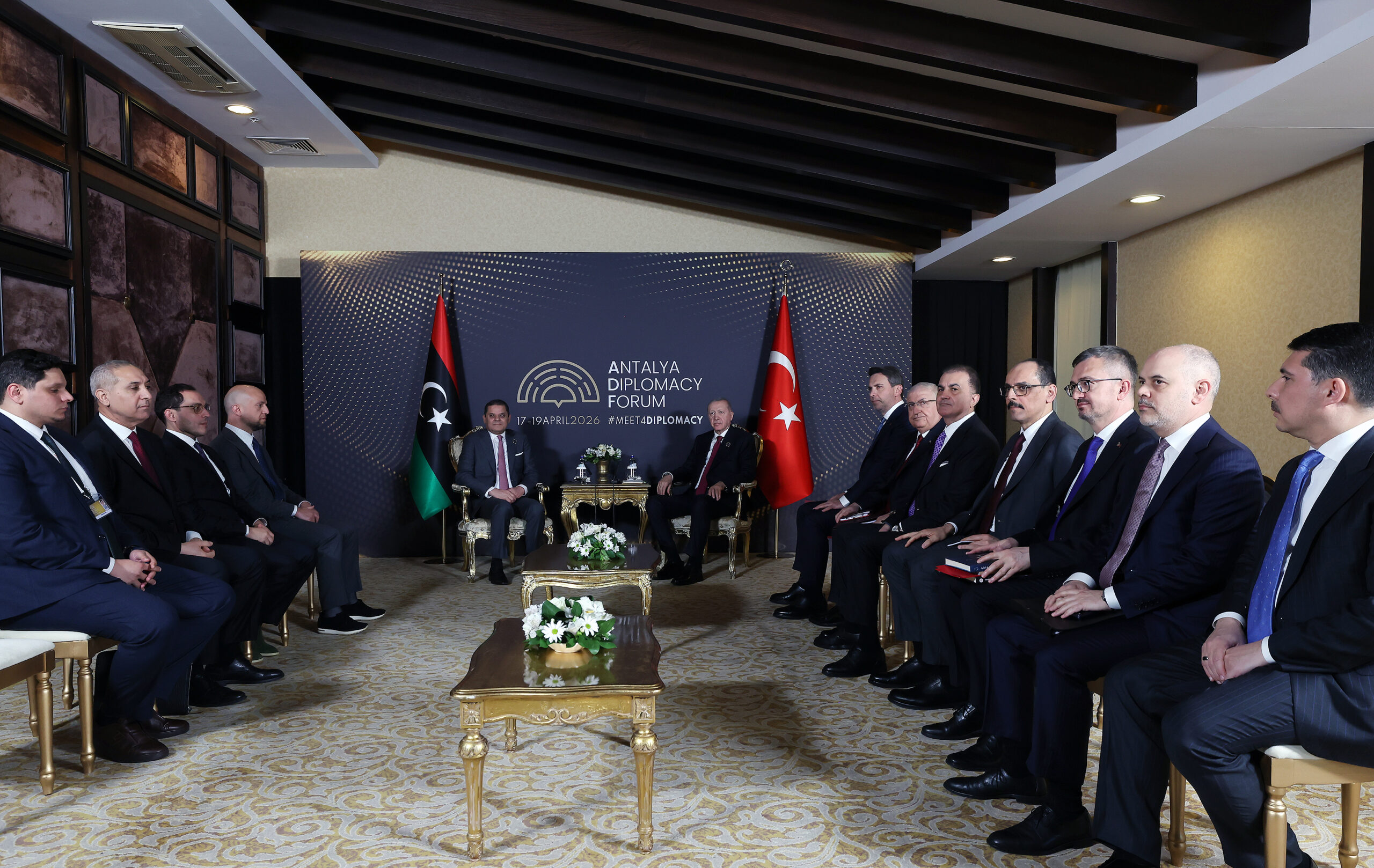
Türkiye has taken a position throughout the process aimed at stopping the bloodshed. Given the current situation, Ankara’s contribution remains critical in making alternative solutions more advantageous for the parties than war. Therefore, despite Israel’s opposition, it is extremely important that Türkiye continue its dialogue with the U.S. and its mediating role.
This opinion piece was published on Nov. 25, 2025, on the Anadolu Agency website under the headline: “Gazze için kritik adım: BMGK’nin 2803 sayılı kararı nasıl okunmalı?”